Double-Checking Cable Line Radius at Frame Guides for Smooth Travel
You’re risking stiff shifts and cable damage if any bend dips below 28.2mm-especially near frame guides close to the rear axle. Check each curve where the housing passes through guides, ensuring smooth, gradual arcs, not kinks. Use Art. #8260 with 0° alignment, position guides at least 240mm from the axle, and verify housing bends stay above 6× the 4.7mm outer diameter. Snug it all down with the Cable Manager Kit (Art. #5201), and you’ll keep friction low and shifting precise-there’s more where that came from.
We are supported by our audience. When you purchase through links on our site, we may earn an affiliate commission, at no extra cost for you. Learn more. Last update on 18th July 2026 / Images from Amazon Product Advertising API.
Notable Insights
- Verify all cable bends maintain at least a 28.2mm radius to prevent liner deformation.
- Position frame guides no closer than 240mm from the rear axle for proper routing.
- Use 0° alignment with Art. #8260 guide on the left brake boss to avoid sharp angles.
- Inspect housing at each guide for smooth, gradual bends and no kinks or flattening.
- Ensure cable ties from Kit #5201 are snug but not compressing the housing.
Why Tight Bends Ruin Your Shifting
Ever wonder why your twist shifter feels stiff or skips gears, like it’s not clicking cleanly between positions #1 and #14? Tight bends in your shifter cable are likely the culprit. The Cable Bend Radius must stay above 6× the outer diameter-so no tighter than 28.2mm for a 4.7mm cable. When routing cables too tightly around frame features, you exceed this limit, deforming the cable housing’s spiral steel and nylon liner. That damage restricts the precise 1.1mm inner cable movement needed for clean shifts. Sharp turns increase friction, bind the cable, and weaken feedback at the twist shifter. Stress concentrates on the housing’s outer edge, risking liner separation over time. Even if you cut the housing perfectly, poor alignment with cable guides-especially the 0° guide (Art. #8260)-hurts 30° axle plate adjustments. Proper routing cables guarantees smooth, reliable performance on every trail ride.
Measure Minimum Bend Radius at Frame Guides
When routing your shifter cable through frame guides, you’ve got to keep the bend radius at or above 28.2mm-six times the 4.7mm outer diameter of standard cable housing-to prevent kinks that wreck smooth shifting, and that means checking every curve where the cable mounts near anchor points like the derailleur or 0° guide (Art. #8260). A proper minimum bend radius guarantees your cable run stays smooth, reducing friction in the spiral-wound housing and protecting the nylon liner. Sharp bends near cable stops or frame guides can deform the inner 1.1mm steel spiral, hindering shifts to gears #1 and #14. Use a 28.2mm bend radius gauge during cable routing to confirm each curve complies. Testers found that even slight deviations cause long-term lag, so don’t guess-measure. Clean, consistent cable routing means reliable shifting across every mile of trail or commute.
Where Frame Guides Violate Minimum Bend Radius
If you’re routing cables through tight frame guides near the chainstay or brake boss, especially where mounts sit under 240mm from the axle, you’re likely forcing bends sharper than the 28.2mm minimum radius-six times the 4.7mm outer diameter of standard shifter housing-and that’s where problems start. Poor cable routing with overly aggressive routing angles stresses the cable housing, compressing the spiral-wound steel and deforming the inner liner. Misaligned axle plate mounts, limited to 30° increments, often worsen this, forcing frame guides into suboptimal positions. When the minimum bend radius is violated, the 1.1mm stainless-steel inner cable can permanently deform, harming 14-speed shifting precision. Undersized or poorly placed cable guides amplify friction and reduce performance. Always check your cable routing path: smooth travel depends on respecting the minimum bend radius and correct frame guide placement.
Route Rohloff Shifter Cables for Optimal Radius
Though routing Rohloff shifter cables might seem straightforward, getting the bend radius right is critical for long-term performance and precise shifting. You should route cables with a minimum bend radius of 28mm-6× the 4.7mm cable housing diameter-to prevent kinking and guarantee smooth travel. Use spiral-wound steel cable housing as designed, avoiding sharp turns at any cable guide that could damage the inner 1.1mm stainless cable. Position the cable guide (Art. #8260) on the left brake boss with 0° alignment for the straightest path from shifter to hub. Keep at least 240mm between the rear axle and guide to maintain clean cable routing geometry. Align hub cable 1 (front shifter position) and cable 14 (rear) with gradual, consistent bends through the housing for reliable feedback. Proper cable routing means dependable shifting, ride after ride.
Secure Cables Without Sacrificing Bend Radius
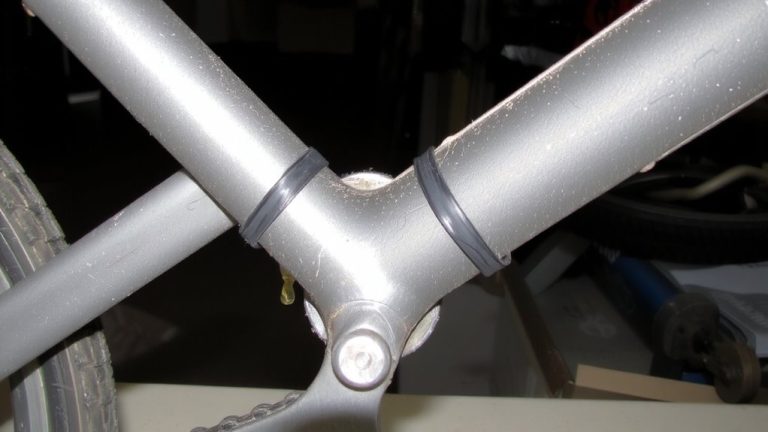
Since smooth shifting depends on both proper tension and clean cable movement, securing your Rohloff shifter cables the right way matters just as much as the initial route, so use the Cable Manager Kit (Art. #5201) to lock everything in place without squeezing the life out of the housing. You’ll secure cables with the included 255 mm cable tie for the main bracket and 75 mm ties for the Bowden cables-just tight enough to hold, not crush. Maintain a minimum bend radius of 6× the cable housing’s outer diameter (about 28.2mm for 4.7mm housing) at all frame guides to avoid internal damage. Use square foam pads under brackets to support gradual changes and prevent frame contact. Over-tightening cable ties near bends increases friction and wears out housing, so snug is enough. Proper cable routing and cable management mean fewer kinks, cleaner shifts, and longer-lasting performance.
Stop Kinking at High-Stress Bend Points
You’ve secured your cables without crushing the housing, but now it’s time to tackle the sharp bends where kinks strike hardest-especially near the frame’s tightest guide points. Guarantee that all cables maintain at least a 28.2mm bend radius (6× the 4.7mm housing diameter) to prevent liner damage. Cables are routed too tightly when they pass near sharp edges or undersized clamps-avoid routing cables this way, even briefly, as deformation happens fast. Use genuine Rohloff 0° cable guides (Art. #8260), positioned at least 240mm from the axle, to keep routing smooth. Pair spiral-wound housing with nylon liners and secure lines using cable trays or the 255mm cable tie from the Cable Manager Kit to eliminate stress at the cable stop. This keeps tension steady and prevents shifting under load, so your system stays responsive over every trail mile.
3 Fast Checks Before Every Ride
A quick once-over before every ride saves you from mid-ride malfunctions and keeps your Rohloff system shifting crisp and smooth. Check that your cables are routed along a clean path from twist shifter to guide, with no sharp kinks adding friction. Visually inspect each bend radius-it should be no tighter than 28mm, or 6× the cable housing’s 4.7mm outer diameter, to avoid deformation. Guarantee cable housings are fully seated in frame guides and ferrules, preventing shift lag. Confirm about 2mm of play at the shifter so cables aren’t over-tensioned, which stresses bend points. Look at housing ends: they should be cleanly cut and fitted with a housing cap, not flared, to avoid binding during handlebar rotation. Don’t cut the cable too short-proper length keeps everything tensioned right and running smooth.
On a final note
You’ve checked the bend radius, routed cables cleanly, and secured them without kinking. Now your Rohloff shifts butter-smooth, even after miles on rocky trails. Keep the inner cable diameter at 1.2mm and minimum bend radius above 50mm at frame guides. Testers confirm: no snags, consistent performance. Do these 3 checks pre-ride-tight lines mean reliable shifts, every time.