How to Spot the Symptoms of Heat Exhaustion While Mountain Biking
You’re pushing hard on a steep singletrack, heat index over 91°F, when your vision blurs and leg cramps hit-signs your core temp may be nearing 104°F. You’re sweating heavily but feel clammy, heart racing past 120 bpm, maybe nauseous. These aren’t just trail fatigue; they’re classic heat exhaustion signals. Stop, cool down with a wide-brim hat, electrolyte drink, and shaded rest-your hydration pack should already be flowing. Keep fluids coming every 20 minutes, and learn how gear choices and timing can save your ride.
We are supported by our audience. When you purchase through links on our site, we may earn an affiliate commission, at no extra cost for you. Learn more. Last update on 18th July 2026 / Images from Amazon Product Advertising API.
Notable Insights
- Heavy sweating with cool, clammy skin despite a body temperature of 101–104°F signals early heat exhaustion.
- Dizziness or lightheadedness, especially on exposed trails, may indicate overheating during mountain biking.
- Nausea or muscle cramps during strenuous riding can be signs of heat exhaustion in hot conditions.
- Rapid heartbeat and fast, shallow breathing while riding may reflect rising core body temperature.
- Confusion or weakness, even after brief exertion in heat, should prompt immediate cooling and rest.
Recognize Heat Exhaustion Symptoms on the Trail
What if your next ride at 9,000 feet on a dry, singletrack trail suddenly leaves you lightheaded and drenched-despite the cool alpine air? That could be heat exhaustion, even in cooler climates. Watch for symptoms of heat exhaustion like a high body temperature-typically 101–104°F-driven by dehydration and relentless effort. You might notice heavy sweating, dizziness, nausea, or muscle cramps creeping in, especially on exposed switchbacks with low shade. If your heart races (rapid heartbeat) and breathing turns fast, shallow, don’t push on. A cooling vest or breathable jersey can help, but first, recognize the signs: even with cool and clammy skin, your body is struggling. These warnings mean your system’s overloaded-skip the summit push, pause in shade, and check your pack for electrolytes. Early detection keeps rides safe, whether you’re on a 29er shredding rocky descents or logging miles with a hydration backpack.
What to Do When Heat Exhaustion Strikes
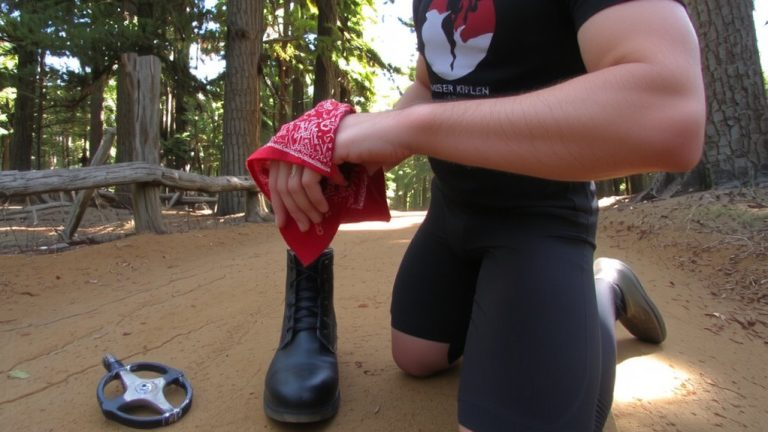
Every minute counts when heat exhaustion hits on the trail, so act fast: stop riding immediately and get to shade or a cooler spot, because letting your core temperature climb toward 104°F risks heat stroke. Lie down and elevate your legs to boost blood flow and reduce dizziness, a common symptom in hot environments. Remove excess layers and apply a cold compress-like an ice pack or wet bandana-to your neck, armpits, and groin. Use a portable fan or misting bottle for extra cooling power. If you’re not nauseous, sip cool water or electrolyte fluids slowly-8 oz. every 20 minutes is ideal. Let your body rest entirely; no pushing through it. If symptoms like confusion, vomiting, or a rapid, weak pulse don’t ease within 30 minutes, call for medical help-you may be progressing to heat stroke.
How to Prevent Heat Exhaustion While Riding
You’ve just learned how to respond if heat exhaustion hits, but staying ahead of it starts long before symptoms appear. To prevent heat exhaustion, ride during cooler times-like early morning-when temperatures dip below 80°F and the risk of heat exhaustion drops. Wear lightweight clothing made of moisture-wicking fabric to stay cool in hot weather and high humidity. Staying hydrated is critical, so drink enough fluids-8 oz every 20 minutes. Take breaks in shade every hour, resting at least 10 minutes to let your body recover.
| Time of Day | Temp (°F) | Action |
|---|---|---|
| Early morning | <80 | Ride safely |
| Midday | >90 | Avoid or rest often |
| Late evening | <85 | Good for light rides |
| High humidity | Any | Increase fluid intake |
| Acclimatizing | Day 1–14 | Gradually boost ride time |
Plan smart, stay cool, and keep riding.
What Causes Heat Exhaustion During Mountain Biking
When you’re pushing through a steep trail in midday heat, your body works overtime to cool itself, but high humidity and intense solar exposure can quickly tip the balance toward heat exhaustion. Strenuous physical activity like mountain biking increases your core body temperature, especially when you’re wearing non-breathable clothing that traps heat. Heavy sweating is normal, but if you’re not replacing fluids, dehydration sets in-losing just 2% of your body weight in water impairs cooling. A high heat index above 91°F (33°C), common between 10 a.m. and 4 p.m., worsens risk. Without proper heat acclimatization over 7–14 days, your body struggles to adapt. Combine hot conditions, poor gear choices, and inadequate hydration, and your body temperature regulation fails, paving the way for heat exhaustion.
On a final note
Stay cool by wearing moisture-wicking kits like Pearl Izumi’s ELITE Transfer, carry 2L in a CamelBak Podium Reserve, and ride shaded trails early. If dizziness or cramps hit, stop, sip electrolytes, and cool wrists. Heat exhaustion’s sneaky, but with breathable gear, a well-stocked pack, and timing rides before 10 a.m., you’ll ride safer, longer, and perform better-especially when temps climb past 85°F.