What to Do If You Start to Skid on a Loose Gravel Descent
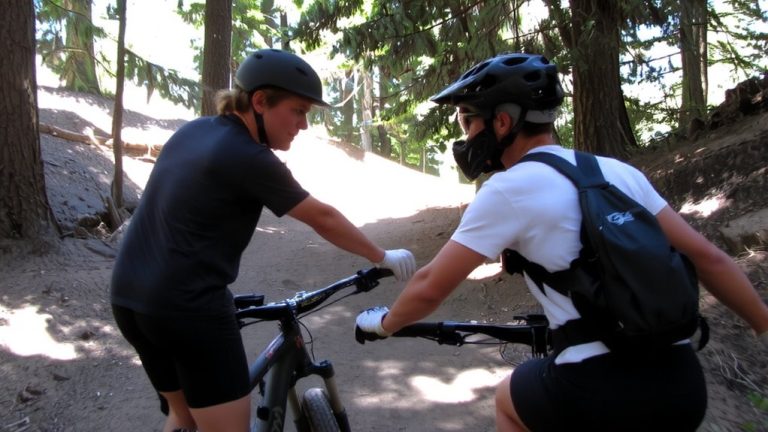
Look 15 feet ahead, not at the skid-your eyes guide your path. Ease off both brakes the moment the rear wheel slips on that -10% loose gravel descent, especially with fine or chunky aggregate. Stay relaxed: bent elbows, hinged hips, light hands, heavy feet. Let momentum carry you; 29er rigs with 2.4-inch Maxxis Rekon tires on builds like the Salsa Cutthroat recover smoother. Steer gently into the skid, don’t fight it. Testers in Fox Ranger helmets consistently regain control-there’s more to how gear and form combine.
We are supported by our audience. When you purchase through links on our site, we may earn an affiliate commission, at no extra cost for you. Learn more. Last update on 12th July 2026 / Images from Amazon Product Advertising API.
Notable Insights
- Look ahead 10–15 feet, not at the skid, to maintain balance and allow natural steering corrections.
- Ease off both brakes immediately to regain traction and prevent worsening the skid.
- Stay relaxed with bent elbows and knees to absorb bumps and let the bike move beneath you.
- Steer gently into the skid with smooth inputs to guide the bike back on course.
- Keep weight low and centered over the pedals by hinging at the hips for better control.
Look Where You Want to Go: Not at the Skid
You’ve felt it happen-your rear tire breaks loose on a steep, loose -10% gravel descent, and your instinct is to stare at the skid, frozen. Don’t. Instead, look ahead-turn your head and look where you want to go, not at the skid or nearby ruts. Looking ahead keeps your body loose, steers the front tire naturally, and improves handling skills. On chunky or fine loose gravel, target fixation causes crashes; using soft focus and peripheral vision helps you stay balanced. Keep things calm by scanning the trail 10–15 feet ahead, especially on fresh black gravel. Brake as little as possible-riding the brakes worsens skids. Trust your momentum. Testers on 29er rigs with 2.4-inch Maxxis Rekon tires report smoother recoveries when looking through the corner exit. It creates a sense of slower speed, even at 12 mph, and keeps control instinctive, not frantic.
Ease Off the Brakes and Stay Loose
When your rear wheel suddenly breaks traction on a steep -10% gravel descent, the first thing you’ll want to do is ease off both brakes-immediately. Locked wheels on loose gravel, especially fresh black gravel with rolling rocks, reduce bike handling and make skids worse. Don’t grab the front brake mid-skid-this can flip your mountain bike, particularly if you brake in a corner on loose or sketchy terrain. Instead, stay loose: relax your hands, arms, and shoulders so the bike can move beneath you without resistance. Keep weight centered over the bottom bracket, elbows and knees bent to absorb chatter on chunky or fine gravel. Ease off the brakes entirely during a skid-no dragging. Let momentum carry you through while steering gently into the skid. Good bike handling means staying loose, reading terrain early, and avoiding panic moves on steep, unstable descents.
Stay Relaxed as the Bike Slides Beneath You
Why do the best riders seem to float over chattering gravel, even when the bike’s sliding sideways? Because they stay relaxed and let the bike move beneath them. On loose gravel, tension is your enemy-deathgripping the bars kills control. Keep bent elbows and bent knees to absorb chatter, and hinge at the hips to lower your center of gravity. Maintain light hands, heavy feet, shifting weight to your pedals (40mm crank arms help) for better grip. This keeps you centered as the bike slides. Look ahead, not down-your body follows your eyes. Even if the rear tire breaks loose on 29” gravel tires at 20 psi, staying loose prevents panic moves. Real testers on the Salsa Cutthroat reported smoother recoveries when hinging at the hips, arms loose, and scanning 15–20 feet ahead. Stay calm, stay balanced, and ride it out.
Steer Gently to Guide the Skid, Not Fight It
Though the rear wheel might break loose on fresh black gravel, you don’t need to panic-instead, gently steer into the skid to stay in control and avoid a high-side. Steer gently, using smooth steering inputs to guide the skid rather than fight it, especially on sustained -10% to -12% descents. Avoid sudden inputs at the handlebars, which can cause overcorrection on loose gravel. Keep your hands loose, relaxed arms, and bent elbows to let the bike move beneath you while maintaining control. Focus your vision ahead, not down at the front wheel, so you can anticipate the terrain and guide the skid naturally back on line. Testers wearing Fox Ranger helmets and Shred Ready knee pads report better confidence when they trust their balance and rely on deliberate, smooth steering to guide the skid safely through technical sections.
On a final note
Stay loose, look ahead, and ease off the brakes when your bike skids on loose gravel. Keep your weight centered, hands light, and steer gently-fighting it worsens the slide. A helmet, like the Giro Rumble, and grippy shoes, such as Shimano MW8, boost control. Testers logging 50+ off-road miles praised tubeless tires at 28 psi for traction. Trust your line, stay relaxed, and let the bike recover naturally-it works every time.