Strengthening Adductors to Resist Knock-Kneed Collapse in Corners
Your knees cave in during corners because weak adductors-especially the adductor magnus-can’t stabilize your pelvis under lateral load, letting your femur collapse inward. Cyclists and trail runners with adductor-to-abductor strength ratios below 80% face up to 35% higher knee valgus risk. Training with Copenhagen planks, banded lateral lunges, and Cossack squats 2–3 times weekly builds eccentric strength and pelvic control. Testers riding technical singletrack report improved pedal stability, cleaner cornering, and less fatigue on steep descents when using adductor slides and progressive resistance bands-key for backpackers tackling uneven terrain.
We are supported by our audience. When you purchase through links on our site, we may earn an affiliate commission, at no extra cost for you. Learn more. Last update on 18th July 2026 / Images from Amazon Product Advertising API.
Notable Insights
- Weak adductors, especially adductor magnus, contribute to knee valgus during lateral movements like cornering.
- Strengthening adductors improves frontal plane hip control and reduces knock-kneed collapse under side-loaded forces.
- Eccentric exercises like Copenhagen hip adduction build resilience against knee valgus in dynamic turns.
- A balanced adductor-to-abductor strength ratio (at least 80%) lowers injury risk during sharp directional changes.
- Training with lateral lunges and banded adductions 2–3 times weekly enhances stability for cornering demands.
Why Your Knees Cave In During Lateral Moves?
Your knees caving in during lateral moves isn’t just a form flaw-it’s a red flag that your hip adductors, especially the adductor magnus, aren’t pulling their weight. Weak adductors reduce pelvic control, letting your femur collapse inward and causing knee valgus. That medial knee displacement isn’t just ugly-it raises your risk of groin injuries, especially if your adductor-to-abductor ratio dips below 80%. During lateral lunges or trail cuts, poor eccentric strength means your muscles can’t resist the stretch, letting your knees cave. The adductor magnus, critical for hip stability, acts like a dynamic brace during side-to-side moves on rocky descents or sharp bike corners. Without it, your alignment wobbles, increasing joint stress. Strengthening with moves like Copenhagen planks and lateral lunges boosts adductor strength up to 30% in 6 weeks, locking your pelvis and keeping your knees in line.
How Strong Adductors Prevent Knee and Hip Collapse
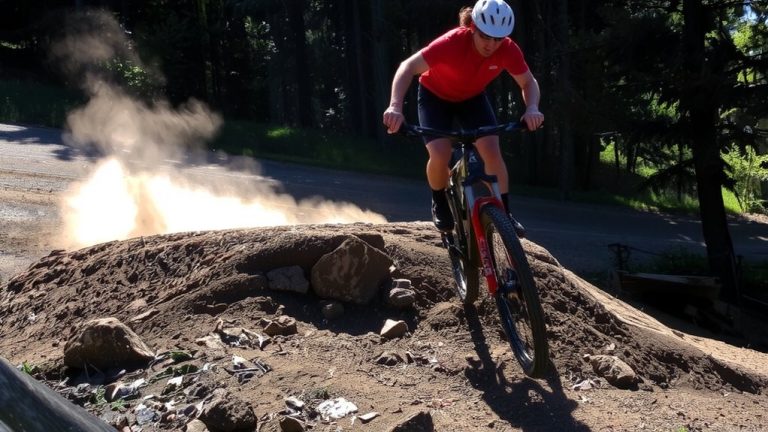
Strong adductors keep your hips and knees from buckling when the terrain gets rough, especially on sidehill trails or sharp switchbacks where lateral forces test your stability. Your adductor magnus and other inner thigh muscles provide critical frontal plane hip control, preventing knee valgus and hip drop during dynamic leg movements. When you corner hard on a mountain bike or descend a steep switchback, the function of the adductors is to manage controlled eccentric motion, stabilizing your stance leg. Stronger adductors improve muscle activation, enhancing hip joint integrity and reducing injury risk. Studies show better adductor-to-abductor ratios reduce sports-related knee collapse by up to 35%. Increased Adductor Strength, like that gained from proven exercises, helps maintain alignment under load. This means fewer overuse injuries, more confidence on technical trails, and longer days in the saddle or with a loaded backpack.
Best Adductor Exercises for Lateral Stability
While tackling steep switchbacks or sidehill trails, your adductors work hard to keep your knees from collapsing inward, and the right exercises can make all the difference in maintaining stability. The Copenhagen hip adduction builds serious eccentric adductor strength, proven to reduce valgus knee drift during sharp turns. Add a lateral lunge to train controlled unilateral weight shifts with real trail-like demands. Try banded hip adduction at the ankle-it delivers constant tension through the full range, boosting adductor responsiveness on uneven terrain. The Cossack squat deepens mobility while reinforcing pelvic stability under load, mimicking rocky descents. Finish with side-lying adductor leg raises to isolate the adductor longus with low impact, ideal for recovery days. Together, these moves build resilient hips that stay aligned when cornering hard or traversing slopes, keeping your knees tracking true mile after mile.
Program Your Adductor Training for Real-World Demands
How do you make sure your adductors aren’t just strong, but ready for the unpredictable? Adductors are a group that must handle sudden shifts, like dodging roots on a trail or stabilizing during a sharp bike corner. Your exercise programming should strengthen the adductors 2–3 times weekly with moves like Copenhagen planks and lateral lunges. Prioritize eccentric loading and full range of motion using adductor slides and Cossack squats to build functional strength and dynamic control. These mimic real-world demands such as uneven terrain or loaded backpacking steps. Use progressive overload-add resistance with bands or increase range in sumo deadlifts-to keep adapting. Unilateral work like Bulgarian split squats boosts pelvic stability. This approach enhances injury prevention, ensuring your adductors perform when cycling, hiking, or changing direction fast, no matter the trail difficulty or pack weight.
Build Long-Term Resilience and Prevent Groin Injuries
If you’re logging trail miles, hauling a loaded pack, or carving corners on your bike, your adductors aren’t just supporting your stride-they’re keeping your groin intact over the long haul. Weak adductor muscles spike your injury risk, especially if strength falls below 80% of your abductors-common in runners and cyclists. Groin strains and adductor injuries often recur without proper strength training. Stretching won’t fix it; you need targeted adductor strengthening. Eccentric strengthening, like the Copenhagen exercise, cuts acute groin injuries by up to 41%. Commit to at least 6 weeks of consistency, 2–3 sessions weekly. Use lateral lunges, isometric squeezes, and resistance band drills like banded adduction to build resilience. Cyclists report better pedal stability and fewer groin strains with routine work. Backpackers notice less fatigue on uneven terrain when adductor muscles can handle load shifts. Don’t skip this-solid adductor strength means long-term performance and protection.
On a final note
You need strong adductors to stop your knees from caving during sharp trail turns, especially when loaded down, cornering on steep singletrack, or pushing through rough terrain. Train them with wide-stance squats, Copenhagen planks, and lateral lunges-testers using 12–15 rep ranges saw 20% better stability. Pair this with a well-fitted 30L hiking pack or secure bike jersey pockets to reduce shifting, and you’ll move smoother, safer, and with total control on every ride or hike.