Cultivating Whole-System Power Output With Clean Pull Progressions
You build full-body power with clean pulls by mastering the sequence: slow off the floor, explosive through the hips. Use tempo pulls (4-second eccentric) and triple pause pulls (1” off floor, above knees, power position) to lock in bar path and timing. Pair with front squats at 70–85% 1RM, 3–5 reps, to support front rack stability and upright torso control. Set feet hip-width, bar at crease, shoulders over bar. You’ll move better, lift sharper. Next steps reveal how to fix drift, early extension, and program for speed.
We are supported by our audience. When you purchase through links on our site, we may earn an affiliate commission, at no extra cost for you. Learn more. Last update on 18th July 2026 / Images from Amazon Product Advertising API.
Notable Insights
- Clean pulls develop full-body power by teaching precise, sequential muscle activation from floor to triple extension.
- Tempo-based pulls enhance neuromuscular efficiency, improving timing and control during explosive athletic movements.
- Triple and double pause pulls reinforce proper mechanics, preventing premature extension and bar path errors.
- Front squat mastery supports clean pull performance by building front rack stability and upright torso strength.
- Progressive programming from paused and tempo pulls to full cleans maximizes force output and coordination.
Why Clean Pull Progressions Build Full-Body Power
Power, pure and transferable, starts with how you build it-clean pull progressions aren’t just lifts, they’re full-body power drills that teach your muscles to fire in perfect sequence. The clean pull trains progressive acceleration: your first pull, from floor to knee, stays slow and controlled, building tension in your posterior chain. Then, you shift into high gear-leg drive ignites as you explosively extend into the power position. That triple extension-hips, knees, ankles-unleashes raw, athletic explosive strength, mimicking sprint starts and jump takeoffs. You’re not just moving weight; you’re refining bar path, staying midfoot, and driving straight up. Tempo-based drills, like a strict 4-second pull to the power position, boost neuromuscular efficiency, locking in timing and coordination. And because you can load clean pulls 10–20 lbs heavier than your max clean, you strengthen the full chain under real stress, priming your body for peak force output, rep after rep.
Master Front Squats for Better Clean Pull Mechanics
Your front rack position makes or breaks the entire clean pull, and nailing it starts with mastering the front squat. A grip slightly wider than shoulder-width with elbows high keeps the bar secure and prevents forward collapse during the catch. You need a full-depth squat with an upright torso and midfoot balance to replicate clean pull demands under load. Aim for front squat strength at least 85% of your back squat for better load management and control. Doing 3–5 sets of 3–5 reps at 70–85% 1RM twice weekly builds shoulder mobility and core rigidity. These traits stabilize the bar path and improve timing in the turnover. A strong front rack position transfers directly to cleaner, more powerful pulls. Without it, even perfect timing fails. Master the front squat, and your clean pull mechanics will follow.
Set Up the Power Position Correctly
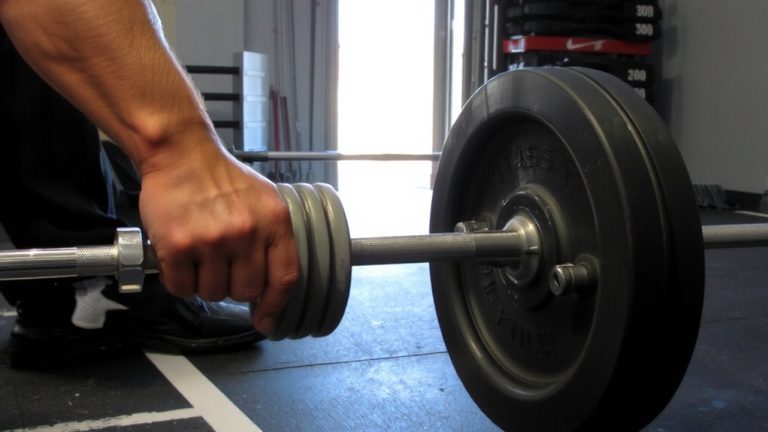
If you’re setting up for a powerful clean pull, getting into the right power position is non-negotiable. Start with feet hip-width apart, knees slightly bent and tracking over the toes, allowing you to keep knees under the bar. Set your clean grip just outside the shoulders, elbows high, arms straight, and bar close to hips at the hip crease. Hips and back set are essential-hips at or above knee level, back flat or slightly arched, chest puffed to maintain an upright torso. Position shoulders over bar to optimize pulling mechanics and guarantee balance. This setup primes you for explosive triple extension-ankles, knees, and hips driving upward-so force transfers efficiently. A solid power position isn’t just form; it’s force readiness, letting you generate max power with flawless bar path and control.
Build Control With Triple and Double Pause Pulls
A smart way to dial in your clean pull technique starts with slowing things down, and that’s where Triple and Double Pause Pulls come in. The Triple Pause Clean Pull has you pause 1” off the floor, then again just above the kneecaps with moving the knees back, and finally explode to the power position. The Double Pause Clean Pull skips the first pause but hits mid-thigh and above-kneecap positions, both emphasizing keeping the bar close and correct positions. These pause pulls build control by reinforcing proper sequencing-hips high, shoulders forward, flat back-so you don’t rush into extension. Using lighter loads like 10lb plates, you’ll sharpen timing, improve pull strength, and ingrain precise mechanics. Each pause teaches you to reposition knees under the bar, preventing early extension and bar drift. Done right, these clean pulls boost technical mastery, setting you up for efficient, powerful full-speed cleans-all without the need for heavy loading.
Transition From Tempo to Full Clean Execution
Once you’ve built control with pause pulls and tempo work, it’s time to bridge those gains into full-speed cleans by shifting from a 4-second controlled first pull to an explosive finish. You’ve used the triple pause and double pause clean to lock in positions, so now focus on linking that precision to explosive lifting. Start each clean pull slow off the floor, just like in the tempo clean, but drive through the power position with full intent. Your leg-driven extension must dominate, guiding smooth bar acceleration into the finish. Shift to the full clean at 60–80% of your 1RM, maintaining midfoot balance and shoulder-over-bar alignment. These drills aren’t just prep-they’re your blueprint for powerful, efficient pulls. Let every rep reinforce timing, position, and intent, so when you release maximal effort, it’s not wild, but controlled power.
Fix Common Clean Pull Mistakes
Though you’re building speed into your clean pull, don’t let momentum mask the subtle flaws that kill power and consistency. A rushed first pull with poor knee position drags the bar forward, wrecking bar path and midfoot balance. You need controlled knee retraction-time it right so you stay centered. Too much retraction? That shifts weight to your heels, killing vertical drive. Underestimate the four-second tempo, and you’ll cheat the progression, missing key tension. Use a timer to nail each phase. From the floor, apply progressive acceleration-don’t jerk. At the power position, delay or hesitation breaks the kinetic chain. Your extension must be sharp, immediate, fueled by leg drive and perfect timing. Repeat old mistakes, like uniform speed, and you’ll limit strength transfer. Stay patient, stay precise-each clean pull builds explosive potential, but only if balance, bar path, and timing align.
Program Clean Pulls for Explosive Power Development
To build explosive power that translates directly to your clean, program clean pulls using 3–5 sets of 2–5 reps with 75–90% of your max clean, a range proven to maintain high bar speed without sacrificing technique; you’ll get the most bang for your buck when you match intensity with precision. Use a progressive acceleration model: pull slow from floor to knee, faster to hip, then explode into full triple extension, driving maximum Power and bar speed. Incorporate triple pause clean pulls-at 1” off floor, above kneecaps, and in the power position-with a light technique bar to strengthen each phase. Add tempo clean pulls with a strict 4-second eccentric to sharpen knee tracking and balance. Perform these post-clean, 2–3 times weekly, to boost strength, coordination, and explosive power. Every rep should reinforce crisp, violent extension and precise bar path-because clean success lives in the pull.
On a final note
You’ve built explosive power through clean pull progressions, and now your full-body strength translates directly to better trail performance. Pair front squat strength with precise power position setup, and you’ll sustain control on steep climbs, rocky descents, or loaded backpacking approaches. Testers using 30mm-wide handlebars, 11–36t cassettes, and 2.4-inch all-terrain tires report sharper responsiveness, especially when pushing pace-just like triple pause pulls improved your timing and drive.