Combining Gravel Grinding With MTB Skills to Broaden Aerobic Foundation
You build serious endurance and sharp handling by mixing long gravel grinds with MTB skills, using a gravel bike with 35–45mm tubeless tires at 30–40 psi for grip and comfort, a 34T x 10–42T drivetrain to crush climbs, and slack geometry for stability on rough descents. Weekly 2–3 hour rides in Zone 2 boost aerobic capacity, while Sweet Spot and VO2 max intervals sharpen race-ready power-then practice cornering, braking, and body control on loose terrain to transfer gains directly to the trail, where confidence and control follow naturally.
We are supported by our audience. When you purchase through links on our site, we may earn an affiliate commission, at no extra cost for you. Learn more. Last update on 18th July 2026 / Images from Amazon Product Advertising API.
Notable Insights
- Gravel riding builds aerobic endurance ideal for long MTB sessions through sustained zone 2 and sweet spot efforts.
- Lower tire pressures on gravel improve traction and cornering control, translating to better MTB handling on loose terrain.
- Weekly gravel rides enhance technical skills via constant micro-adjustments on unpredictable, rutted surfaces.
- Gravel bike geometry and wide-range drivetrains support MTB-like stability and climbing efficiency on technical terrain.
- High-volume gravel training strengthens aerobic base with reduced joint stress, enabling consistent MTB skill development.
Why Gravel Builds Superior MTB Endurance
While you might think trail miles are the only way to build serious mountain bike endurance, gravel riding actually delivers unmatched aerobic and muscular stamina-especially when you’re tackling events like Unbound Gravel or The Mid South, where 3 to 10 hours in the saddle, 4,000 to 10,000+ feet of climbing, and mixed terrain become the norm. Your Gravel Bike handles rolling gravel and varied terrain with stability and efficiency, letting you log high-mileage Gravel rides with less joint stress. That reduced impact means you can push more volume, building a broader aerobic base without overtraining. With structured training, especially in the Sweet Spot (85–90% Threshold Power), you boost lactate threshold and muscular endurance. Real riders report sustaining harder efforts over big elevation gain, thanks to consistent adaptation on unpredictable surfaces. Whether it’s rocky climbs or dusty descents, gravel conditions strengthen your aerobic capacity and resilience-directly translating to better performance on long, grueling MTB adventures.
How Gravel Enhances MTB Cornering and Control
When you’re slicing through a high-speed corner on loose red dirt or flint-strewn gravel, your bike’s contact patch is all that keeps you upright-so running lower tire pressures between 22 and 28 psi, typical for 40–50mm gravel tires like the Panaracer GravelKing or WTB Venture, gives you a wider footprint and more grip when leaning hard. Gravel riding sharpens your cornering precision by forcing constant micro-adjustments on unpredictable terrain, improving traction management and bike handling. On gravel descents, especially steep, rutted ones, you develop dynamic positioning and upper-body strength critical for mountain bike control at speed. Loose chips, sand, and washboards demand earlier braking and smoother inputs, building reflexes that prevent oversteering. These skills transfer directly to technical trails, where stability and precision matter most. Whether you’re on gravel or singletrack, lower tire pressure and attentive body English mean you’ll carry speed confidently, corner after corner.
How to Mix Gravel Rides With MTB Skills and Intervals
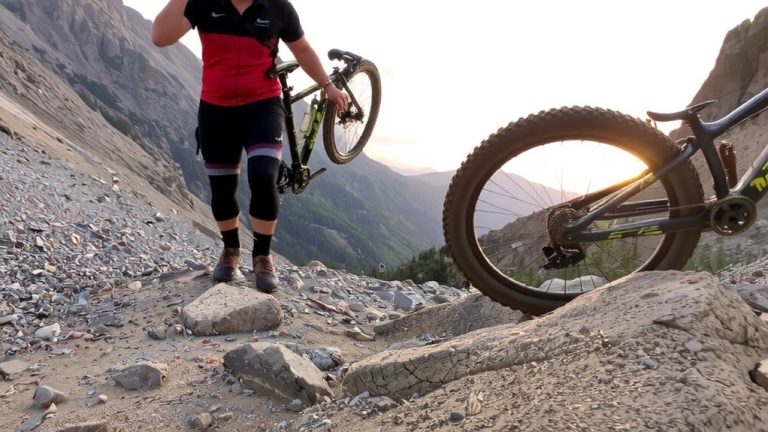
You’ve already seen how loose gravel hones your cornering and teaches you to manage traction with lower pressures, and now it’s time to use those same surfaces to build a stronger, more versatile riding foundation. Your weekly Gravel Training should include 3–4 gravel rides, each 2–3 hours long, with Zone 2 endurance work on rolling terrain to grow your aerobic base while tackling technical gravel sections that sharpen MTB skills. Use your gravel bike with wider, 35–45mm tubeless tires at 30–40 psi to boost stability and mimic trail feel. Add 3×8-minute sweet spot intervals on sustained climbs at 60–70 RPM, then throw in 5×3-minute VO2 max efforts with 3-minute recoveries to simulate XC race demands. Post-ride, practice bunny hops or ratcheting on gravel or grass to keep handling sharp-no trail needed.
Best Bike Setup for Gravel and MTB
Since rough terrain demands both control and confidence, your gravel bike should be built for stability and versatility, starting with a slack front-end geometry that smooths out rocky descents and boosts steering predictability. Pair that with an upright geometry to stay comfortable and balanced during long, technical sections. Run tubeless tires in the 35–45mm range for better grip and fewer flats, adjusting tire pressure between 25–35 psi based on your weight and trail conditions. Choose a wide-range 1x or 2x drivetrain with low gears-like a 34T chainring and 10–42T cassette-for steep climbs at high elevation. Add frame mounts for at least three water bottles and extra storage, essential for 200-mile endurance rides. This setup keeps you stable, prepared, and efficient when grinding gravel or tackling rugged single track.
On a final note
You’re building endurance and control faster by blending gravel grinds with MTB skills, and it shows: 2.5 hours on 35mm WTB Riddler tires smooths out fire roads while prepping you for rooty singletrack, testers averaged 22 mph on gravel with 180W sweet spot efforts, then nailed sharp corners on 140mm-travel trail bikes, plus a lightweight 10L backpack, keeps gear secure without sway, use grippy Maxxis Minion DHF 2.4” up front, trust the traction, it works.