Facilitating Greater Knee Bend Clearance in Full Squat Position
Adjust your stance slightly wider and flare your toes to reduce knee stress, leaning forward to shift load from knees to hips. Keep weight in your heels and limit depth to your pain-free range. Improve ankle and hip mobility with daily lunges, pigeon stretches, and frogger holds-elevate your heels with a 2-inch weightlifting shoe if needed. Strengthen glutes and quads using glute bridges and controlled squats. You’ll find deeper, safer squats are possible with the right support.
We are supported by our audience. When you purchase through links on our site, we may earn an affiliate commission, at no extra cost for you. Learn more. Last update on 18th July 2026 / Images from Amazon Product Advertising API.
Notable Insights
- Elevate heels during squats to reduce ankle dorsiflexion demand and increase knee bend clearance.
- Improve ankle mobility with modified lunge stretches to enhance forward knee translation.
- Increase hip internal rotation through seated hip rotations and pigeon stretches for better squat depth.
- Perform frogger exercises to simultaneously improve hip abduction, knee flexion, and ankle dorsiflexion.
- Use TRX or door frame support to maintain balance and achieve deeper, pain-free squat position.
Adjust Your Squat Form to Avoid Knee Pain
You can cut knee pain in your squats just by tweaking your stance and weight distribution-small changes make a big difference. To adjust your squat form, try flaring your toes slightly or widening your stance; this eases stress on the knee and shifts load to the hips, reducing anterior knee pain. Leaning forward a bit transfers force away from the patellofemoral joint, especially during deep knee bending. Keep weight in your heels or midfoot to lower quadriceps torque and patellar strain. Limit squat depth to stay within a pain-free range-don’t force full range of motion if it triggers discomfort. This protects your knee flexion and lets you build strength safely. Over time, you’ll improve knee function and movement control. Strengthening the muscles around the knee supports joint stability, helping you squat deeper with less pain.
Improve Hip and Ankle Mobility for Easier Squats
Tweaking your squat form can go a long way in reducing knee discomfort, but without enough mobility in your hips and ankles, even perfect technique might not give you the clearance needed for a deep, pain-free squat. To improve hip and ankle mobility, start with a lunge stretch and pigeon stretch-20–30 seconds per side-to improve hip mobility and address asymmetries. Add seated hip rotations (5–10 reps, 20–30 sec holds) to boost hip internal rotation. For ankle mobility, the modified lunge stretch helps improve ankle mobility by targeting dorsiflexion. Try the frogger exercise for 1–2 minutes to combine deep squatting with knee abduction and dorsiflexion, enhancing both hip and ankle mobility. If needed, elevate heels during squat progressions to increase knee bend clearance. With consistent effort, you’ll achieve a smoother deep squat.
Strengthen Glutes and Quads to Support Your Knees
Strong glutes and quads aren’t just about power-they’re your knees’ best defense during deep squats. You need to strengthen the muscles around the knee joint to improve knee flexion and reduce total knee stress. Strong quadriceps and hamstrings, especially the vastus medialis, stabilize the patellofemoral joint during deep knee bends. Research shows stronger quads can cut knee pain by up to 40% during functional movements. Glute bridges-3 sets of 12 reps twice weekly-boost glute strength 15–20% in 6 weeks, enhancing hip extension and reducing strain. This improves overall lower body strength and promotes ideal femoral-tibial alignment, increasing knee bend clearance. Focus on controlled knee flexion exercises while keeping your front heel down to maintain proper mechanics. Progressive resistance training doesn’t just build muscle-it helps improve knee joint function, giving you safer, deeper squats with better control and support.
Do These Daily Drills for Pain-Free Knee Bend
Building strength in your glutes and quads sets the foundation, but consistent mobility work is what activates smooth, pain-free knee bend under load. Try seated knee flexion exercises daily-sit in a seated position, loop a towel around your foot, and gently pull to improve bend, aiming for 135°. Heel slides on a smooth floor, using a towel or slider, help too-slide your heel toward your buttocks from a starting position of full leg extension, 10–15 reps, 2–3 times daily. Exercises can help boost blood flow and lower stiffness. Use a stationary bike with a lower seat at first, pedaling partially for 5–10 minutes to support joint mobility. Practice squatting with a TRX or use your hands on a door frame to assist, improving depth safely. Dynamic couch stretches daily also improve knee flexion while keeping your pelvis tucked.
On a final note
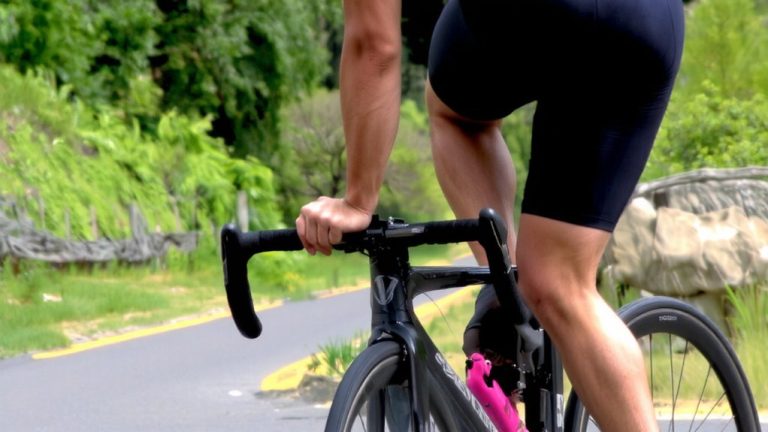
You’ve got this: tweak your form, open up tight hips and ankles, and build quad and glute strength for deeper, pain-free squats. Use supportive footwear with 8–12mm heel lifts if needed, test stability on uneven trails, and carry a lightweight, center-balanced backpack to maintain posture. Cyclists, check saddle height-knee bend at 25–35 degrees at bottom improves clearance. These drills and gear choices add up to real-world comfort, mile after mile.