Adjusting Suspension Settings Based on Terrain Type and Skill Level
Start with the manufacturer’s base clicker settings and set sag to 25–30% of travel under rider load, using preload to fine-tune. For soft terrain, stiffen compression and rebound by 2–4 clicks; in deep sand, add 3–5 clicks to fork compression and shock rebound. Keep rear sag near 34% and front sag around 30–40mm, adjusting spring rates if free sag isn’t 20–30mm. Test every change over consistent laps, comparing feedback to baseline. Proper tire pressure, damping, and sag activate terrain-specific control-your ideal balance is just a few clicks away.
We are supported by our audience. When you purchase through links on our site, we may earn an affiliate commission, at no extra cost for you. Learn more. Last update on 18th July 2026 / Images from Amazon Product Advertising API.
Notable Insights
- Match suspension sag to rider weight and riding style, targeting 25–30% front and 25–40mm rear with rider loaded.
- Adjust spring rates if sag can’t be set properly, ensuring free sag remains 20–30mm for optimal performance.
- Increase compression and rebound damping by 2–4 clicks for soft terrain to prevent bottoming and improve control.
- Tune damping based on terrain: stiffen for deep sand, moderate compression and soften rebound for rocky hardpack.
- Test changes over consistent laps, refine in 1–2 click increments, and document results for skill-level progression.
Start With Proper Suspension Base Settings
You’ll want to start with the manufacturer’s recommended base clicker settings-scribble them down before turning a single knob, so you’ve always got a fallback if things go sideways. Your suspension setup begins with proper sag: aim for 25–30% of total travel, measuring rider sag with you in full gear. Static sag, without your weight, helps confirm spring rate suitability. If preload adjustments are needed to hit that ~34% rear rider sag, make them before tweaking damping. Check tire pressure based on terrain-higher pressure on softer ground prevents bottoming. Match spring rates to your weight to avoid harshness or wallow. Then fine-tune compression damping and rebound damping for control. Every damping adjustment should come after these baseline steps. Properly set, your suspension soaks up trail chatter smoothly, keeps tires tracking, and makes technical climbs and descents way more predictable.
Measure and Set Sag by Weight and Skill
Sag’s the secret sauce for dialing in how your bike handles bumps, corners, and jumps, and getting it right starts with measurements that match your weight and riding style. To set front sag, lift the front wheel, measure exposed fork length (L1), then remeasure with you in full gear (L2 and L3); aim for 25–30% of total suspension travel, or 30–40mm. For rear sag, use a stand to measure axle-to-fixed-point distance (L1), then under load (L2 and L3), targeting 25–40mm or 34% of travel. Adjust suspension using the preload collar-tighten to reduce sag or loosen to increase it. Check free sag (bike weight only); 20–30mm confirms correct spring rate. If sag won’t land in range, your rider weight may need a stiffer or softer spring. Don’t tweak compression and rebound damping yet-get sag and preload right first.
Tune Damping for Your Terrain
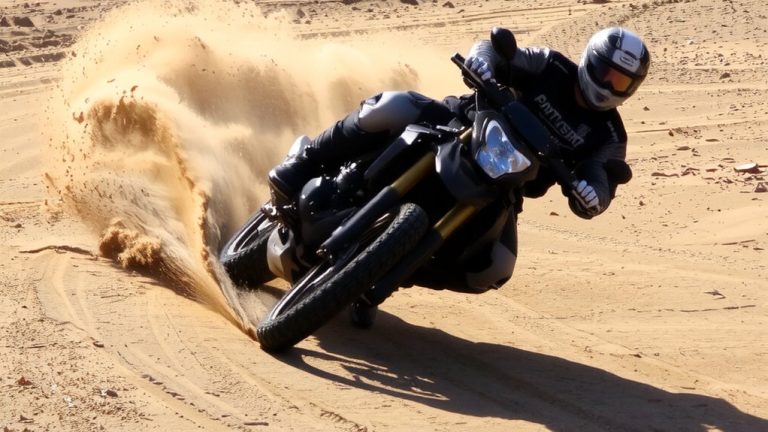
When the trail turns technical or the terrain shifts beneath your tires, dialing in damping becomes just as critical as getting sag right. For soft terrain, increase compression damping and rebound damping by 2–4 clicks to stop wallow and boost control. In deep sand, stiffen damping adjusters-3–5 clicks firmer on both fork compression and shock rebound-to prevent packing and manage slow stroke. Ride hard-packed dirt? Use faster rebound damping to keep your tire grounded, paired with firm compression damping. On rocky, hard terrain, soften shock rebound by 2–3 clicks to improve traction. Always adjust rebound or compression one click at a time, testing over 2–4 laps on that terrain type.
| Terrain Type | Compression Damping | Rebound Damping |
|---|---|---|
| Soft Terrain | +2–4 clicks | +2–4 clicks |
| Deep Sand | +3–5 clicks | +3–5 clicks |
| Hard-Packed Dirt | Firm | Faster |
| Rocky Hardpack | Moderate | -2–3 clicks (softer) |
| Varied Trail | Tune to dominate | Adjust rebound to flow |
Refine Compression and Rebound From Feedback
Because the way your suspension behaves on repeated test sections reveals more than theory ever could, start refining compression and rebound based on direct feedback from the trail-notice if the fork dives hard into corners or the rear shock packs down through consecutive bumps, and adjust compression damping in 1–2 click increments to prevent bottoming without dulling small-bump response, especially on hard-packed runs where you need compliance without sacrificing stability. If the shock kicks sideways on acceleration bumps, soften rear rebound damping in 2-click steps using the rebound adjuster for better traction. On loamy terrain, stiffen low-speed compression and rebound to reduce wallowing and control suspension travel. In deep sand, if you’re not using full stroke, reduce compression via the compression clickers. For hard-packed trails, speed up rebound damping to enhance small-bump compliance while keeping bottom-out resistance.
Test, Compare, and Confirm Your Settings
While you’ve dialed in your compression and rebound based on trail feedback, the real proof’s in consistent, repeatable testing-so hit the same 2–4 lap loop, riding identical lines and hitting the same bumps each time, to truly gauge whether your latest 1–2 click adjustments improved plushness, control, or bottom-out resistance. Use this test to compare current performance against your baseline. Confirm settings by checking if clickers are set within 1–2 clicks of manufacturer specs. Evaluate rebound damping by pushing down on the fork or shock-smooth return means damping’s on point. Check sag and make sure you’re using nearly all suspension travel, just once or twice per lap. Keep a log of each suspension adjustment, including compression, sag, and rider notes. That way, you can confirm what works and fine-tune with confidence.
On a final note
You’ve set sag based on your weight and skill, fine-tuned damping for terrain, and adjusted compression and rebound using real feedback, so your suspension responds precisely, whether you’re on rocky climbs or fast descents. Testers riding Fox 36 forks and RockShox Super Deluxe shocks confirmed 25–30% sag, medium-high compression, and controlled rebound boosted control. Confirm your setup with short trail tests, compare changes, and ride confident-the right tuning makes every trail more manageable, safer, and way more fun.