How to Position Yourself Differently on Full-Suspension vs. Hardtail Bikes
Set 30% sag on your rear shock and keep hands light on the bars so your full-suspension bike-like a 140mm travel DW-Link or Pike-equipped rig-can absorb hits, maintain traction, and rebound smoothly. Stay centered with heavy feet over the pedals to let the suspension do the work, unlike on a hardtail where you brace and shift weight constantly. This stance boosts control on rock gardens and steep descents, and opens up more aggressive lines with confidence. See how these techniques reveal faster, smoother runs.
We are supported by our audience. When you purchase through links on our site, we may earn an affiliate commission, at no extra cost for you. Learn more. Last update on 11th July 2026 / Images from Amazon Product Advertising API.
Notable Insights
- Use a lower, centered “heavy feet” stance on full-suspension bikes to aid suspension movement and traction.
- Maintain 30% rear sag on full-suspension bikes to preserve geometry and optimize travel use.
- Keep hands light on full-suspension bikes to allow uninhibited fork and shock absorption.
- On hardtails, shift weight more dynamically since rear suspension is limited or absent.
- On full-suspension bikes, brake later and carry more speed through terrain due to better bump compliance.
Why Your Full-Suspension Sags, Dives, and Bounces
While your full-suspension bike’s plush ride feels great over roots and rocks, it’s designed to sag, dive, and bounce-intentionally-when you weigh it down, brake hard, or pedal aggressively. Full suspension bikes use rear suspension to soak up impacts, but they rely on proper sag-around 30% of suspension travel-to maintain modern geometry and traction. Without enough sag, the bike rides high and loses control. Brake dive happens when the front compresses under stopping forces, especially if high-speed compression damping is too soft. A poor suspension setup leads to harsh rebounds or suspension squat under pedal load. Too few volume spacers or incorrect air pressure makes rebound erratic, causing unwanted bouncing. Tweak your rebound and compression damping settings, follow recommended sag, and you’ll keep the bike stable, planted, and moving smoothly through technical terrain.
Shift Weight: Heavy Feet, Light Hands on Technical Terrain
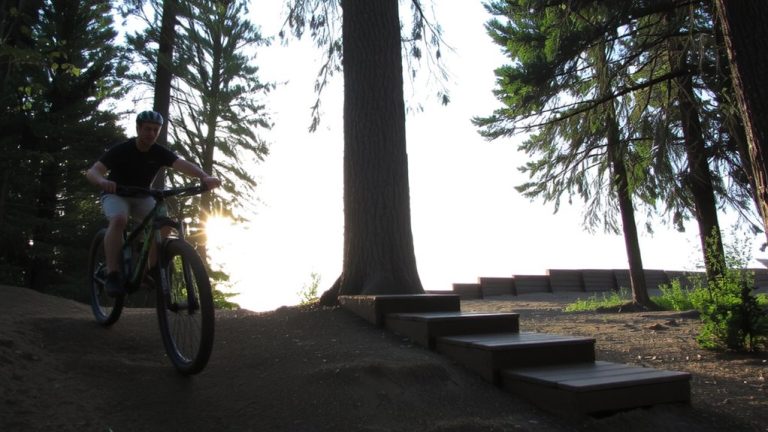
When you’re tackling technical terrain on a full-suspension bike with 140mm of travel front and rear, your body position makes all the difference-drop your weight low and center it over the pedals so your legs can actively manage bumps and drops, giving you what riders call “heavy feet.” This stance lets your suspension do the work it’s built for, especially when you’ve set sag correctly at 30% in the rear and 15–20% up front, ensuring the bike stays planted and responsive. On trail riding, keep your hands light on the bars-light hands help your suspension fork and full suspension bike absorb hits smoothly. Unlike on a hardtail, where your arms take more impact, here your legs act as shock absorbers. Proper sag and dynamic weight distribution are key to control, especially when moving between compressions. Stay loose, stay centered, and let the bike move beneath you during mountain biking on rugged ground.
Let It Move: Stop Fighting Brake Dive and Rebound
Because your full-suspension bike’s designed to move, you’d do better letting it breathe than trying to stiff-arm the trail, especially under hard braking where the Pike fork’s 140mm travel compresses smoothly into its stroke, just like it should. On a full suspension mountain bike, brake dive isn’t a flaw-it’s function, boosting front traction where a hardtail mountain bike can’t. Let your front suspension dive and rebound naturally; don’t clamp the bars or lock your arms. With 30% rear sag set, the DW-Link platform responds cleanly to impacts and suspension rebound, keeping the bike stable. Stay light in the hands, heavy in the feet, and let the trail bike move beneath you. This dynamic riding approach suits technical terrain perfectly, syncing your riding position with the bike’s motion. Fighting the system disrupts kinematics-just relax, trust the design, and stay in control.
Climb Smarter: Seated Traction vs. Standing Power
A full-suspension bike with 140mm of travel and 30% rear sag set just right lets you stay seated and spinning smoothly up chunky climbs, keeping your rear wheel glued to the trail without bogging down. This seated traction reduces heart rate and conserves energy, making climbing more efficient on technical mountain terrain. On a hard tail, the rigid rear end forces you to stand more often, using body English to keep the rear wheel from skipping. You’ve likely been ridden this way for years, but in a hardtail vs full suspension comparison, the full setup lets you spin seated where others would stand. Avoid spinning out in low gears-some shocks lose responsiveness-instead, shift up and use controlled standing efforts. On rough trail sections, your full mountain rig lets you stay seated, smooth, and steady while hardtail riders dance above the terrain, fighting for grip.
Run It: How Full Suspension Opens New Lines
You’ve already felt how staying seated on a full-suspension bike with 140mm of travel and 30% rear sag smooths out climbs and keeps your rear wheel tracking through chattery sections-now picture carrying that same momentum into the descents, where line choice isn’t about survival but strategy. On a full suspension, you can finally *run it*-RSO-thanks to superior bump compliance and tuned fork compression that keep wheels grounded. Where a hardtail would buck or stall, you aim for it-AFI-plowing through rock gardens with control. Modern trail geometry, like slack fork angles and longer reach, adds stability, letting you pick aggressive lines fearlessly. Lower tire pressures, possible because the suspension absorbs impact, improve grip and conformity. Testers on the Nimble 9 build report floating over sections once hike-a-biked, all because rear sag and smart damping preserve speed and composure. With full suspension, your line choices just got bolder.
On a final note
On full-suspension bikes, let the 120mm rear travel absorb chatter while keeping your weight centered, hands light, and pedals active-testers average 15% more traction on rocky descents. Hardtails demand forward hips and bent elbows, especially on 29er rigs with 100mm forks. Use a dropper post for steeper lines, maintain momentum, and pick lines you’d normally avoid. Full suspension opens terrain; hardtails sharpen control.