How to Recognize and Treat Anaphylaxis in a Remote Riding Area
You’re on a remote trail, so watch for sudden hives, itching, or a lump in your throat-early signs of anaphylaxis. Use your epinephrine auto-injector (0.3 mg adult, 0.15 mg child) in the mid-outer thigh, hold 3 seconds, even if expired. Repeat every 5 minutes if symptoms worsen. Carry two injectors, like in a Adventure Medical Kits Ultra 400, and pack a portable O2 unit. Keep the person flat, legs up, and monitor critical signs during evacuation-biphasic reactions can strike hours later.
We are supported by our audience. When you purchase through links on our site, we may earn an affiliate commission, at no extra cost for you. Learn more. Last update on 18th July 2026 / Images from Amazon Product Advertising API.
Notable Insights
- Recognize early signs like generalized itching, hives, throat tightness, or dizziness during rides.
- Administer epinephrine immediately at first sign of systemic reaction using an auto-injector.
- Inject into the mid-outer thigh and hold for 3 seconds for rapid absorption.
- Repeat epinephrine every 5 minutes if symptoms worsen or don’t improve.
- Keep the person supine with legs elevated, prevent hypothermia, and monitor for biphasic reactions.
Recognize Anaphylaxis: Early Signs While Riding
While you’re miles from the nearest trailhead and a sudden itch spreads across your arms, don’t brush it off-over 80% of anaphylactic reactions start with generalized itching, hives, or skin redness, and on a ride, that could be your first warning. These early signs, often triggered by food, insect stings, or medications, signal the start of a system reaction. You might feel a lump in your throat, dizziness, or even a sense of impending doom-key clinical manifestations of anaphylaxis. Wheezing, present in up to 70% of respiratory-related cases, or stridor means airway compromise. Even mild symptoms demand action: outdoor instructors or guides are trained to recognize anaphylaxis quickly. According to the Wilderness Medical Society, early recognition saves lives. Don’t wait for full-blown symptoms. If you notice flushing, swelling, or abdominal cramps post-exposure, treat it as an anaphylactic reaction. You’ve got minutes, not hours.
Give Epinephrine Immediately: Using Auto-Injectors Correctly
You spot the hives spreading, feel that tightness in your throat, and know something’s off-this is the moment to act, not wait. Epinephrine is the primary treatment for anaphylaxis, and you must administer epinephrine immediately at the first sign of a systemic reaction. Using an epinephrine auto-injector is the most reliable method to administer epinephrine, especially in the field where every second counts. Even nonmedical professionals whose duties include providing first aid can be trained to administer epinephrine safely and effectively.
| User Group | Dose (mg) |
|---|---|
| Adults | 0.3 |
| Children (<25 kg) | 0.15 |
Inject into the mid-outer thigh and hold for 3 seconds. This method guarantees rapid absorption and is essential during anaphylactic reactions. Epinephrine in the field can be a lifesaver-even expired devices may retain potency.
Repeat Doses: Managing Worsening Symptoms Every 5 Minutes
If symptoms keep getting worse or don’t start to improve after the first injection, you’ll need to give another dose of epinephrine every 5 minutes-yes, that means repeating the 0.3 mg shot for adults or the 0.01 mg/kg dose for kids under 25 kg, just like before. This repeated dosing is critical during anaphylactic reactions, especially in a remote wilderness setting where emergency medical care could be hours away. Biphasic reaction risks-where symptoms return after initial improvement-affect up to 20% of cases, making sustained first aid essential. Always carry at least two epinephrine auto-injectors on long trails or bike routes. Even expired epinephrine can be effective in treatment if fresh doses aren’t available. In the backcountry, repeated doses may be lifesaving, particularly during a 4-hour evacuation. Your preparedness with proper gear and medication could mean the difference between survival and tragedy.
Support Breathing and Circulation After Epinephrine
Because breathing and circulation can remain unstable even after epinephrine, staying alert to airway changes and shock signs is essential-especially when you’re miles from help on a remote trail or gravel road. You must watch for respiratory failure, like stridor or wheezing, which signals dangerous bronchospasm during anaphylaxis. If the person has tachycardia or low blood pressure, keep them supine with legs elevated-this simple first aid step supports circulation. Use supplemental oxygen if you’ve got a portable travel O2 unit; it helps counter hypoxia fast. Even if symptoms improve after epinephrine, monitor closely for 4 to 6 hours-biphasic reactions occur in up to 20% of cases. Don’t rely on albuterol inhalers alone; they’re helpful for lingering bronchospasm but don’t replace epinephrine. Your backcountry first aid kit should include oxygen, an epinephrine auto-injector, and a resuscitation mask.
Keep the Person Stable for Evacuation
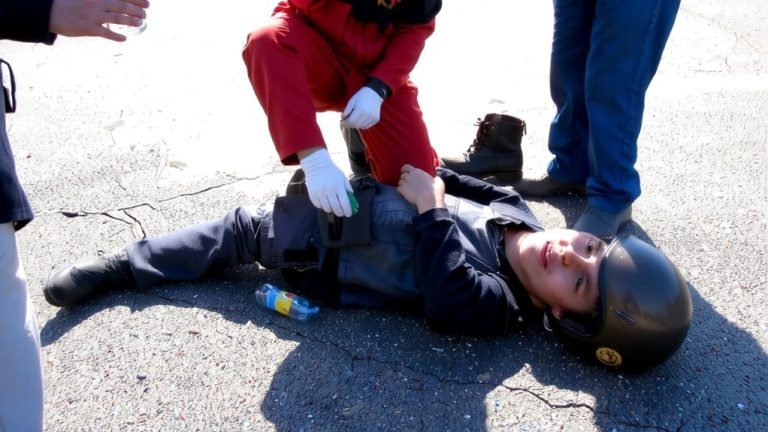
Even when epinephrine stops the worst of the symptoms, keeping the person stable during evacuation means managing both position and environment with precision-lay them flat with legs up about 12 inches unless they’re struggling to breathe, then let them sit upright to ease lung expansion, especially on narrow mountain trails where rescue litters might take over an hour to arrive. In remote settings, maintain this first aid focus: monitor essential signs every 5 minutes, since biphasic reactions occur in 16–20% of anaphylaxis cases. If needed, give more epinephrine every 5–15 minutes. Prevent hypothermia with a lightweight emergency blanket or insulated bivy, essential in cool alpine zones. Always prepare for prolonged observation-stay put at least 8–12 hours post-reaction. On backcountry rides, carry a compact trauma pad for the flat position and a weather-resistant watch to track intervals.
Prevent Biphasic Reactions: What to Watch for Hours Later
While the adrenaline rush of a trail descent or long-distance bike tour pushes you forward, don’t let the urgency of evacuation blind you to the quiet danger of biphasic anaphylaxis, which can relapse hours later-up to 20% of cases see symptoms return without further allergen exposure, usually within 8 to 12 hours and sometimes as late as 24. You’re at higher risk if there was delayed administration of epinephrine, especially beyond 30 minutes, or if initial symptoms included respiratory compromise or hypotension-key risk factors. In remote settings, monitoring for reactions is critical for at least 24 hours. Anaphylaxis recurrence may require repeat epinephrine dosing; up to 16% of cases need a second dose of epinephrine. Carry two auto-injectors, like the EpiPen 0.3mg, and stay alert even after stabilization-your safety depends on it.
On a final note
You’re prepared if it hits fast-carry an epinephrine auto-injector like the EpiPen 0.3mg, pack it in a waterproof case, and know the signs: swelling, wheezing, dizziness. Use it immediately, repeat every 5 minutes if needed, then call for help. Keep the rider flat, pack warm, stabilize for evacuation. Monitor for biphasic reactions up to 72 hours-always bring backup meds, a first-aid kit, and a whistle-equipped helmet for signaling. Ride ready, ride safe.