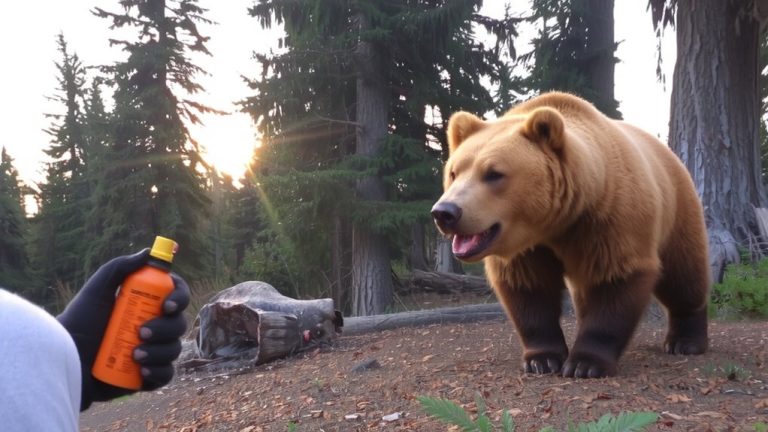
What to Do If You Encounter an Aggressive Wildlife Animal on the Trail
Stay calm and keep 25–50 yards from aggressive wildlife-use your trekking poles to steady yourself while backing away slowly. Raise your arms or open your jacket to appear 20–30 inches taller, speak firmly, and maintain eye contact, especially with mountain lions. Deploy bear spray from your belt when a grizzly is within 30 feet, aiming slightly down in short bursts. Never run-stay upright, protect your head if needed, and respond based on species. The right gear and response make all the difference. More specifics on animal-specific strategies follow.
We are supported by our audience. When you purchase through links on our site, we may earn an affiliate commission, at no extra cost for you. Learn more. Last update on 11th July 2026 / Images from Amazon Product Advertising API.
Notable Insights
- Stay calm and avoid sudden movements to prevent triggering a predator’s chase instinct.
- Maintain safe distances: 25 yards from bison, 50 from elk or moose, and 3 feet from snakes.
- Appear larger by raising arms or opening your jacket, and speak firmly in a deep voice.
- Use bear spray when an aggressive bear is within 30 feet, aiming slightly downward for a cloud barrier.
- Never run or turn your back; slowly back away while facing the animal and maintaining eye contact.
Stay Calm and Keep Your Distance
If you suddenly come face-to-face with a wild animal on the trail, the first thing you should do is stay calm-panicking or making sudden movements can trigger a predator’s chase instinct, especially with mountain lions or bears. You need to keep your distance and maintain distance at all times: stay at least 25 yards from bison, 50 from elk or moose, and 3 feet from snakes. Back away slowly while you face the animal, never run, and avoid sudden movements that could provoke aggressive wildlife. Stand your ground if it approaches, but don’t challenge it. Keep your trekking poles stashed and backpack secure so you stay balanced. Most hikers who follow these steps report feeling more in control, even when startled. Remember, your goal isn’t to escape quickly-it’s to disengage safely, calmly, and on your terms, giving the animal space to retreat.
Appear Larger and Speak Firmly
You’ve stayed calm and kept your distance, now it’s time to make your presence known-wild animals like mountain lions, coyotes, or even a defensive bobcat aren’t looking for a fight, but they need to see you as a threat, not prey. Stand tall, raise your arms, or open your jacket to appear larger, creating a broader silhouette that deters close approaches. Wave trekking poles or sticks above your head, boosting your profile by 20–30 inches. Speak firmly and shout loudly using deep, assertive tones-don’t scream, but project confidence. Clap your hands sharply to add noise and motion. Maintain eye contact with cougars, signaling you won’t back down. If with others, group together, forming a single, larger shape that intimidates curious elk or coyotes. These quick actions, combined with gear like extendable poles or a roomy rain shell, help you appear dominant, clear, and in control-exactly what wildlife respects.
Adjust Your Response for the Animal
While staying alert on the trail means preparing for the unexpected, knowing how to adjust your response based on the animal you’re facing can make all the difference-because not every wild encounter calls for the same strategy. If a black bear approaches, make noise, stand tall, and fight back if attacked-never play dead. With a grizzly, avoid eye contact, speak softly, and if charged, play dead by lying flat with hands behind your neck. For a mountain lion, maintain eye contact, make yourself big, and fight back fiercely if it attacks. When a moose charges, run and stay a safe distance behind a tree or rock; if knocked down, curl up and protect your head. Each animal demands a different reaction-understanding these differences keeps you safer on remote trails.
Deploy Bear Spray During a Charge
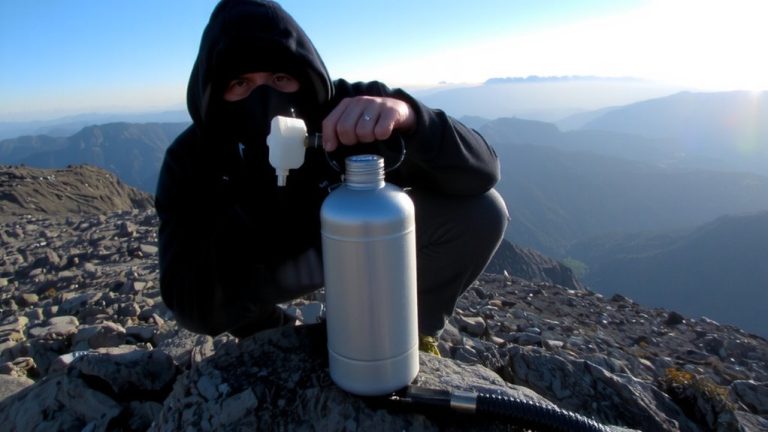
Bear spray is your best line of defense when a grizzly bear charges, and having it ready can make all the difference in a split-second situation. Keep your bear spray accessible on your belt or pack strap, never buried in your backpack. When a grizzly bear charges and gets within 30 feet, deploy bear spray immediately. Aim slightly downward to create a dense cloud barrier the aggressive animal must run through. Use short bursts of 1–2 seconds to maximize coverage and conserve spray. According to the Journal of Wildlife Management, bear spray is 92% effective at stopping aggressive behavior, outperforming firearms in close-range encounters. Real-world testers confirm it reduces injury rates markedly. Properly deployed, bear spray creates a wide fog that deters a charging bear without causing permanent harm, making it the most reliable, non-lethal defense on trails.
Never Run or Turn Your Back
If you come face to face with an aggressive animal on the trail, staying calm and standing your ground is critical-running can trigger a predator’s instinct to chase, turning you from a neutral hiker into perceived prey. Never run, as fleeing may provoke a chase instinct in animals like mountain lions, which clock speeds up to 30 mph. Turn your back, and you risk signaling vulnerability to grizzly bears or coyotes, increasing chances of a predatory response. Instead, stand your ground, maintain eye contact, and slowly back away. This applies to moose too, which can sprint 35 mph despite their bulk.
| Animal | Speed | Risk if You Flee |
|---|---|---|
| Mountain lion | 30 mph | Triggers chase instinct |
| Grizzly bear | 35 mph | Seen as threat or prey |
| Coyote | 40 mph | Predatory response |
| Moose | 35 mph | Provokes charge |
Always face aggressive wildlife-never turn your back-and stand your ground.
On a final note
Stay sharp, stand your ground, and keep bear spray-like the UDAP Bear Spray (10.6 oz, 27 feet range)-ready on your hip. Keep trekking poles close for balance and defense. Wear bright clothing for visibility, and pack essentials in a ventilated, 30L backpack with a sternum strap. Trails demand respect: test your gear, know the terrain, and always hike with a buddy. You’ve got the right tools, the right moves, and the confidence to react fast, stay safe, and keep exploring.