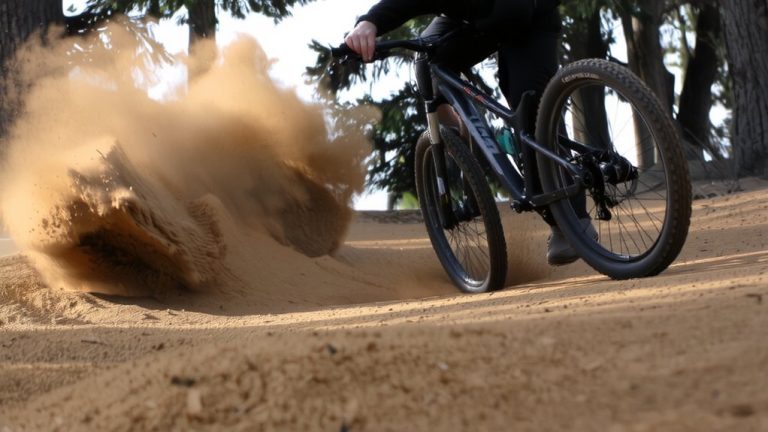
Tight Switchback Turns: Line Choice & Braking Tips (MTB)
You nail tight switchbacks by entering wide-aim at least 10 meters out-to open the radius and maintain momentum, braking fully 10–15 meters before the turn to avoid skidding on loose gravel. Lean the bike while keeping your body upright, press down on the outside pedal (dropped, heel low), and center your weight over the bottom bracket. Keep your eyes focused 60–100 feet ahead, scanning apex to exit, so your line feels natural and smooth; practicing on grass with spaced cones builds real trail confidence fast.
We are supported by our audience. When you purchase through links on our site, we may earn an affiliate commission, at no extra cost for you. Learn more. Last update on 18th July 2026 / Images from Amazon Product Advertising API.
Notable Insights
- Enter wide to increase turn radius and create a smoother, more manageable arc through the switchback.
- Brake completely before the turn to maintain traction and avoid skidding on loose surfaces.
- Lean the bike while keeping your body upright to maximize tire grip and balance on technical terrain.
- Look 60–100 feet ahead, focusing on the exit to naturally guide your line and maintain momentum.
- Practice daily with drills using cones to build muscle memory, vision habits, and trail confidence.
Pick the Right Switchback Entry Line
While it might be tempting to follow the beaten path, you’ll want to start setting up for a switchback at least 10 meters out if you’re going to carry any momentum through the turn. When approaching a switchback, aim your line as wide as possible-especially on tight switchbacks-to open up the turning radius. For a left-hand bend, that means hugging the far right edge, even using sidehill terrain if needed. This early line choice lets you create a smoother 180-degree arc, reducing skid risk and boosting exit speed. Avoid the worn “people’s line” if it cuts too tight; it forces abrupt stops and weak body position. Instead, focus on looking ahead 60–100 feet, identifying your turning point early. A wide entry line improves flow, keeps your weight balanced, and pairs perfectly with aggressive trail tires like Maxxis Minion DHF 2.5” for grip.
Brake Before You Enter the Turn
Because you’ll want both wheels gripping firmly through the turn, get your braking done early-ideally 10 to 15 meters before the switchback entry-so you can coast in with control and confidence. Use your braking setup to handle all necessary deceleration early, avoiding last-second grabs of the front brake mid-corner. Keep your weight back and heels down as you slow, maintaining traction and balance on steep or loose terrain. Brake before the turn to prevent traction loss, especially on dusty, gravelly surfaces where tight corners increase skid risk. Smooth deceleration lets you roll through the apex without pedal drag or speed wobbles. Data from BetterRide camps shows riders who brake early save up to six minutes on technical descents. By locking in speed early, you enable a wider line, boosting exit speed by up to 20%. Keep your focus ahead-no braking in the turn.
Lean the Bike, Not Your Body
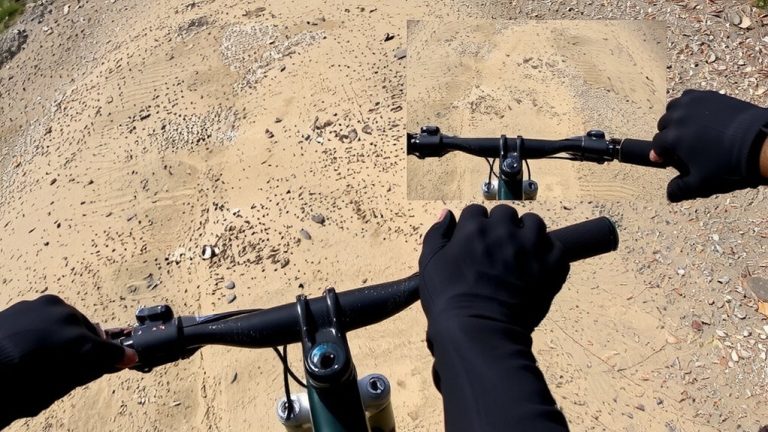
You’ve nailed your braking point-now it’s time to carry that control into the turn by leaning the bike, not your body. In tight switchbacks, tipping the bike while keeping your body upright maintains traction and control. Keep your body weight centered over the bottom bracket so the bike can tilt beneath you, letting you carve a tighter line without losing balance. Press down on the outside foot with the pedal dropped and heel low-this stabilizes the bike during the lean, especially on loose 20-degree descents. Use your arms to initiate the lean early, but don’t overcommit until you’ve checked the terrain. Keep your chin over the stem so the front wheel stays planted and responsive. Lean the bike, not your body, and you’ll rail corners on rocky trails with confidence, maintaining grip and precision where it matters most.
Look Through the Turn to the Exit
Where should your eyes be when the trail throws a tight, rocky switchback your way? Look through the turn to the exit, scanning 60–100 feet ahead for smarter line selection and cleaner execution. As you approach, focus on the apex, then shift your gaze to the exit during corner entry-this visual targeting keeps your momentum steady and your line precise. Avoid staring at the front wheel or immediate terrain; doing so disrupts balance and invites sketchy steering on technical switchbacks. Proper vision guides your body and bike naturally along the intended path, especially on steep, rocky descents where precision matters. Riders who consistently look through the turn report smoother movements, faster exit speeds, and greater confidence, just like those in BetterRide camps. Keep your eyes up, trust your line, and let your vision pull you smoothly through.
Drill Your Line and Vision Daily
When you treat every turn like a repeatable skill, not a one-off challenge, you start building the consistency that smooths out even the rockiest descents. Set up cones on flat grass to drill switchbacks, spacing them 10+ meters from the entry so you can practice approach and line selection. Use a wide entry line to create a smooth arc, just like on real trails, reducing perceived tightness. Focus your vision 5+ meters ahead, scanning through the apex and exit to condition smart habits. This daily drill sharpens both line and vision, training your brain to lead with your eyes and commit early. Riders who practiced 20 minutes twice weekly after the Neshaminy clinic saw better flow and control. Consistent practice means your body knows the move before you even see the turn-critical for technical terrain, proper gear fit, and sustained trail confidence.
On a final note
You’ve got this: pick your line early, brake before the turn, and lean the bike-keep your body upright. Look where you’re going, not at the dirt right in front of you. Practice daily on trails like Phil’s Trail or the Moab Slickrock. Wear a Fox Defend jersey with D3O armor, pack a 12L Osprey Raptor with hydration, and ride flat pedals for better control, 170mm cranks reduce drag. It all adds up to faster, smoother switchbacks.