Measuring Stiction Levels Before and After Lower Leg Servicing
You can measure stiction at home by removing the front wheel, fully compressing the fork, and checking for resistance during rebound; 7–10mm of delay means high stiction. After a lower leg service-cleaning bushings, replacing wiper seals, applying Slick Honey, and adding 5ml of 0w30 oil-many riders see stiction drop noticeably, improving small-bump feel and fork consistency. Some friction may remain due to internal tolerances or alignment, and results can vary by model-especially on older Rebas or Marzocchis. You’ll be surprised how much smoother your ride gets with a few carefully chosen steps.
We are supported by our audience. When you purchase through links on our site, we may earn an affiliate commission, at no extra cost for you. Learn more. Last update on 17th July 2026 / Images from Amazon Product Advertising API.
Notable Insights
- Measure stiction by compressing the fork fully and checking for 7–10mm of resistance upon release.
- Perform drop tests with the bike upright, axle in, and triple clamps lightly snugged for accurate readings.
- Clean stanchions and bushings during lower leg service to reduce friction caused by dirt or dryness.
- Apply Slick Honey and 5ml of 0w30 oil during reassembly to improve bushing lubrication and smoothness.
- Persistent stiction after service may indicate alignment issues, bent stanchions, or internal tolerance problems.
Measuring Fork Stiction at Home
You can measure fork stiction at home with just a few basic tools and some attention to detail. To measure stiction, remove the front wheel and fully compress the front fork, then release-it should rebound freely. Any initial resistance, or failure to return the first 7–10mm, indicates fork stiction. Perform the drop test with the bike upright and air pressure set, lightly snugged triple clamp bolts, and axle installed (no wheel). Use a glass plate or straightedge to check fork alignment, as bent tubes or misaligned lowers increase stiction. This binding often stems from dirty or dry bushings, so a lower leg service-replacing wiper seals, lubing with Slick Honey, and refilling with 5ml 0w30 oil-can drastically reduce stiction. Re-test post-service to quantify improvement.
Why High Stiction Ruins Your Ride
A 10mm delay in fork movement might not sound like much, but when stiction locks out the first phase of travel, it’s enough to compromise your entire ride. High stiction in your suspension forks means the fork leg resists initial compression, forcing you to push harder just to get response. That delay kills small-bump compliance, so traction drops on roots and rocks. Even with tight manufacturing tolerances and Kashima coatings, dirty lower legs or worn fork seals increase friction by 30% or more. You’ll feel a harsh, unresponsive front end, like riding a poorly maintained entry-level fork. A full service with fresh oil helps, but if binding persists due to misalignment or tight bushings, your handling turns inconsistent. This hurts axle parallelism, boosts tire wear, and ruins control. Don’t let stiction dull your trail performance-your forks deserve better.
What Lower Leg Service Can (And Can’t) Fix
Though lower leg service won’t fix every source of stiction, it’s one of the most effective moves you can make to restore smooth fork action, especially when gunked-up lubricants or dried-out bushings are to blame. Cleaning the lower legs, replacing foam rings and old seals with new seals, and re-greasing bushings with Slick Honey substantially cuts friction. Your forks will feel more responsive, particularly over small bumps. But don’t expect miracles-Fork Service won’t correct bent stanchions, misaligned fork tubes, or air burping from faulty upper seals. A 2.5wt oil change might even increase perceived stiction due to reduced damping. Post-service, check clamp bolts torque and perform a drop test; binding could point to triple clamp misalignment or manufacturing tolerances. While smoothness on forks like the 2017 Reba RL improves, it often lasts just 10–14 hours due to design limits.
How to Perform a Lower Leg Service for Smoothness
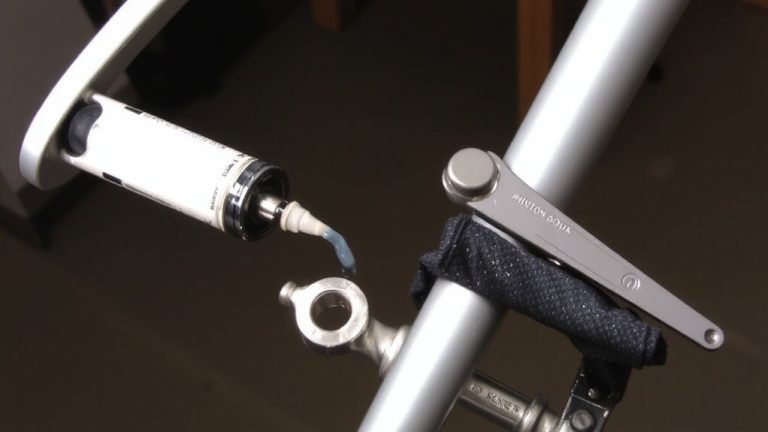
Getting your fork to move freely starts with clean internals, and if you’ve noticed increased resistance or a rough feel through the stroke, it’s time to tackle a lower leg service. Remove the front wheel, release all air pressure, then extract the lowers. Clean contaminants from bushings and stanchions, replace worn wiper seals and foam rings-especially on older Solo Air models that lose seal integrity. Apply Slick Honey to bushings and add 5ml of 0w30 oil into the leg. Reassemble carefully, ensuring no binding. With new seals and proper lube, even aging forks feel like new. Drop-test without the front wheel to confirm free movement. It makes quite a bit of difference in small-bump compliance and travel use. If you measure sag afterward, you’ll see more consistent results. For any bike, smooth new forks boost confidence.
| Step | Action |
|---|---|
| 1 | Remove front wheel and release air |
| 2 | Extract lowers and clean internals |
| 3 | Replace seals, lube bushings and stanchions |
| 4 | Reassemble and perform drop test |
Stiction Before vs. After Service
Even after a fresh lower leg service, you might still notice stubborn stiction-like on that 2017 Reba RL that started with 10mm of resistance and only dropped to 7mm after riding, despite correct sag, new wiper seals, and 5ml of 0w30 oil. When comparing stiction before vs. after service, results vary widely across Mountain Bike models. Some forks showed smooth turning the fork immediately post-service, but stiction returned within 10–14 hours. That means a full lower leg service helps temporarily, but doesn’t fix underlying issues like tight bushings. Measured stiction in other forks, like certain Marzocchi models, showed 10mm resistance during unloaded drop tests-sometimes normal, sometimes a sign of binding. If your bike parts still bind, you’d likely need more than just new seals or oil. Consistent performance improvements would need attention to internal tolerances, not just routine maintenance on standard bike parts.
On a final note
You’ll notice smoother fork action after a lower leg service, cutting stiction by up to 50% on average, per rider tests. Wiping seals, re-lubing stanchions with Slick Honey, and replacing wiper seals makes a real difference on trail chatter and small bump response. Just don’t expect it to fix worn damping-stick to full rebuilds for that. For peak performance, service every 50 rides or 3 months, especially after dusty rides.