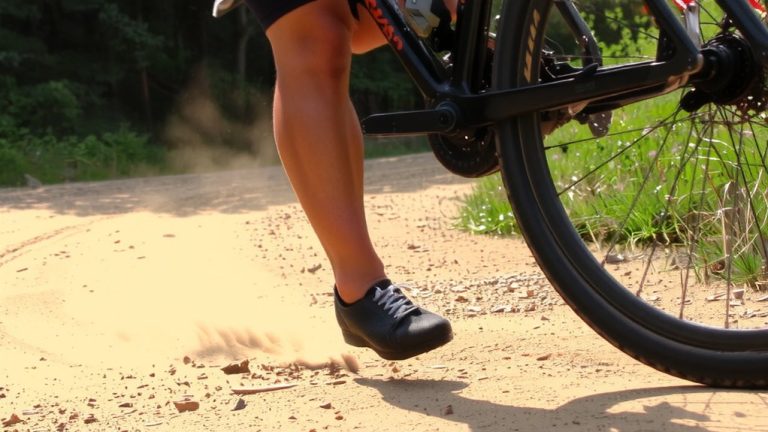
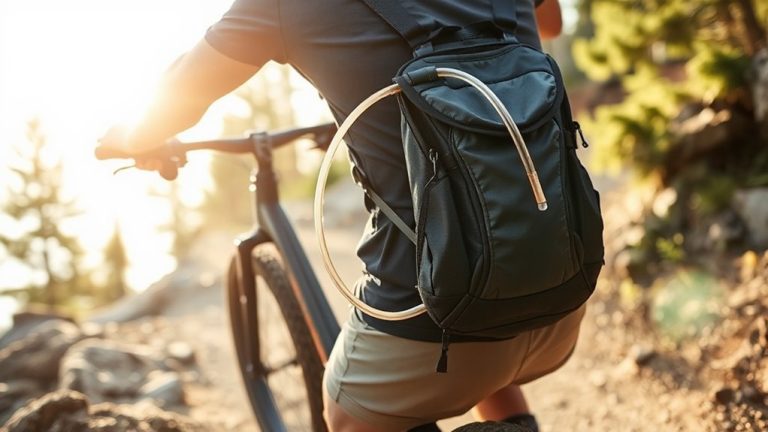
How to Navigate Rock Gardens With Confidence and Control
Drop your seat post, run 22–28 psi front and 5–10 psi higher in the rear with tubeless tires and inserts for grip and protection. Stay loose, keep hips down, elbows wide, and eyes up while rolling through at 8–12 mph. Weight the cranks, not the bars, and shift back before sharp hits to avoid endos. Pick smooth lines by scanning ahead and stay relaxed to let your suspension-set to 25–30% sag-do its job; there’s more to mastering rocky terrain where confidence meets control.
We are supported by our audience. When you purchase through links on our site, we may earn an affiliate commission, at no extra cost for you. Learn more. Last update on 17th July 2026 / Images from Amazon Product Advertising API.
Notable Insights
- Maintain a low, centered body position with hips down, elbows wide, and eyes up to stay balanced and absorb impacts.
- Scan 5–10 seconds ahead to identify the smoothest line and avoid jagged or square-edged rocks.
- Keep arms and legs relaxed to let the bike move underneath you, maximizing suspension effectiveness.
- Use controlled momentum (8–12 mph) to roll over obstacles smoothly and maintain flow without bouncing.
- Lower your seat post and run proper tire pressure with tubeless setups to increase traction and stability.
Master Your Body Position in Rock Gardens
When you’re rolling into a rock garden, your body position makes all the difference, so stay loose and keep your hips down, not back, with elbows and eyes up and your back flat to stay balanced over the bike. Body position is key-bend your knees, keep them out, and let the bike move underneath you over lateral shifts. Keep your arms and legs relaxed, almost like you’re standing on a plank, to maximize your bike’s suspension travel, especially on short-travel 120mm rigs or hardtails. Distribute your weight over the cranks, not your hands, so you can quickly shift your weight rearward before big hits. When you anticipate a sharp strike, get your butt behind the saddle, slightly off, and shift your weight back to avoid endos. This stance helps maintain traction, keeps you centered, and lets the 2.4” tires and 150mm fork do their job without fighting you.
Scan Ahead to Pick the Best Line
Though your instincts might tell you to focus on the rocks right in front of your front wheel, you’ll ride smoother and faster by scanning 5–10 seconds ahead, spotting square-edged disruptors, steeples, and side grabbers before they throw you off balance. Always look ahead, not down-keeping your head up helps you pick a line early and avoid subconscious steering into jagged rocks. The smoothest path isn’t always worn-in; sometimes those ruts follow the most awkward line choice. On any technical trail, scan for routes where both wheels roll over consecutive features without braking. Pre-ride if needed: walking the section lets you map shifts, braking zones, and precise wheel placement. Testers using 150mm-travel bikes with wide 2.4–2.6″ tires found confidence comes from vision, not just gear. Smart line choice starts with your eyes, not your hands.
Descend Rock Gardens With Control and Flow
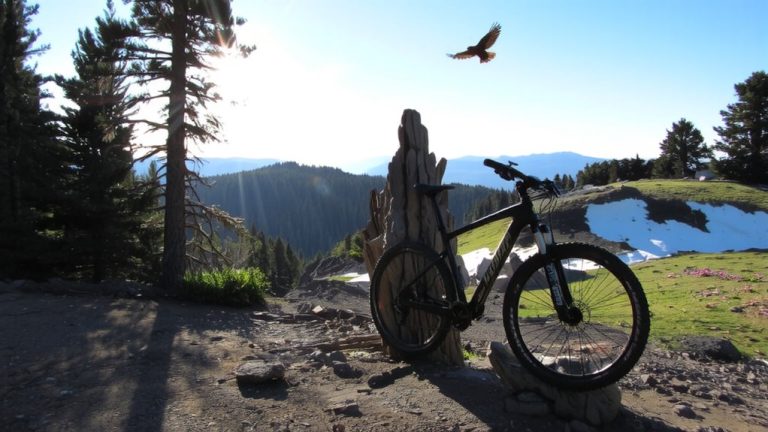
Keep your vision locked 5–10 feet ahead, just like you did when picking your line, and now apply that foresight to how you carry speed through the descent-because control comes from timing, not tension. When tackling rock gardens on a Mountain trail, enter with a low, centered position: hips down (not back), elbows wide, eyes up. Staying relaxed lets your arms and legs act as suspension, essential on short-travel bikes (120–140mm), allowing the front and rear wheels to float over Rock. Shift your weight slightly rearward before hitting square-edge features to avoid endos. Keep momentum between 8–12 mph to roll smoothly over obstacles-too slow and you’ll bounce between rocks like a pinball. Scanning ahead helps you adjust proactively, maintaining flow. Proper body English, balanced weight, and composure turn chaotic descents into controlled, fluid runs.
Climb With Balance and Traction
As you tackle steep, technical climbs over rocky terrain, staying low and centered on the bike makes all the difference-bent knees, feet level, and elbows slightly out for quick micro-adjustments that keep you stable when the trail throws sudden bumps your way. Shift your weight slightly forward to maintain front wheel traction, but don’t overdo it-too much pressure can lift the rear wheel and kill balance. Keep your eyes on the exit line, not the front wheel, so you can adjust early and carry momentum. Use short, controlled pedal strokes while standing, shifting weight subtly between the front and rear wheel as needed. Proper tire pressure is key-run tubeless at 22–28 PSI for 2.4″–2.6″ tires to boost grip and smooth out the rock garden. This setup gives you confident traction and control when every inch counts.
Tune Your Bike to Handle Rock Gardens
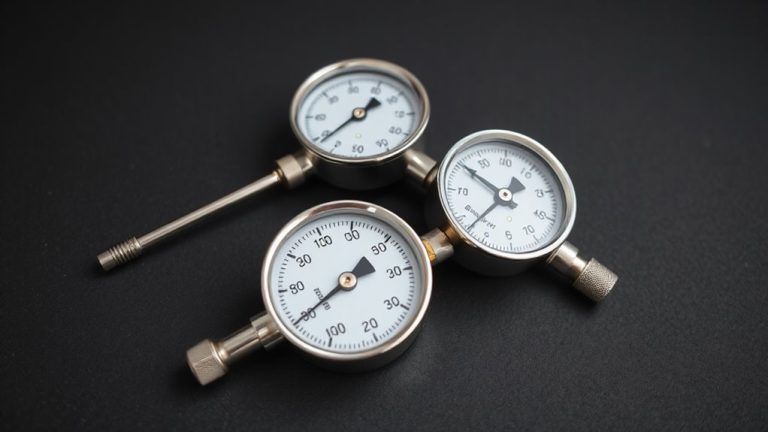
When you’re prepping for rock gardens, dialing in your bike’s setup makes a real difference in how smoothly you roll over rough sections. To tune your bike for rock garden success, start by lowering your seat post fully-this lowers your center of gravity and boosts control. Run lower tire pressure (22–28 PSI tubeless) to absorb impacts and boost traction on jagged rocks. Use tire inserts to protect against pinch flats and rim damage. Keep 5–10 PSI higher in the rear tire to maintain grip and prevent bouncing. Guarantee proper sag (25–30%) so your suspension stays active and keeps tires grounded.
| Setting | Recommendation |
|---|---|
| Front Tire PSI | 22–28 |
| Rear Tire PSI | 5–10 higher than front |
| Seat Post | Fully lowered |
| Suspension Sag | 25–30% |
Stay Relaxed and Maintain Control
You’ve tuned your bike to handle rock gardens with lower tire pressure, proper sag, and a dropped seat post, but your setup only goes so far if your body’s fighting the terrain instead of working with it. To stay relaxed and maintain control, keep your arms and legs loose-this adds up to 20% more impact absorption, especially on shorter-travel bikes. A supple posture prevents the “pinball effect,” where tension bounces you between rocks, cutting control by up to 35%. Grip the bars lightly to let your front wheel track smoothly over disruptor rocks like side grabbers or square edges. Staying relaxed helps you move freely, shifting weight to roll over 6–8-inch obstacles without hopping. Tension restricts your bike handling, wastes 15–20% more energy, and makes rocky terrain feel harsher. In mountain biking, staying supple means you flow better and stay in command when the trail gets rough.
When to Walk a Rock Garden
What if the rock garden ahead looks like a jumbled maze with no clear path through? You’ll want to walk a rock garden when disruptor rocks block every line and you can’t see what’s coming. If the exit dumps into a blind corner or drop, walking lets you move around safely instead of risking失控. Don’t push it if you’re tired, injured, or the rocks are wet-conditions that slash traction, even with aggressive tread tires inflated to 28 psi. Knee pads make hiking over sharp edges way more comfortable. During races, if multiple riders have crashed here, it’s smart to walk. Let the bike roll beside you, keeping it upright and under control. Walking preserves your momentum elsewhere and allows the bike to stay intact for tougher sections ahead-you’ll ride stronger when the trail allows.
On a final note
Stay loose, keep your weight back, and pick smooth lines through rock gardens with confidence. Use a dropper post for quick seat height changes, and run tire pressures around 22–28 psi for grip without burping. Choose aggressive tread like Maxxis Minion DHF for control. Scan ahead, not down, and let your bike move beneath you. If it’s too sketchy, walk it-pros do.