How to Monitor Your Breathing Rate During Strenuous Climbs
Count your breaths for 30 seconds and multiply by two to get your breathing rate in BPM-this real-time metric tracks effort better than heart rate during climbs. At 25–30 BPM, you’re in a sustainable zone; near 45 BPM, you’re approaching your Critical Power, like elite climbers. Pair this with RPE: 55 BPM means max effort. Use a chest strap for precise tracking, or go low-tech with timed counts. You’ll learn how staying below key thresholds improves stamina and focus on long routes.
We are supported by our audience. When you purchase through links on our site, we may earn an affiliate commission, at no extra cost for you. Learn more. Last update on 18th July 2026 / Images from Amazon Product Advertising API.
Notable Insights
- Count your breaths over 30 seconds and multiply by two to get breaths per minute during climbs.
- Use breathing rate zones: 25–30 BPM for moderate effort, 45 BPM for near-maximal intensity.
- Pair breathing rate with RPE to accurately gauge effort and avoid exceeding critical thresholds.
- Observe breathlessness onset; 55 BPM typically signals maximal effort and respiratory compensation.
- Monitor breathing rhythm visually or with wearables to track efficiency without lab equipment.
Count Your Breaths: A 30-Second Test for Climbing Intensity
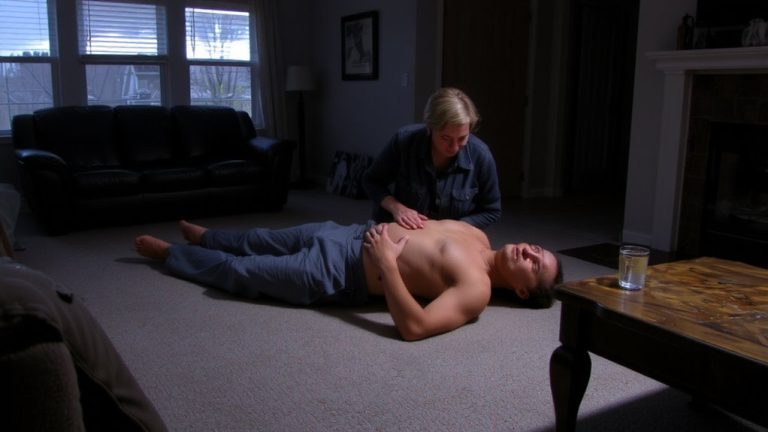
Why not check your breathing mid-climb to gauge how hard you’re really going? Try the 30-second test: count your breaths and multiply by two to get your breathing rate in breaths per minute (BPM). This simple check reveals climbing intensity and links directly to metabolic markers like Critical Power and Respiratory Compensation Point. Near Critical Power, breaths hit ~45 BPM (80–85% of max), while RCP starts around 55 BPM (~95–100%), signaling severe strain. Elite climbers like Adam Ondra hit just 14 BPM on moderate routes-efficient, sub-CP effort. Others, like Štěpán Stráník, register 36 BPM, showing higher relative load. Your 30-second test result correlates strongly with Perceived Exertion (RPE), giving real-time feedback without lab gear. Count your breaths regularly to track efficiency, adapt your pacing, and stay below critical thresholds. It’s practical, fast, and works anywhere-no sensors or gadgets needed.
Use Breathing Rate and RPE to Stay in the Right Effort Zone
While your heart rate might lag when effort shifts fast, your breathing rate keeps pace-literally-giving you an instant read on how hard you’re working. Pair your breathing rate with Rating of Perceived Exertion (RPE) to stay in the right effort zone, especially during interval training. When you near Critical Power, breathing rate hits 80–85% of max, tidal volume plateaus, and breaths spike-often around 45 BPM (RPE 8). Elite climbers like Adam Ondra operate efficiently below this, using low breathing rates (~14 BPM) to conserve energy. Push into the Respiratory Compensation Point (~55 BPM, RPE 9–10), and fatigue sets in fast. Real-time breathing rate and RPE tracking help avoid this high-stress zone. For training monitoring, use a chest-strap sensor or wearable that logs breath-by-breath data. This combo gives reliable feedback, even when tired, so you climb smarter, longer, and in control.
Compare Your Breathing to Elite Climbers’ Efficiency
Your breathing efficiency on tough climbs can tell you just how close you are to elite performance, and comparing it to pros like Adam Ondra’s reveals key differences in control and stamina. Ondra’s breathing rate of 14 BPM on an 8b route-well below critical power-shows exceptional respiratory efficiency, supported by a high tidal volume of ~2.5 L. In contrast, Štěpán Stráník’s 36 BPM on the same route suggests effort near critical power, with lower tidal volume (~1.9 L) and reduced efficiency. Most climbers hit ~45 BPM near critical power and 55 BPM at respiratory compensation. Elite climbers often max at 60–65 BPM. Monitoring training with a focus on breathing rate and perceived exertion helps you close the gap. Efficient breathers like Ondra stay calm, use deeper inhales, and sustain stamina. Use these insights to refine your technique and track progress realistically.
Stay Calm and Climb Longer With Controlled Breathing
| Breathing Rate (BPM) | RPE / Physiological State |
|---|---|
| 14 | Elite efficiency, calm focus |
| 25–30 | Moderate effort, sustainable |
| 35–40 | Approaching CP |
| 45 | Near CP, increased strain |
| 55 | RCP, maximal effort (RPE 9–10) |
On a final note
You’ve got this-track your breaths every 30 seconds to gauge effort, aiming for 30–40 breaths per minute on steep trails. Pair that with an RPE of 6–7 to stay efficient. Top climbers use controlled breathing to save energy, and so can you. Wear a lightweight pack like the Osprey Talon 22, keep your stride steady, and fuel every 45 minutes to crush long ascents with less fatigue.