How to Develop Explosive Leg Drive for Short, Punchy Trail Climbs
You build explosive leg drive for punchy climbs by training fast-twitch muscles with squat jumps, jump lunges, and single-leg glute bridges-aim for 40–80 ground contacts twice weekly, fresh off a warm-up. Add Bulgarian split squats and standing hill sprints at 110–120% FTP for real power. Use 8–10% gradients, stand at the base, and drive at 80–100 RPM with full 5-minute recoveries. Manage soreness in your calves and Achilles, and time sessions away from heavy lifting to maximize gains-there’s more where that came from.
We are supported by our audience. When you purchase through links on our site, we may earn an affiliate commission, at no extra cost for you. Learn more. Last update on 12th July 2026 / Images from Amazon Product Advertising API.
Notable Insights
- Perform plyometric exercises like squat jumps and jump lunges to train fast-twitch muscle response for explosive starts.
- Execute 20- to 60-second standing sprints at 110–120% FTP on steep sections to simulate punchy climb demands.
- Train neuromuscular power with hill repeats: 5–10 x 60-second sprints and 5-minute recoveries.
- Build unilateral strength using Bulgarian split squats, single-leg deadlifts, and glute bridges for stable, powerful standing efforts.
- Limit plyometric sessions to 1–2 times weekly with 40–80 ground contacts, prioritizing freshness and proper landing mechanics.
Why Explosive Leg Drive Wins on Punchy Climbs
Most punchy climbs under three minutes reward raw power more than steady-state endurance, and that’s where explosive leg drive makes the difference. On short punchy climbs, your ability to generate rapid acceleration and surge past rivals hinges on explosive power, not just aerobic fitness. You’re pushing 110–120% of your FTP in 20- to 60-second bursts, demanding peak force from fast-twitch muscle fibers. These fibers thrive on strength training and respond powerfully to plyometric exercises like squat jumps and jumping lunges, which boost reactive strength and pedal force return. Hill repeats-think 5–10 x 60-second standing sprints with 5-minute recoveries-condition your neuromuscular system for controlled, forceful strokes. With consistent practice, your power output becomes sharper, faster, and more sustainable, turning steep terrain into your advantage.
Do These 3 Plyometric Exercises for Climb-Starting Power
You just learned how explosive leg drive turns punchy climbs into opportunities to drop the hammer, and now it’s time to build that power at the source. Incorporate these plyometric exercises into your training for cyclists to boost climb-starting power and improve your power-to-weight ratio. Start with 10 squat jumps, hands near hips, for vertical explosion. Add 10 alternating jump lunges per leg-focus on soft landings to sharpen neuromuscular coordination. Finish with 8–12 single-leg glute bridges per side to fire up hip drive and glute activation. Perform these fresh, right after warm-up, for maximum neural output. Limit ground contacts to 40–80 per session, keeping training times per week to 1–2 to avoid overkill. These moves build real-world responsiveness for steep, short ascents, letting you launch fast and stay light on technical trail sections where every watt counts.
Add These Strength Moves for Standing Climb Dominance
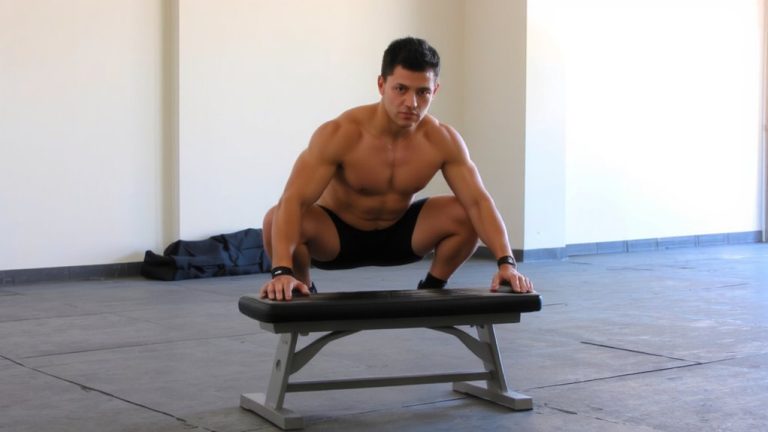
Why do some riders surge up steep, chunky ascents with total control while others wobble and fade? It’s strength, pure and simple. Cyclists who dominate standing climbs train smart. Add the Bulgarian split squat, 10 reps per leg on a 15–30cm bench, to build unilateral leg strength and balance. Pair it with single-leg Romanian deadlifts (10 reps per leg, no weight) to fire up your glutes and hamstrings-vital for power on uneven trails. Drop into alternating rear lunges (10 reps per leg) to reinforce eccentric quad and glute strength during punishing hill climb efforts. Throw in single-leg glute bridges (10 reps per side) to stabilize your pelvis when you’re out of the saddle. These moves build the raw strength and neuromuscular control you need. Add squat jumps (4 sets of 15) to tie it all together with explosive power.
Nail Your Standing Bursts on Short, Steep Sections
When you’re facing short, steep sections that demand instant power, mastering standing bursts means combining explosive effort with precise technique. In your training, perform 20-second maximal sprints at the crest of 2- to 3-minute climbs at 110–120% FTP-this Cycling-specific drill builds explosive leg drive. Execute hill sprints from a standstill on a 60-second climb, staying seated until the base, then drive up with your leg to raise your center of gravity while maintaining 80–100 RPM. Allow 5 minutes of recovery between intervals to sustain high neuromuscular output. On indoor cycling trainers, simulate these efforts with rapid resistance increases to spike heart rate and build strength. Practice partner repeats on 8–10% gradients, alternating 20-second standing attacks to mimic real trail intensity. These bursts sharpen control and power, ensuring you conquer punchy sections with precision, whether on gravel trails or technical singletrack.
Schedule Explosive Leg Work Without Overtraining
Though explosive leg drive can transform your performance on trail climbs, overdoing it risks fatigue and injury, so it’s essential to structure these sessions wisely. Aim for two times per week, scheduling explosive work on separate days from heavy weight training to avoid CNS fatigue. Make sure to place plyometrics early in your workout, after a dynamic warm-up, when your nervous system’s fresh. Perform 40–80 ground contacts per session, focusing on clean landings: keep your back knee aligned, maintain a straight back, and absorb impact through your hips and glutes. This isn’t about reps-it’s about quality. Monitor your calves and Achilles; soreness 24 hours post-session means it’s time to dial back. You don’t need fancy gear, just good form and timing. Overload slowly, prioritize recovery, and your legs will deliver sharp, powerful bursts right when you need them on steep, punchy trails.
Rest to Supercharge Your Climbing Power
How do you turn crushing climbs into controlled, powerful ascents? You rest. Real gains in explosive climbing come not from constant grinding, but from strategic recovery. Limit hard sessions to twice weekly, with 48 hours between for neuromuscular recovery. Overtraining leads to fatigue, poor form, and increased tendon overuse-especially in your calves and Achilles. After Speed Legs drills or plyometric efforts, take a full day of rest or add an easy 30–45 minute recovery ride at Zone 1 heart rate. That light spin boosts blood flow without strain. Pair this with proper sleep and hydration, and you’ll see sharper power on steep, punchy trails. Testers using this rhythm in trail shoes like the Salomon Speedcross or on gravel bikes like the Trek Checkpoint saw quicker turnover and less soreness. Rest isn’t downtime-it’s when your body builds strength, fuels repair, and readies for the next explosive burst uphill.
On a final note
You’ve got the tools: use plyometrics for snap, strength work for sustained power, and smart timing to avoid burnout. Testers riding Specialized Stumpjumper EVOs saw gains in 4-second climb bursts after six weeks of box jumps, single-leg squats, and standing interval repeats. Keep your pack light-under 15 lbs with a hydration bladder-and stick to trails with 12–18% grades to practice. Rest 48 hours between sessions, and trust the recovery, not the grind.