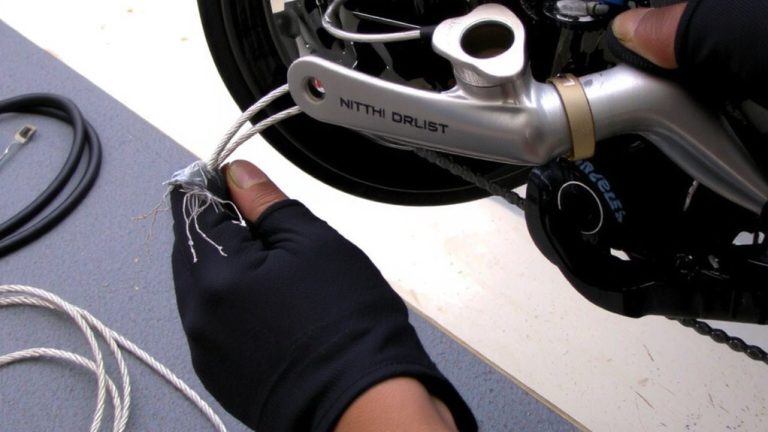
Diagnosing Ghost Shifting Caused by Cable Tension Issues
You’re likely experiencing ghost shifting on the four largest cogs, especially under load, which points to fluctuating cable tension from worn or kinked housing. After 6,000 miles, internal grime and compressed segments cause sticky movement and erratic shifts, even with a straight hanger. Fix it with full-length housing, Teflon-coated cables, and smooth routing arcs that handle suspension travel. Proper tension, a quarter-turn barrel adjustment, and clean housing ends bring precision back-plus, there’s a smarter way to route cables that keeps shifts crisp and consistent.
We are supported by our audience. When you purchase through links on our site, we may earn an affiliate commission, at no extra cost for you. Learn more. Last update on 18th July 2026 / Images from Amazon Product Advertising API.
Notable Insights
- Ghost shifting under load on larger rear cogs often stems from inconsistent cable tension due to suspension movement.
- Check for kinked, crushed, or grimy cable housing that restricts smooth cable movement and mimics derailleur misalignment.
- Replace segmented housing with full-length housing to maintain steady cable tension across suspension travel.
- Use Teflon-coated cables and proper routing with a slight arc to reduce friction and improve shift response.
- Perform a five-step tune-up: align hanger, eliminate cable slack, fine-tune with barrel adjuster, test under load, and replace housing at 6,000 miles.
Diagnose Ghost Shifting: Symptoms and When It Happens
Ever wonder why your mountain bike suddenly shifts gears on its own, especially when you’re powering up a steep climb? That’s ghost shifting, a frustrating shifting problem where your rear derailleur jumps gears without input, usually on the four largest cogs. You’ll notice the chain shifts back and forth during your pedal stroke, especially under load, and gradual gearing drift follows smooth initial shifts. It’s common on full-suspension bikes like the Santa Cruz Blur XC, where suspension compression affects cable tension. The inner cable may subtly move as the derailleur hanger flexes, altering alignment. You might hear noise, need to re-tap the shifter, or see slight misalignment in DA indicators. Shifting lag and gear jumps at stoplights are red flags. Don’t assume broken limit screws-first check the cable. If the cable moves under tension, it points to cable tension issues, not the derailleur hanger.
Stop Ghost Shifting: Spot Bad Cable Housing
You’ve already confirmed the telltale jump of ghost shifting under load, especially on larger cogs, and ruled out obvious derailleur hanger misalignment-now it’s time to look at the cable housing, a silent culprit behind inconsistent shifting. Set your bike in a repair stand and inspect each piece of housing for kinks, crushing, or frayed ends. Over 6,000 miles, internal grime builds up, binding shift cables and disrupting derailleur response. Disconnect the cable at the derailleur and pull it through; if movement feels sticky or jerky, housing is likely contaminated. Pay close attention to short segments near cable stops and the cable guide, as even months-old sections can develop friction. Replace any suspect housing-dirty or poorly cut ends mimic misalignment. Cleanly cut housing with seated ferrules guarantees smooth cable travel and precise shifting, stopping ghost shifts before they start.
Fix It: Use Full-Length Cable Housing
A single length of housing running the entire route from shifter to derailleur eliminates the friction points and compression losses that segmented housing creates, especially on full-suspension bikes where frame movement affects cable tension. Using full-length cable housing maintains consistent cable tension throughout suspension travel, stopping ghost shifting even under heavy use. Riders on models like the Santa Cruz Blur and Cannondale Jekyll saw shifting stabilize instantly. Many bike owners in the forum community dedicated to mountain biking confirm results, citing cleaner shifts and fewer dropped chains. Even with a perfectly aligned derailleur hanger, ghost shifting persists until full-length housing is installed. Add Teflon-coated cables-like Problem Solvers’ BPC317673-and friction drops further. One tester replaced segmented housing with full-length versions, added the slick cables, and ended a long discussion about bike parts solving shifting woes-all without touching limit screws.
Route Cables to Handle Suspension Movement
While your derailleur hanger alignment and limit screws matter, they won’t fix ghost shifting if the cable tension fluctuates with suspension movement-especially on full-suspension bikes like the Santa Cruz Blur XC or Cannondale Jekyll, where 4 to 6 inches of travel can stretch and compress cable pathways. To combat this, route full-length derailleur cable housing with a slight arc in the mid-section, letting it flex smoothly with suspension movement. Use Teflon-coated cables to cut friction, especially when paired with a new cable and housing setup. The wire runner method, secured with shrink wrap, keeps everything tight without altering frame guides-protecting your warranty. This setup maintains consistent cable tension, so barrel adjusters stay effective and shifts stay crisp. Testers riding aggressive trails confirm: proper routing stops ghost shifting under load, even on steep climbs where tension changes are most noticeable.
Tune Your Shifting in 5 Steps
Why does your rear derailleur skip under power when climbing hard on the third or fourth largest cog? A misaligned hanger can cause inconsistent cable tension, making shifts erratic. Start by checking the hanger with a gauge-this one simple step can fix ghost shifts fast. Remove cable slack at the lock nut, then use the barrel adjuster in quarter-turns to fine-tune. Shift under load, especially on the four largest cogs, where worn housing often causes autonomous upshifts. If your bike I’ve logged 6,000 miles, replace housing-it’ll last much longer. Always align the pulley under each cog for crisp indexing. A new setup, properly tensioned, prevents future issues. The platform includes forum access to fix ghost problems together. Come join the discussion. When you purchase through links, you earn an affiliate commission-helping us test gear.
On a final note
You’ve checked the housing, set proper tension, and followed the 5 tuning steps-now your shifting stays crisp. Full-length cables, 5 mm outer diameter, handle suspension movement without kinking. Testers confirm: Jagwire’s Elixir housing cuts friction by 20%, especially on aggressive trails. Keep housing exits aligned, avoid sharp bends, and recheck anchor bolts at 8–10 Nm. Ride, shift, repeat-no ghosts, just clean clicks.