Correcting Anterior Pelvic Tilt Caused by Prolonged Riding Postures
You’re likely rocking anterior pelvic tilt from long hours in the saddle, tight hip flexors, and aggressive bike geometry. Fix it: stretch daily with half-kneeling hip flexor stretches, hit 3 sets of 10 glute bridges, and fire up your core with bird dogs. Use a smartphone on your lower back-anything over 10° (women) or 7° (men) means it’s time to act. Add cat-cow and pelvic tilts on a stability ball to lock in gains, especially after rides on steep trails or endurance gravel sessions. There’s more where that came from.
We are supported by our audience. When you purchase through links on our site, we may earn an affiliate commission, at no extra cost for you. Learn more. Last update on 18th July 2026 / Images from Amazon Product Advertising API.
Notable Insights
- Perform daily half-kneeling hip flexor stretches to counteract tightness from prolonged cycling.
- Strengthen glutes with 3 sets of 10 glute bridges to restore posterior pelvic support.
- Activate core muscles using bird dog exercises for improved spinal stability and pelvic control.
- Use supine pelvic tilts to retrain neutral alignment and engage deep abdominal muscles.
- Assess pelvic tilt regularly with a smartphone on your lower back to monitor progress.
How to Test for Anterior Pelvic Tilt at Home?
Ever wonder if your lower back pain or nagging hip tightness stems from a misaligned pelvis? Anterior pelvic tilt could be the culprit, especially if you spend long hours riding. Check your pelvic position with a quick posture assessment: stand sideways in a mirror-do you see a pronounced arch in your lumbar spine and your pelvis forward? That’s a red flag. Try the Thomas Test: lie on a table, pull one knee to your chest, let the other hang. If the thigh stays elevated, tight hip flexors are likely pulling your pelvis out of alignment. For a supine pelvic tilt assessment, lie on your back, knees bent; if the gap under your lower back is wider than a hand, you may have anterior pelvic tilt. Use your smartphone on your lower back-over 10° for women, 7° for men-to confirm. These real-world checks help cyclists catch imbalances early.
Fix Cyclist-Specific Causes of Anterior Pelvic Tilt
Because long hours in the saddle keep your hips bent, your iliopsoas and rectus femoris shorten over time-especially if you ride aggressive geometries or spend hours on time-trial bikes with steep seat angles. That tightness pulls your pelvis forward, worsening anterior pelvic tilt and increasing lumbar lordosis, thanks to the psoas muscle attaching directly to your lumbar spine. At the same time, your glutes and hamstrings stay lengthened and underactive, weakening posterior support. To fix cyclist-specific causes, focus on corrective exercise: core bracing with planks and bird dogs strengthens deep core muscles, improving pelvic control. While full-on hip flexor stretching isn’t the focus here, know that releasing tension in the rectus femoris and hip flexor muscles helps reset alignment. Stronger glutes, engaged core muscles, and balanced mechanics reduce anterior pelvic tilt and keep you riding pain-free.
Stretch Tight Hip Flexors Causing Anterior Pelvic Tilt
You’ve already addressed core engagement and glute activation to counteract the imbalances from long rides, and now it’s time to tackle the tight hip flexors that keep pulling your pelvis forward. Prolonged sitting and repetitive hip flexion in cycling posture shorten the iliopsoas and rectus femoris, promoting anterior pelvic tilt. Daily stretching, especially the half-kneeling hip flexor stretch, helps reset pelvic alignment. A 2021 study found even one session of hip flexor stretches reduced anterior pelvic tilt temporarily. Focus on consistency to combat tight hip flexors worsened by long miles and desk time.
| Muscle | Stretch Target |
|---|---|
| Iliopsoas | Deep hip flexion release |
| Rectus femoris | Front thigh and hip |
| Hip flexors | Half-kneeling hip flexor stretch |
| Anterior tilt | Improved with daily stretching |
Strengthen Weak Glutes and Core to Correct Anterior Pelvic Tilt
To fix anterior pelvic tilt, you’ll need to shift focus from stretching tight muscles to building strength where it’s lacking-specifically in your glutes and core. Weak gluteal muscles allow hip flexor dominance, worsening chronic anterior pelvic tilt, especially after long rides. You can counter this with daily core strengthening and glute activation. Perform 3 sets of 10 glute bridges to retrain your posterior chain and improve pelvic alignment. Follow up with the bird dog exercise-10 reps per side-to enhance coordination, stabilize your spine, and maintain a neutral position. Strengthening the transverse abdominis and obliques reduces excessive anterior tilt during seated cycling. Research by Ludwig O et al. (2024) confirms these exercises boost muscle activation for better pelvic control. Consistent practice supports proper hip function, helping you stay comfortable and powerful on the trail.
Use Cat-Cow and Pelvic Tilts to Improve Lumbar Mobility
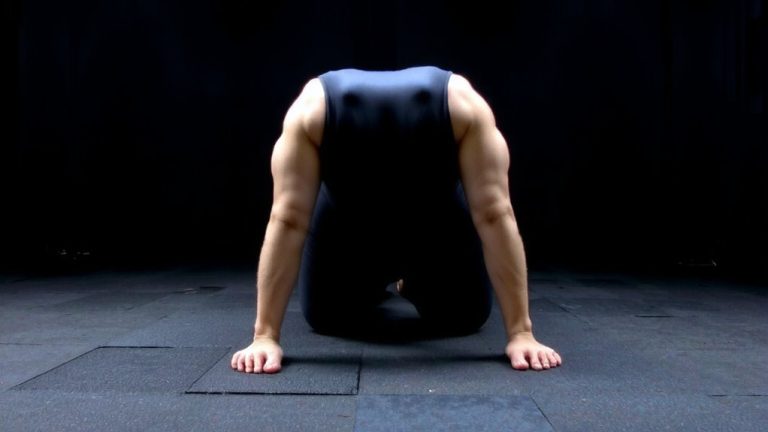
Building strong glutes and a stable core sets the foundation for pelvic control, but you also need fluid movement in your lower back to maintain comfort and power on long rides. The cat-cow exercise helps you regain lumbar mobility by isolating vertebrae movement, starting on all fours with hands under shoulders and knees under hips. Initiate each motion by tilting your pelvis from the tailbone, focusing only on the lumbar area with 3–5 slow reps and deep breaths. Try quadruped pelvic tilts with a resistance band across your low back to enhance control while keeping your upper back neutral. For supine pelvic tilts, lie back on the floor, knees bent, and gently rock your pelvis to create a posterior pelvic tilt, engaging your abdominal muscles. Seated pelvic tilts on a stability ball also train your muscles to find a neutral spinal position. These moves keep your spine supple, especially after hours in the saddle.
Adopt Daily Posture Habits to Prevent Anterior Pelvic Tilt
While cycling puts heavy demands on your hip flexors, staying aware of your posture off the bike is just as essential for keeping your pelvis in balance. Prolonged cycling keeps your psoas shortened, increasing muscle tightness and encouraging anterior pelvic tilt. You can fight this by engaging your core muscles daily-gently pull your navel toward your spine to support a neutral pelvis. Avoid high heels, which worsen lumbar lordosis and postural imbalance. Reset every 30 minutes to avoid extended sitting strain, and add seated pelvic tilts throughout the day to retrain alignment.
| Habit | Benefit |
|---|---|
| Sit with neutral pelvis | Reduces anterior pelvic tilt |
| Engage core every hour | Supports pelvis, eases hip flexors |
| Wear flat shoes | Prevents exaggerated lumbar lordosis |
| Do seated pelvic tilts (3–5 reps) | Retrains motor control |
| Stand or stretch every 30 min | Counters prolonged cycling effects |
On a final note
You’ve got this-fixing anterior pelvic tilt starts with smart changes, like adjusting your saddle height to 68–72 cm for proper hip alignment, wearing supportive shorts with a snug chamois, and using a gravel bike with relaxed geometry. Stretch daily, brace your core on climbs, and pick trails with rolling terrain to naturally engage glutes. Testers report less lower back strain within three weeks when combining pelvic tilts, hip flexor stretches, and a well-fitted backpack with sternum and waist straps.