Planning a Spring Mountain Bike Trip: What You Need to Know About Muddy Trails
Check trail closures on Trailbot or BMA’s site before heading out-Heil Valley’s clay-heavy trails stay soggy for days. Skip riding if water flows down the trail or mud packs on your tires. Stick to decomposed granite or rock-armored routes like Nelson Loop or Wild Turkey for better traction. Fit aggressive tires like Maxxis Forekaster, run 5–10 psi lower pressure, and wear a fender like MarshGuard. Clean your bike with biodegradable Muc-Off afterward to prevent wear-and know the smartest riders always wait for the right conditions.
We are supported by our audience. When you purchase through links on our site, we may earn an affiliate commission, at no extra cost for you. Learn more. Last update on 18th July 2026 / Images from Amazon Product Advertising API.
Notable Insights
- Check trail conditions before riding using Trailbot or BMA’s Trail Conditions page to avoid closed or damaged trails.
- Avoid riding on trails with flowing water, packed mud, or visible tire tracks to prevent erosion and tread damage.
- Choose decomposed granite, sand-based, or rock-armored trails that drain well and stay rideable after rain.
- Equip your bike with fenders, aggressive tires, and lower tire pressure for better traction and visibility in mud.
- Clean your bike thoroughly after muddy rides to prevent corrosion and reduce long-term wear on components.
Check For Muddy Trail Closures First
While spring brings longer days and thawing trails, it also means muddy conditions that can damage sensitive trail systems, so checking for closures should be your first move before hitting the dirt. Trail conditions in spots like Evergreen, Greenbush, and Rocky Knoll change fast-when water flows down the path or ruts form, land managers close them to protect clay-based soils, especially in early Heil Valley Ranch sections. Riding muddy trails leads to erosion and tread damage you’ll help repair later. Always check Trailbot or the BMA’s Trail Conditions page for live updates, crowd-sourced reports, and official alerts. Sign up by texting “OSMP” to 888-777 or register with Erie Singletrack and Hall Ranch for real-time trail closures. Smart riders use this intel to plan routes, pack the right gear, and avoid fines. Skip the sketchy exits and preserve the dirt you love to ride.
Know When Trails Are Too Wet to Ride
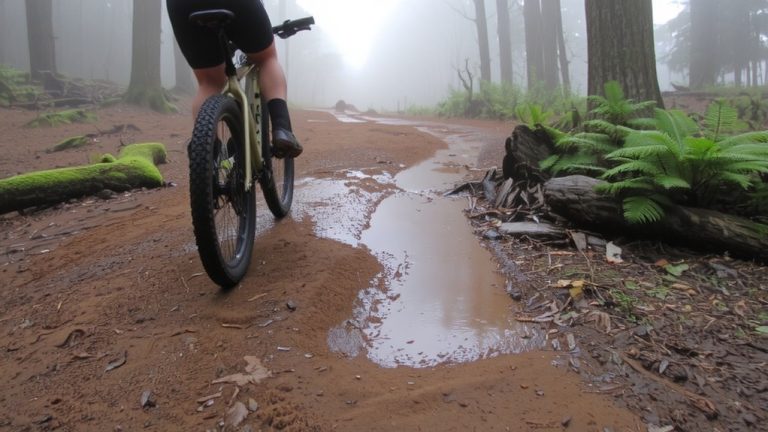
When you see water actively flowing down the trail like a shallow creek after rain, that’s your cue to turn around-riding in those conditions turns soil into soup and leads to long-term damage, especially on clay-heavy trails that stay wet for days. If you notice mud packing on your tires like a snowball, it’s a red flag; wet conditions mean tires will dig deep, carving ruts that persist long after the ride. Even a few pedal strokes can leave visible tracks when the ground’s too soft, signaling you should postpone your ride. Land managers in places like Boulder County close trails for good reason-protecting tread integrity and ecosystems during vulnerable phases. Wait until the trail dries enough that tires roll smoothly without squishing through muck. Your patience preserves the trail and guarantees better, safer rides later.
Pick Trails That Handle Mud Well
If you’re looking to ride right after a spring shower, focus on trails built with materials that naturally resist mud and drain quickly, so you can roll through without harming the tread. For durable mountain biking options, pick decomposed granite trails like Nelson Loop at Hall Ranch-the soil repels water, staying rideable even in wet conditions. Sand-based trail systems also handle moisture well, bouncing back fast post-rain. Seek out rock-armored paths such as Wild Turkey and Ponderosa in Heil Valley Ranch, where solid drainage cuts erosion risk. Betasso, Walker Ranch, and Lower Bitterbrush at Hall Ranch are proven performers, thanks to stable tread and smart runoff design. Avoid clay-heavy routes like the first miles of Picture Rocks, which hold water and scar easily. Choosing the right trail isn’t just smart riding-it’s trail stewardship.
Wear Mud-Ready Gear to Stay Safe
You’ve picked the right trail-rocky, well-drained, and built to handle spring’s soggy leftovers-now make sure your gear’s up to the challenge. When you ride in the mud, your mountain bike takes a beating, so wear mud-ready gear that keeps you safe and in control. Install front fenders like MarshGuard or SKS models to block spray and boost visibility. Wear protective eyewear and keep a microfiber cloth or tear-offs handy to clear splatter fast. Choose aggressive tread tires like Maxxis Forekaster or Specialized Storm Control-they grip deep mud and resist clogging. Run tire pressure 5–10 psi lower than usual for better traction, but steer clear of slick roots and rocks where sliding’s more likely. Stay steady through corners, pedal in a harder gear, and avoid sudden moves to keep your mountain bike stable on soft, sucking trails.
Clean Your Bike to Support Trail Preservation
A single post-ride wash can save you hours of repairs down the trail-and doing it right keeps both your bike and the backcountry in top shape. After tackling a muddy mountain ride, rinse off grime with a garden hose on shower setting; high-pressure sprays can force water into bearings and cause long-term damage. Use biodegradable cleaners like Muc-Off or Maxima Oils, scrub thoroughly, then give it a second rinse to remove all residue. Dry your bike completely and apply chain lube to prevent corrosion. Cleaning right after each local trail outing prevents dried mud from wearing down your drivetrain and suspension. It’s not just about longevity-it’s about responsibility. Well-maintained bikes are less likely to break down, reducing trailside fixes that disrupt other trail users. When you care for your gear, you protect shared spaces, keep rides smooth, and support sustainable riding for everyone.
On a final note
Check trail closures and moisture levels before you head out, because riding on muddy paths damages roots and erosion control, even if the top looks dry. Stick to packed gravel or well-drained trails like those with volcanic soil or high rock content. Wear quick-dry shorts with 8-inch chamois liners, and grip with flat pedals using recessed pins. Carry a 12L hydration pack with 3L reservoir, and clean your bike’s drivetrain with a de-greaser wipe post-ride to protect trail sustainability.