Choosing the Right Tire Pressure for Loose Over Hardpacked Trail Conditions
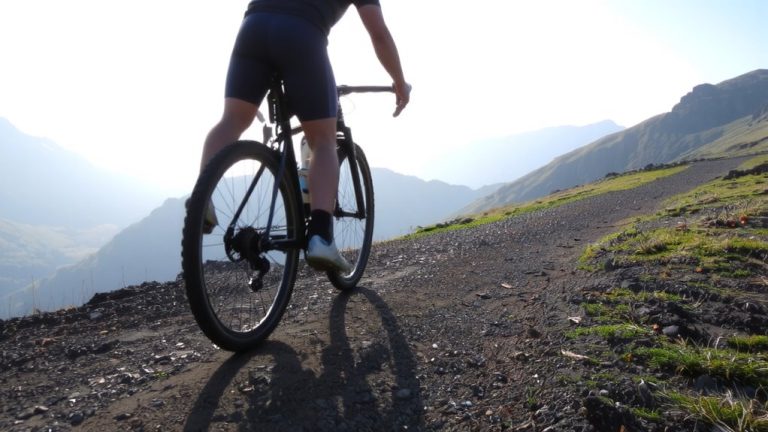
For loose debris over hardpack, run 22–24 psi up front and 24–26 psi in the rear, dropping 2–4 psi if you’re on tubeless-this boosts grip, reduces bounce, and helps your tires bite through gravel to the solid trail below. Lighter riders (under 60 kg) can go 2 psi lower, heavier ones add 3–4. Wider 2.5–2.6″ tires? Subtract 1–2 psi. Keep your front 2–3 lower than the rear for sharper steering, and fine-tune in 1–2 psi steps based on how the trail feels. You’ll soon find the sweet spot that balances speed, control, and comfort-and there’s more to optimizing your setup where pressure is just the start.
We are supported by our audience. When you purchase through links on our site, we may earn an affiliate commission, at no extra cost for you. Learn more. Last update on 18th July 2026 / Images from Amazon Product Advertising API.
Notable Insights
- Lower tire pressure (22–24 PSI front, 24–26 PSI rear) helps tires penetrate loose debris to grip hardpack underneath.
- Reduce front tire pressure by 2–3 PSI compared to rear for better steering and braking on mixed terrain.
- Use 2–4 PSI lower pressures with tubeless setups to improve grip and avoid pinch flats.
- Lighter riders (under 60 kg) can drop PSI by 2; heavier riders (over 90 kg) should increase by 3–4.
- Wider tires (2.5–2.6″) allow 1–2 PSI lower pressures for enhanced loose-surface traction without sacrificing efficiency.
How Tire Pressure Affects Grip on Mixed Terrain
While tackling mixed terrain, your tire pressure plays a critical role in how well you maintain grip, especially when moving between loose gravel and hardpacked trails. Lower PSI, like 20–23 front and 22–25 rear, increases the contact patch, letting your tires conform to loose terrain for better grip and control. Too much pressure causes tires to skip over bumps, reducing traction and raising the risk of sliding in corners. On hardpacked trails, slightly higher PSI (28–32) cuts rolling resistance and boosts efficiency. A 2–3 PSI drop in the front improves steering and braking grip. Tubeless setups let you safely run 2–4 PSI lower than tubed tires, enhancing grip on loose terrain while protecting rims on hardpack. Balancing front and rear pressure gives you confidence across varied mixed terrain.
Optimizing PSI for Loose-Over-Hardpack Trails
Since loose debris rides over a firm base, you’ll want to drop your tire pressure 2–3 PSI below your usual setting to let the tread dig through the surface layer and grip the hardpack underneath. On loose-over-hardpack trails, this small PSI reduction boosts your contact patch without killing rolling efficiency. For tubeless setups, start at 22–24 PSI front and 24–26 PSI rear, adjusting slightly based on rider weight and tire width. Wider tires (2.5–2.6 inches) can run 1–2 PSI lower, enhancing grip on the loose top layer while staying stable over hardpack. Tubeless setups allow safer low pressures-2–4 PSI under tubed-giving you better conformity and control. Always fine-tune based on real-time trail conditions: too low and you’ll squirm, too high and you’ll slip. Ideal PSI means confident cornering, consistent grip, and smooth shifts across changing terrain.
Matching PSI to Rider Weight and Bike Type
When you’re dialing in your tire pressure, your rider weight and bike type are two of the most important factors shaping how your mountain bike tires respond on trail, and getting them right means you’ll roll faster, grip better, and avoid unnecessary crashes. If you’re a lighter rider under 60 kg, drop your baseline PSI by 2; heavier riders over 90 kg should add 3–4 PSI to prevent bottoming out. Full-suspension setups typically run 24–30 PSI front, 26–32 rear, while hardtails use slightly lower pressures-22–28 front, 24–30 rear-due to less rear impact absorption. Heavier riders over 80 kg need higher PSI in the recommended range for support, especially on hardpack. Lighter riders can safely go lower for grip without rim strikes. Tire width matters: 2.5–2.6-inch tires need 1–2 PSI less, while 2.1–2.25-inch tires require 1–2 more.
Why Tubeless Lets You Run Lower PSI Safely
You can confidently drop your tire pressure by 2–4 PSI with a tubeless setup because there’s no inner tube to pinch between the rim and trail obstacles, eliminating common “snake bite” flats that plague tubed systems. Running tubeless means you can safely run 2–4 PSI lower without risking pinch flats, giving you improved traction and grip and comfort on loose terrain. Sealant inside the tire plugs small punctures, while modern bead designs resist tire burping during hard hits. Lower pressure increases tire conformity, boosting control without adding rolling resistance. You’ll notice less vibration and better compliance, especially on rocky descents. Use a tire pressure gauge to fine-tune settings-most riders run tubeless at 21–28 PSI depending on weight and trail. The result? Confident handling, improved traction, and the freedom to push harder, all while riding safer and smoother.
Front vs. Rear: The 2–3 PSI Rule for Steering Control
Running lower pressure in your front tire-just 2 to 3 PSI under the rear-gives you noticeably sharper steering control and cornering grip, especially when the trail turns loose or steep. The 2–3 psi rule accounts for rider weight bias, which naturally shifts more load to the rear, allowing the front to run lower pressure without squirm. A lower front tire pressure increases the contact patch, boosting traction for hard braking and aggressive turns. For most trail conditions, if your rear tire pressure sits at 25–30 PSI, set your front between 22–28 PSI. This front vs. rear balance enhances stability and reduces front tire washout on off-camber sections. Tubeless setups make this easier, letting you safely run lower pressures. You’ll get better steering control without risking pinch flats-just stick to the 2–3 psi rule for confident handling.
Use 1–2 PSI Adjustments to Match Trail Feedback
Though terrain can change in an instant, fine-tuning your tire pressure in 1–2 PSI increments gives you immediate control over grip, rolling resistance, and ride quality. When you hit loose trails, dropping 1–2 psi increases the contact patch for better traction and prevents sliding on gravel or sand-just enough to reduce tire squirm. On hardpacked terrain, bumping pressure by 1–2 psi boosts rolling efficiency and smooths vibrations, ideal for XC or long rides. These small 1–2 psi adjustments let you respond to real-time trail feedback without sacrificing stability. Maintaining impedance balance means you absorb bumps without bouncing, preserving energy across mixed conditions. Use a precise gauge-testers say even 1 psi changes handling on technical sections. Whether you’re climbing loose over hardpack or descending chunky rock, dialing tire pressure this way keeps your ride predictable, efficient, and dialed.
On a final note
You’ll ride smarter by dialing in your PSI for loose-over-hardpack trails-start at 22–26 psi tubeless, adjust by 1–2 psi based on feedback. Lighter riders or hardtails can lean toward 22 psi, heavier riders or full-suspension bikes thrive at 26 psi. Run 2–3 psi lower in the front for confident steering. Real-world testing shows this range boosts grip, reduces fatigue, and prevents burping, all while keeping rolling resistance low.