Why Trail Ratings Don’t Always Account for Weather Impact
Trail ratings assume dry conditions, so when rain hits, that Class 2 trail with 6-inch-deep mud pits can feel like a Class 4 slog, even with 35-inch all-terrains aired down to 15 psi. Slick rock, hidden ruts, and hydrolock risks in stock 4x4s rise fast-low-range gearing and winching often become necessary. Heat above 90°F or stealth ice under snowpack further skew difficulty, ignoring real-time hazards like flash floods or fatigue from front-loaded elevation. Your fitness, tires, and gear choices matter more than the rating suggests-knowing how they interact changes everything.
We are supported by our audience. When you purchase through links on our site, we may earn an affiliate commission, at no extra cost for you. Learn more. Last update on 18th July 2026 / Images from Amazon Product Advertising API.
Notable Insights
- Trail ratings are based on dry, ideal conditions and rarely adjust for rain, snow, or heat.
- Wet weather transforms mild trails into hazardous routes with mud, slick rock, and reduced traction.
- Static systems like Colorado’s 1–10 scale don’t reflect real-time changes from rainfall or snowfall.
- Flooded sections and hydrolock risks in low-clearance vehicles aren’t factored into original trail class ratings.
- Psychological and physical demands increase in extreme weather, but ratings ignore these situational factors.
Do Trail Ratings Lie in the Rain?
When rain hits the trail, that “moderate” Class 4 rating you trusted starts to feel like a gamble, because most trail difficulty scales-from Colorado’s 1–10 system to user-generated AllTrails tags-are based on dry conditions and don’t reflect how slick rock, muddy off-camber turns, and deep ruts drastically change traction and control. Trails labeled “moderate” under ideal weather conditions can turn treacherous when water saturates the ground, yet Difficulty Ratings rarely adjust. A Class 4 trail’s Difficulty Rating stays the same, even though wet Trail conditions increase rollover risks and demand winching. Most ratings ignore real-time water impact, so that “moderate” path might now need 35-inch all-terrains, low-range gearing, or even traction boards. Always check recent trail reports, because static ratings lie when weather conditions shift. Your safety hinges on reading Trail conditions, not just trusting a number.
Why Mud Makes Easy Trails Dangerous
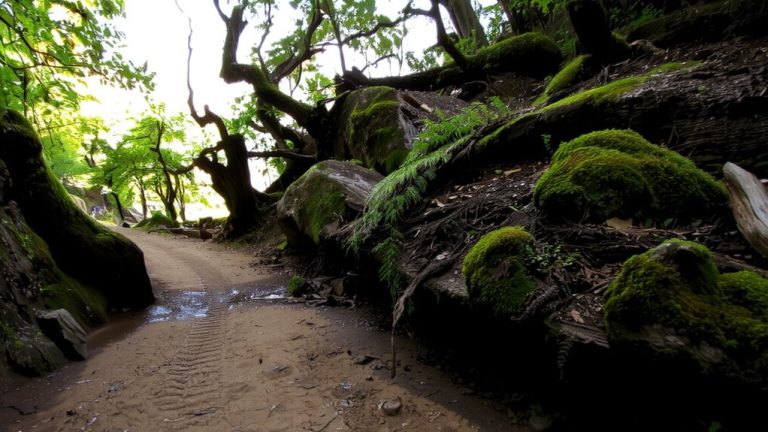
Even if you’re running a capable rig with 35-inch all-terrains and lockers front and rear, don’t assume an easy trail will stay easy once rain turns dry ruts into thick, 6-inch-deep mud pits-because that Class 1 or 2 path, normally passable in a 2WD truck, can quickly become a high-risk slog where traction fades fast and momentum dies. Trail ratings don’t account for sudden mud, and what’s labeled Passable mud might hide frequent deep holes or surprise water crossings. Deep mud over 6 inches risks hydrolock, even in stock vehicles with adequate ground clearance. Airing down helps, but prolonged sections dig trenches fast, especially when wheel spin kills forward drive. The Minnesota DNR warns green circle trails turn slick and hazardous with poor drainage. That “easy” route could lead to vehicle damage or mechanical breakdown. Always check recent conditions-don’t trust dry-weather ratings when mud’s in play.
Can Heat and Snow Break Any Rating System?
Though trail ratings promise predictability, extreme heat and snow can turn a seemingly manageable route into something far more demanding, no matter the class. Temperatures above 90°F soften terrain, turning Class 3 trails into heat traps where sweat loss exceeds intake, demanding hydration packs with 3L capacity and electrolyte support. Snow may make trail ratings obsolete-burying markers and introducing avalanche risks, even on “easy” paths. Freeze-thaw cycles create stealth ice under snowpack, spiking fall risks beyond what difficulty ratings suggest. Wet soil on Class 4+ trails amplifies flash flooding danger, especially in narrow canyons. In these conditions, trail rating systems fail fast. You’ll need extreme caution, microspikes, and waterproof layers. On rocky descents, Vehicle damage probable isn’t just a warning-it’s likely without diff locks and all-terrain tires. Always check forecasts and pack gear for what’s not rated: weather’s wild edge.
What 5 Things Beat a Trail’s Official Rating
A trail’s official rating won’t tell you how slick the mud is after last night’s downpour, or whether your legs will burn on a 1,200-foot climb in the first mile, and that’s because real-world factors often override the map’s promise. Your personal fitness and hiker experience reshape trail difficulty-what’s hard for one may be easy for you. Real-time trail conditions, driven by recent weather, can turn a packed path into a muddy slog, ignoring the rating entirely. Elevation gain distribution matters more than total feet-it’s brutal when it’s front-loaded. Navigation skills keep you confident on poorly marked stretches, while psychological factors like fear of exposure can make a moderate trail feel severe. Weather impact alters traction, visibility, and stamina. Always check trail conditions before you go-what’s rated “moderate” might feel extreme when wet, steep, and exposed.
How to Update Your Plan When Weather Shifts
When rain rolls in and trail conditions shift fast, your best bet is adapting early-because a Class 4 trail rated for axle hub–deep water crossings and 15° off-camber sections can turn into a slick, impassable mess once rain saturates the soil. Trails marked *Impassable under anything* but dry conditions require checking before proceeding, especially with increased water crossing depth and poor traction. Black diamond or blue square routes, passable by stock rigs in ideal conditions except after rain, demand caution recommended for all drivers. Driver experience matters-only an experienced driver should attempt wet clay-heavy paths where Trail building didn’t account for drainage. Flash flooding can turn a 6-inch crossing into a hazard, so assess conditions and with adequate recovery gear, reconsider your route. Always trust real-time conditions over ratings-your safety depends on it.
On a final note
Rain turns dirt to grease, and that “easy” trail? It’s not easy anymore. Your trail rating doesn’t know the forecast, so you’ve got to step up. Wear sticky rubber outsoles like Vibram Megagrip, run tubeless tires at 28–30 psi for grip, and pack a 2.5L hydration bladder. Testers found Merino wool socks resist blisters even wet, and a 100-denier nylon rain shell weighs just 8 oz but blocks 99% of rain. Stay alert, stay geared, stay safe.