Fix Scratched Anodized Stanchions: Polishing Paste Guide
You can use polishing pastes on scratched anodized stanchions, but only if the gouge is shallow-under 0.2 mm-and doesn’t catch your fingernail, meaning the hardcoat layer is still intact. Start by cleaning the stanchion with isopropyl alcohol and a microfiber cloth, then inspect under bright light. Smooth only raised, jagged edges with a fine steel file, never sand deep into the aluminum. Follow with 1000- to 2000-grit wet sandpaper, then apply Autosol or aluminum polish to restore surface integrity and protect seals. Deep scratches that compromise the anodized layer can’t be fixed with polish and often require a CSU replacement-especially on FOX forks, where hydrodynamic performance drops fast when grit enters the system, and bushings lose their Teflon coating. There’s a smarter way to handle borderline cases.
We are supported by our audience. When you purchase through links on our site, we may earn an affiliate commission, at no extra cost for you. Learn more. Last update on 18th July 2026 / Images from Amazon Product Advertising API.
Notable Insights
- Only smooth scratches with raised edges; deep scratches over 0.2 mm require CSU replacement.
- Clean stanchions thoroughly with isopropyl alcohol to assess scratch depth and location accurately.
- Use fine-cut files to remove sharp burrs, preserving the anodized layer and preventing seal damage.
- Progress through 1000+ and 2000 grit wet/dry sandpaper before applying aluminum polish for best results.
- Polishing pastes restore shine and seal pores but cannot repair structural damage from deep scratches.
Assess Scratch Depth and Location First
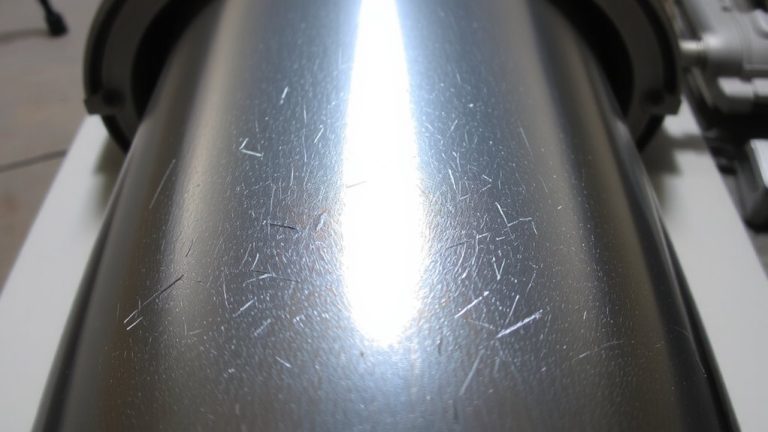
While you’re checking your fork after a rough trail session, don’t just glance over those stanchion scratches-take a moment to assess depth and location, because whether a scratch sits in the first 70% of travel or the last 30% makes a real difference in how it affects performance. Scratches in the first 70% repeatedly contact seals and bushings, risking contamination and wear, especially if they’re 0.2 mm deep or more. Use your fingernail or a magnifier to check-if it catches, that’s a red flag. Sharp, jagged edges from rock strikes are worse than smooth scrapes, potentially shredding teflon bushings or rubber seals. If the scratch is shallow and smooth, a dab of clear nail polish can temporarily seal it, preventing grit buildup until proper repair. But if it’s deep or in the mid-stroke zone, where seals cycle constantly, plan a full polish. Know the difference early, and you’ll avoid compounding damage on your next ride.
Clean the Stanchion to See Real Damage
Before you decide whether a scratch needs more than a quick fix, you’ve got to see it clearly, so start by cleaning the stanchion with isopropyl alcohol and a lint-free microfibre cloth to strip away old oil, grime, and trail dust that hide the real damage. Focus on the first 70% of travel, where surface contamination can compromise seals and invite grit into wiper and foam rings. Remove built-up lubricant and debris to avoid pushing dirt deeper during inspection. Use bright, directional lighting techniques-like a angled LED work lamp-to expose shallow scratches invisible under normal light. Rotate the stanchion slowly, performing a full rotation inspection to check all sides, since damage often hides on the underside or in shadowed zones. This clear, thorough view guarantees you’re treating real issues, not just what’s easiest to spot.
Smooth Only the Raised Edges: Never Sand Deep
Since sharp burrs from rock strikes are the real threat to your stanchion’s seals and bushings, focus only on smoothing the raised edges-not the scratch depth-using a fine-cut hardened steel file or a Leatherman metal file with light, controlled strokes, because heavy pressure risks deforming the aluminum or cutting through the critical anodized layer that protects against corrosion; keep the file flat and steady, removing just enough material to knock down jagged lips that could tear seals during fork compression. Your file technique matters-short, precise passes guarantee edge refinement without gouging. Remember, surface preservation is key; the anodized coating is only 0.001–0.002 inches thick, and once it’s gone, corrosion follows. For deeper scratches over 0.2 mm, consider JB Weld epoxy later, but never sand deep. This step isn’t about perfection-it’s about function, longevity, and protecting internal components with smart, minimal intervention.
Polish to Prevent Seal Damage
Now that you’ve flattened the jagged edges with a fine metal file, it’s time to refine the surface further by polishing to protect your fork’s internals. Proper polishing maintains surface integrity, guarantees lubrication retention, and enhances corrosion resistance. Use 1000+ grit wet/dry sandpaper followed by Autosol or similar anodized aluminum polish to achieve a near-mirror finish. Avoid coarse abrasives-they degrade the anodized layer and increase contamination risks.
| Step | Material | Purpose |
|---|---|---|
| 1 | 1000+ grit wet/dry paper | Smooth scratch ridges |
| 2 | 2000 grit paper | Refine surface finish |
| 3 | Autosol polish | Restore shine, seal pores |
| 4 | Microfiber cloth | Final buff, no lint |
This process keeps oil films intact, supports hydrodynamic lubrication, and prevents seal damage from debris buildup.
Replace CSU If Scratches Exceed 0.2mm
A scratch deeper than 0.2 mm on your stanchion isn’t just a surface blemish-it’s a threat to your fork’s performance. You’re risking CSU degradation because deep grooves compromise the anodized layer, letting grit embed and wear down seals. That leads to seal contamination, where dirt and metal shavings mix with oil, accelerating internal damage. In FOX forks, this disrupts hydrodynamic failure, meaning lubrication can’t form a clean film, so contaminated oil pumps past damaged zones, harming bushings and stanchions further. Polishing won’t fix it-structural integrity’s already lost. You’ll need to replace the CSU; it’s the only reliable fix. Chances are, you’ll also swap bushings since raised scratch edges often strip their Teflon coating. Testers confirm: forks with deep scratches feel rough, leak oil, and lose damping control. Don’t push it-replace the CSU now, and keep your ride smooth, sealed, and durable on tough trails.
On a final note
You’ve assessed the scratch depth and cleaned the stanchion, so now stick to the plan: smooth only raised edges, never sand deep, and use a fine polishing paste to protect the seal. If scratches exceed 0.2mm, replace the CSU. Proper care keeps your fork running smooth, mile after mile, trail after tough trail-just like our testers confirmed on rocky descents and muddy climbs.