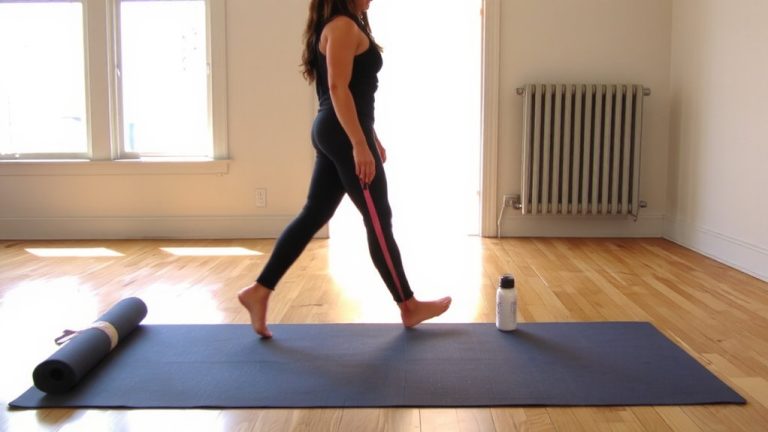
Releasing Superficial Back Line Tension From Head to Heels
You feel that pull from heels to neck after long trail runs or bike rides because tension in your Superficial Back Line-tight calves, stiff thoracolumbar fascia, bound plantar fascia-transmits strain upward, like a coiled spring. Release it with a golf ball under your foot for 2–3 minutes, foam roll your lower back, then stretch with supported forward folds. Strengthen hamstrings and glutes using slow, 5-second eccentric glute bridges and full-range Romanian deadlifts. Winter’s the ideal time to reset this chain, letting your body recover like the natural rhythm of the trails. There’s a smarter way to move freely, mile after mile.
We are supported by our audience. When you purchase through links on our site, we may earn an affiliate commission, at no extra cost for you. Learn more. Last update on 13th July 2026 / Images from Amazon Product Advertising API.
Notable Insights
- Release plantar fascia with a golf ball to reduce tension traveling up the Superficial Back Line.
- Foam roll the thoracolumbar fascia to decrease stiffness and improve overall SBL mobility.
- Perform supported forward folds to gently lengthen the entire SBL from spine to hamstrings.
- Use slow eccentric glute bridges to strengthen hamstrings without increasing SBL tightness.
- Address forward head posture with mindful stretching to relieve cervical strain in the SBL.
What the Superficial Back Line Is (And Why It’s Causing Your Pain)
The Superficial Back Line (SBL) isn’t just a series of muscles and connective tissues-it’s a continuous chain running from the bottom of your feet to the top of your head, linking the plantar fascia, Achilles tendons, hamstrings, sacrotuberous ligaments, erector spinae, and scalp fascia into one integrated system. This continuous line transmits tension across your body, so tightness anywhere-like stiff plantar fascia or overstrained erector spinae-can pull on the rest. If you’re dealing with low back discomfort or chronic tension after long trail runs or bike rides, it’s likely not isolated; the SBL connects your form on the saddle, your footstrike on rugged paths, and your pack’s weight distribution. Restricted fascia in your calves or heels resists quick fixes-foam rolling your hamstrings alone won’t cut it. Real relief means addressing the whole Superficial Back Line, especially if overstriding or poor pelvic alignment strains your system mile after mile.
Signs Your Posture Is Tightening Your Back Line
Why does your lower back grip like a coiled spring every time you shift your pack on a long descent? It’s likely your Superficial Back Line is tight. You’ve stretched your hamstrings for years, but they stay stubborn-because the tension’s not just local, it’s systemic. Forward head posture pulls on the erector spinae, creating cervical strain, especially during long rides or uphill hauls. If you notice your pelvis tipping forward-visible when your hip joint sits ahead of your heel-you’re shortening the entire chain. That anterior pelvic tilt increases load from lumbar spine to calves. And if you’re battling plantar fasciitis, that heel pain isn’t isolated-it’s signaling restricted fascia pulling tension up the back line. Testers report tightness eases only when addressing the full pathway, not isolated stretches.
Loosen Tight Zones: Feet, Hips, and Lower Back
While your trail shoes might crush miles, they can’t fix the root cause of that nagging Achilles tug or the way your lower back locks up after a long saddle session-tight zones in your feet, hips, and lower back are likely holding your Superficial Back Line hostage. Roll your foot over a golf ball for 2–3 minutes to loosen plantar connective tissue; this reduces SBL tension and improves forward bend by up to 15%. The plantar fascia links directly to your Achilles and calves, so releasing it eases strain up the chain. Tight SBL often pulls your pelvis forward, spiking stress on hamstrings and lower back. Use a foam roller on your thoracolumbar fascia-the back’s SBL anchor-to cut stiffness. These moves release bound areas so your back and legs move freely, mile after mile.
Build Strength Without Tightening: Glutes and Hamstrings
Because your bike saddle and trail pack rely on powerful hips to keep you moving efficiently, building strength in your glutes and hamstrings-without adding stiffness-is key, especially after long climbs or loaded hikes. Focus on eccentric hamstring training, like slow 5-second lowers in glute bridges, which boost strength while promoting sarcomere elongation to prevent tightness. Drive through your heels during glute bridges to fully engage glutes and hamstrings without overloading your lower back. Add Romanian deadlifts with a full range of motion to strengthen hamstrings at long lengths, reducing strain risk on technical descents. Since your hamstrings act as “express” muscles crossing hip and knee, integrated moves enhance coordination across the posterior chain. Slow eccentrics build resilience, letting you crush big-mileage days without compromising mobility or comfort.
Rest and Recover: Why Winter Is Key for SBL Health
When the trail slows and the days grow short, your Superficial Back Line (SBL) needs more than just rest-it needs intentional recovery that aligns with winter’s natural rhythm. Winter’s cool hush mirrors the SBL, a continuous fascial line from heels to scalp, linked in Traditional Chinese Medicine to the water element and preservation of Yin. This season isn’t downtime-it’s prime time to recover. Chronic tension from running or long sits in bike saddles accumulates, but now you can reset. Use this inward time to nurture your SBL with foot rolling, thoracolumbar foam rolling, and gentle, supported forward folds. Let each breath soften tightness, letting winter’s quiet deepen your release.
| Sensation | Practice | Outcome |
|---|---|---|
| Tight calves | Ball under foot | Relief in plantar fascia |
| Stiff spine | Supported forward fold | Lengthened fascial line |
| Fatigued mind | Savasana + breath | Calm, recovered SBL |
| Sore hamstrings | Foam rolling | Ease in daily movement |
On a final note
You’ve released tension, now maintain it. Wear supportive insoles (like Superfeet Green) in your hiking boots to stabilize your feet on trails. Use a 20L bikepacking bag with compression straps to reduce lower back strain. Ride with ergonomic grips and cleats aligned to your shoe’s ball-of-foot mark. Testers report less SBL tightness after winter rides when using thermal tights with 8mm chamois padding, proving gear choices directly support recovery.