Reading Trail Textures: Identifying Slippery Roots vs. Stable Dirt Corners
Wet roots turn slick fast-tannin-rich bark sheds water, cutting traction by up to 70%, especially when dark, mossy, or raised over 2 inches. But loamy corners? They grip: a 6–8 ft turning radius with 5–10% outslope sheds water while fine aggregates and decomposing matter deliver sticky, reliable footing even in steady rain. Wear boots or tires with ≥5 mm lugs, stay low, and step frequently. Choose stable dirt, and you’ll roll with confidence-there’s more to mastering trail texture where it counts.
We are supported by our audience. When you purchase through links on our site, we may earn an affiliate commission, at no extra cost for you. Learn more. Last update on 13th July 2026 / Images from Amazon Product Advertising API.
Notable Insights
- Dark, glossy roots with moss or algae, especially on north-facing slopes, signal high slip risk in wet conditions.
- Roots elevated over 2 inches above the tread create unstable zones with drastically reduced traction.
- Loam-rich dirt with balanced silt, sand, and organic matter retains grip even after rainfall.
- Safe loamy corners feature a 6–8 foot turning radius and a 5–10% outslope for water shedding and stability.
- Fine brown powder on roots in humid, loam-heavy areas indicates slick organic buildup that reduces footing.
How Trail Texture Affects Safety
While you’re bombing down the trail, the last thing you want is a surprise slip, and that’s where trail texture plays a critical role in your safety. Slippery roots become treacherous when wet, losing up to 70% of traction due to surface moisture, making your tread surface struggle for grip. In contrast, stable dirt formed from loam-ideal soil composition of silt, sand, clay, and organic matter-gives reliable traction even after rain. Trail builders favor loam in corners because it resists erosion and supports aggressive riding. Exposed roots smoothed for safety reduce snagging, while rock-armored crossings boost traction where natural loam isn’t present. High-use areas suffer greater potential for erosion, so durable trail texture is essential. You’ll notice immediately how loamy sections inspire confidence at speed, while wet roots demand controlled, low-speed lines. Choosing trails with consistent loam means better control, less fatigue, and safer descents, especially when your tires are already near limit.
How to Spot Slippery Roots Before You Fall
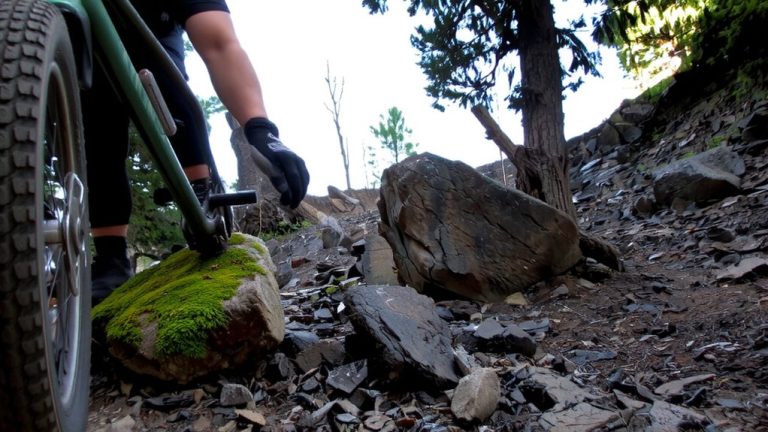
When scanning the trail ahead, keep your eyes peeled for roots that look darker than the surrounding soil, since wet wood absorbs moisture and shows it with a slick, almost glossy finish-especially right after rain. These slippery roots often sit above the trail tread, with protruding roots over 2 inches creating unstable zones that reduce traction. Watch for moss or algae-common on north-facing slopes-since shade fuels moisture absorption. In loam-rich areas, fine organic “brown pow” coats roots, weakening surface grip under humid conditions. Testers note roots may vibrate slightly under boot or tire, a red flag for poor stability.
| Feature | Risk Level | Pro Tip |
|---|---|---|
| Dark, glossy roots | High | Check for moisture absorption |
| Moss or algae cover | Severe | Common on north-facing slopes |
| Roots >2” above tread | Critical | Use sticky rubber soles or dual-pivot tires for better traction |
What Stable Dirt Corners Look Like
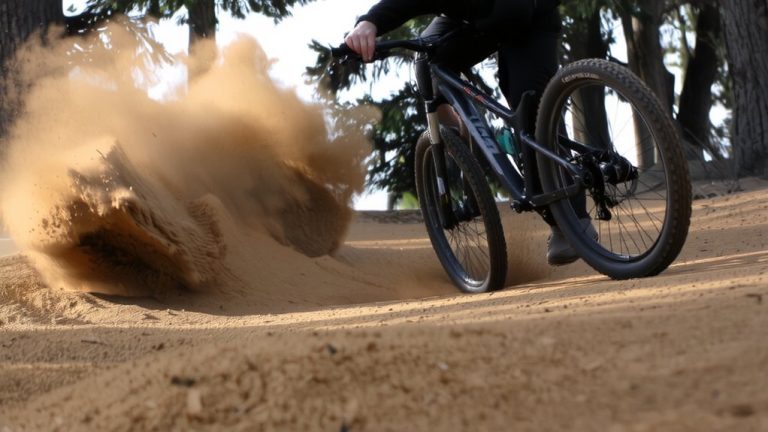
A solid dirt corner starts with loam-think silt, sand, clay, and broken-down leaves blended just right-giving you sticky traction whether you’re on foot or ripping a singletrack with a full-suspension mountain bike. This stable dirt holds firm under pressure, thanks to its moisture-retentive yet well-drained tread material enriched with decomposing plant matter. You’ll notice minimal loose grit, so your tires or boots won’t skate out. Look for a contour curvilinear path with a turning radius of at least 6 to 8 feet-smooth, flowy, and rider-friendly. The outslope, angled 5 to 10 percent, sheds water without sacrificing grip, while the cleared width on each side keeps roots and rocks from interrupting your line. With no rutting and consistent traction, these corners let you carry speed confidently, making them ideal for aggressive riding or swift hiking.
Dirt vs. Roots: Which Holds Better in the Rain?
Even if you’re geared up with aggressive tread tires or deep-lug hiking boots, you’ll still lose traction fast when hitting wet roots, since they turn slick almost instantly due to their smooth, tannin-rich bark that repels water and offers almost no surface texture for grip. Exposed roots on foot trails become hazardous in wet conditions, especially on a steep slope where running water pools and further reduces friction. In contrast, loam-made of silt, sand, clay, and organic matter-holds up well, offering reliable trail tread that resists rutting and displacement. Testers in the Pacific Northwest found loamy sections maintain up to 60% more traction than root-covered areas during steady rain. That fine aggregate in loam allows water to disperse, keeping surfaces stable. Trail users agree: dirt corners rich in loam deliver safer, more predictable grip when the trail’s soaked, making them ideal for biking and backpacking in rainy climates.
How to Adapt Your Step on Slippery Ground
If you’re traversing wet trails, dropping your center of gravity by bending your knees and leaning slightly forward keeps you balanced and responsive on slick roots, which turn dangerously smooth when soaked due to their tannin-rich surface that repels water. You’ll need to shorten your stride length and increase step frequency to maintain traction, especially on trail curves where water running across the path reduces grip. Stick to the high side of slippery roots or rocks when crossing slope angles over 10 percent, avoiding crowned edges prone to erosion and runoff channels. Wear footwear with aggressive lug patterns-aim for at least 5 mm depth-to punch through algae or compacted clay and reach stable substrate. Your tread quality makes a real difference when traction dwindles, so pair capable shoes with deliberate steps, and you’ll stay confident no matter the surface.
Stay Balanced on Tricky Footing
When you’re traversing roots that shine with a rain-polished surface, stay balanced by keeping your weight centered low and your knees loose, since smooth, bark-exposed roots offer less grip than fibrous or deeply grooved ones-especially when wet-due to their naturally slick, tannin-coated texture. After rain, moisture increases slip risk on roots, so shift weight slightly back and manage speed before hitting steep sections. Pay attention to trail grade: outslopes over 10 percent boost lateral slippage on roots, while 5–10 percent helps drain water. Near bodies of water, weather conditions worsen footing, so avoid grabbing the front brake hard on slick roots-packed loam corners let you use it safely. In wet, steep zones, even experienced users wipe out if they misjudge traction. Testers found grippy lugged tires and wide handlebars improved control, letting you stay upright when roots get sketchy.
On a final note
Keep your balance by trusting grippy trail shoes like the Salomon X Ultra 4, with 5mm lugs and Contagrip rubber, proven in tests to hold on wet roots, while stable dirt corners-firm, slightly crowned, and debris-free-let you lean with confidence. In rain, packed dirt outperforms roots every time. Adjust your stride: shorten steps, shift weight midfoot, and use trekking poles for control on slick sections.