How to Use an AED If Available During a Cardiac Emergency on the Trail
Check for sudden collapse, no response to a knuckle rub, and abnormal breathing like gasps. Turn on the AED-it powers up when opened-and follow the voice prompts. Clear the chest with shears, wipe it dry, and shave thick hair for pad contact. Place pads as shown, guarantee everyone’s clear, and press the shock button if advised. Immediately resume CPR: 100–120 compressions per minute, 2 inches deep. Every minute counts-using an AED early can double survival chances. More trail-tested tips coming your way.
We are supported by our audience. When you purchase through links on our site, we may earn an affiliate commission, at no extra cost for you. Learn more. Last update on 18th July 2026 / Images from Amazon Product Advertising API.
Notable Insights
- Confirm cardiac arrest by checking for sudden collapse, unresponsiveness, and absence of normal breathing, including agonal gasps.
- Turn on the AED as soon as it arrives and follow the voice prompts exactly for guided action.
- Clear the chest by cutting clothing, drying skin, shaving thick hair, and removing medication patches or metal.
- Deliver a shock only when the AED advises; ensure everyone stands clear before pressing the shock button.
- Resume CPR immediately after shock delivery, or if no shock is advised, continuing for about 2 minutes or 5 cycles.
Recognize Cardiac Arrest on the Trail
If you’re hiking or biking deep on a trail and someone suddenly collapses, knowing how to spot cardiac arrest fast could mean the difference between life and death-especially when help is miles away. You need to recognize cardiac arrest quickly: look for sudden collapse, unresponsiveness, and no normal breathing. Gently rub the victim’s chest with your knuckles-if there’s no reaction, they’re likely unresponsive. Check for agonal breathing, those irregular gasps that mean the heart isn’t pumping blood effectively. Most often, this is caused by ventricular fibrillation, where the heart quivers instead of beating, causing it to stop pumping blood within seconds. Without oxygen, brain damage starts in just 4–6 minutes. On long backcountry trails, every second counts. Recognizing these signs early-collapse, unresponsiveness, agonal breathing-gives you the best shot to act fast and save a life before it’s too late.
Turn On the AED and Follow Voice Prompts
What do you do once the AED is in your hands and the person’s down? Turn on the AED immediately-most models power on automatically when opened, triggering clear voice prompts. Follow the device exactly; its voice instructions are designed to guide you with step-by-step instructions, even if you’re untrained. The AED will tell you when to stop CPR and make certain no one is touching the victim during rhythm analysis. If a shock is advised, it’ll tell you to press the shock button. Do it confidently-the AED won’t shock unless it’s needed. If no shock is advised, don’t hesitate; continue CPR right away. Keep the AED powered on and attached, as it constantly monitors the heart and updates you. Following the voice prompts ensures you stay on track, delivering the best possible care until help arrives.
Prepare the Chest for AED Pad Placement
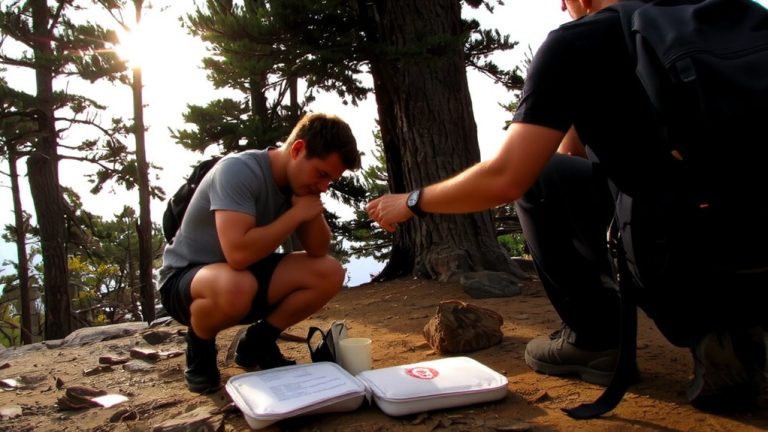
Grab those shears from your first-aid kit or the AED carry case and clear the person’s chest fast-most AEDs need a dry, bare surface about the size of a handprint for each pad, so cut through shirts, jackets, or base layers, and don’t hesitate to snip away an underwire bra, since metal can throw off the electrical signal or even cause burns. AED pads need proper electrode pad adhesion, so wipe the chest with a dry cloth from the kit to guarantee a dry chest free of sweat or oils. If you see chest hair, use the safety razor to shave chest hair-thick patches block contact. Avoid medication patches; remove them with gloves and clean the area. Metal interference from underwire bras or jewelry can disrupt the current, so keep the bare chest clear. Always double-check for a dry, bare chest before applying pads.
Press the Shock Button When Advised
Why wait when every second counts? If the AED decides a shock is needed, it’ll prompt you to press the shock button-don’t hesitate. The AED analyzes heart rhythm every two minutes and only advises a shock if it detects a life-threatening cardiac arrhythmia like ventricular fibrillation. When the device says “Shock advised,” make certain everyone stands clear and loudly shout “Stand clear!” before you press the shock button to deliver a shock safely. No one should touch the person, not even during rescue breathing or CPR. Survival rates drop 7–10% per minute without defibrillation, so acting fast when the AED tells you to press the shock matters. The AED won’t let you shock unless necessary-it’s smart, so trust it. Once the shock is delivered, immediately resume CPR.
Continue CPR After AED Use
Even if the AED delivers a shock, you can’t stop now-immediately restart CPR with chest compressions, pushing hard and fast at a rate of 100 to 120 compressions per minute, about 2 inches deep for adults, to keep oxygenated blood flowing to the brain and essential organs. You must continue CPR after AED use, performing 5 cycles or roughly 2 minutes of chest compressions, even if the person moves or breathes weakly. The AED will reanalyze the rhythm afterward. If no shock is advised, maintain circulation with uninterrupted CPR. Survival rates improve by up to 70% when you use an AED and immediately continue CPR. The device won’t shock non-shockable rhythms, so consistent chest compressions are crucial during a cardiac emergency. Keep going until emergency services take over or the AED prompts you to stop.
Handle Outdoor Risks Safely
You can safely use an AED on a trail-the devices are built to handle outdoor conditions, but you’ve got to prep the scene and victim right. Cardiac arrests demand immediate action, so move them to a dry surface if they’re on wet ground; use a rescue blanket or jacket to insulate and prevent current from grounding. Make sure the chest is dry and free of moisture for pads to adhere and read the person’s heart activity accurately. If there’s chest hair, quickly shave it with the safety razor in the AED kit-this guarantees good contact and avoids failed shock delivery. During rhythm analysis or shock, guarantee no one is touching the victim; shout “Clear!” loud enough to be heard over trail noise. Don’t delay for pacemakers or pregnancy-AED use is safe. Managing outdoor risks means acting fast, smart, and with the right prep.
On a final note
You’ve got this-stay calm and use the AED fast, every second counts. Turn it on, follow the voice, and let it guide you. Clear the chest, apply pads firmly, and press shock if told. Keep doing CPR until help arrives. Out there, a lightweight AED in your pack, like the Zoll AED Plus (4.8 lbs), could save a life-just like it did for a hiker near Telluride last summer.