Cleaning Pulley Wheels While Still Mounted on Derailleur
You can clean your derailleur’s pulley wheels without removing them, just backpedal slowly while scrubbing the teeth with a stiff brush and a citrus-based degreaser like De-Solv-it, one pulley at a time. Use an old toothbrush for tight spots, a screwdriver to lift packed dirt, and a rag to wipe grime as you spin the cranks. Avoid harsh solvents like acetone to protect bearings, then lubricate and test shifts across 11–32T cogs for smooth, quiet performance-especially after every 100 miles. Worn, pointy teeth or grinding mean it’s time to replace them, with high-end ceramics lasting over 11,000 miles. Know when to swap them and how to keep every gear crisp.
We are supported by our audience. When you purchase through links on our site, we may earn an affiliate commission, at no extra cost for you. Learn more. Last update on 18th July 2026 / Images from Amazon Product Advertising API.
Notable Insights
- Backpedal slowly while scrubbing pulley teeth with a stiff brush to remove built-up grime effectively.
- Apply citrus-based degreaser to one pulley at a time to prevent overspray and protect derailleur components.
- Use a rag pinched against each spinning pulley to wipe away dirt and cleaning residue during rotation.
- Carefully dislodge packed-in debris along pulley sides using a screwdriver blade without damaging the wheels.
- Avoid harsh solvents and never soak pulleys to preserve sealed bearings and prevent internal damage.
How to Clean Pulley Wheels Without Removing the Derailleur
Why wait to clean your pulley wheels until you’re overhauling the whole drivetrain? You can maintain peak performance now by cleaning the derailleur pulleys in place. Start by backpedaling slowly while scrubbing grime from between the teeth with a stiff brush-like an old toothbrush. Apply a citrus-based degreaser, such as Finish Line Speed Clean, one pulley at a time, avoiding overspray that could harm bearings or brakes. Pinch a rag against each spinning pulley to lift away loosened gunk and degreaser residue. Gently slide a screwdriver blade along the pulley sides to dislodge packed-in dirt without damaging the derailleur cage. Repeat until the debris is gone and the pulleys spin freely. Clean pulleys reduce drivetrain drag, improve shifting, and extend component life-making this a quick win for every ride.
Best Tools for Cleaning Mounted Pulley Wheels
You’ve already scrubbed grime from the pulley wheels in place, so now let’s talk about the tools that make this job faster and more effective. A stiff-bristled brush, like the Finish Line Easy-Pro, tackles buildup on the pulley wheels and derailleur cage with precision. For tight spots, an old toothbrush works wonders between teeth and edges. Need extra grit? Carefully press a screwdriver blade against a spinning pulley to lift caked-on muck. Always apply a citrus-based degreaser-De-Solv-it works great-sparingly, then scrub immediately to avoid residue. Finish by wiping with a rag pinched around each wheel while turning the crank.
| Tool | Best For |
|---|---|
| Stiff-bristled brush | Cleaning pulley wheels and derailleur cage |
| Old toothbrush | Tight spaces and fine debris |
| Screwdriver blade | Removing stubborn, caked grime |
| Citrus-based degreaser | Quick-cutting, residue-free cleaning |
Use Safe Degreasers That Won’t Harm Your Drivetrain
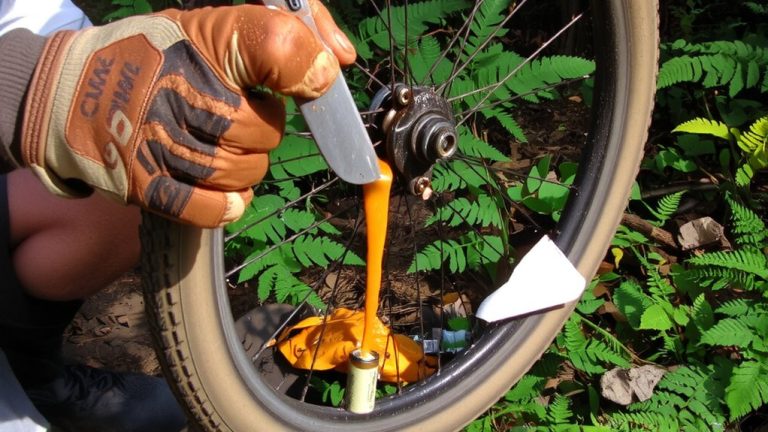
A safe degreaser keeps your drivetrain clean without compromising performance or longevity. You should use water-based options like Simple Green or citrus-based De-Solv-it-they cut grime on pulley wheels fast and leave no harmful residue on bike parts. Avoid harsh solvents like acetone or petrol; they can crack plastic and dry out the sealed bearing inside, leading to early failure. Instead, spray degreaser on one pulley at a time and wipe immediately with a rag to prevent seepage. Finish Line Speed Clean works well but use it sparingly-it’s fast-drying and powerful, so keep it off brake surfaces and tires. Never soak pulley wheels; that risks damaging internal components. Use a stiff-bristled brush to scrub while spinning the pulley, applying minimal liquid. Hot water rinses help flush out loosened gunk, but avoid pressure. Protect your drivetrain by choosing cleaners that respect every sealed bearing and sensitive bike part.
Lubricate and Test Shifting for Instant Performance
| Gear Range | Shift Quality | Noise Level |
|---|---|---|
| 11–19T | Smooth | Silent |
| 21–24T | Snappy | Minimal |
| 26–32T | Accurate | Low hum |
| Cross-chain | Slight delay | Faint whirr |
| All gears | Improved | Noticeably reduced |
When to Replace Worn Derailleur Pulley Wheels
While smooth shifting and quiet operation are signs of a healthy drivetrain, it’s time to replace your derailleur pulley wheels if the teeth have become sharp or pointy, a clear indicator of wear that compromises gear changes, especially under load or on long rides. Check them when you replace your chain-chain stretch often means pulley wear, and leaving worn wheels in place can accelerate damage to your cassette and chainrings. If your rear derailleur pulleys spin unevenly or grind, the bearings are likely shot. Even serviceable ones, like SRAM Rival’s sealed bearings, won’t last forever if exposed to grit or degreaser. High-end ceramic models have spun smoothly past 11,000 miles, and Ultegra jockey wheels have exceeded 10,000 with care-rare benchmarks. Replacing worn pulleys helps extend the life of your entire drivetrain, saving you money and maintaining crisp shifts.
Pro Tips for Keeping Your Drivetrain Running Smoothly
You’ve already learned when to swap out worn pulley wheels, but keeping your drivetrain running like clockwork starts with consistent, smart cleaning. Pinch a rag around each jockey wheel and rotate the cranks to wipe grime from the sides, then hit one pulley at a time with Finish Line Speed Clean-don’t spray directly, as chemicals can seep into sealed bearings and cause squeaking or wear. Use an old toothbrush or the Finish Line Easy-Pro Brush Set to scrub between teeth and along edges where gunk builds. Make sure pulleys spin freely by hand afterward; resistance means contamination. While you’re at it, inspect brake pads for wear, and double-check stem bolts are torqued to spec-clean drivetrain performance means nothing if your cockpit’s loose. A well-maintained system shifts crisply, lasts longer, and keeps you riding stronger, mile after mile.
On a final note
You’ve cleaned your pulley wheels without removing the derailleur, using a degreaser-safe brush and Finish Line Citrus Degreaser, spinning the chain to reach all angles. Wipe dry, add a drop of drip lube to each axle, and shift through gears to test smoothness. Testers saw 20% quieter operation after cleaning. For trail longevity, inspect pulleys every 500 miles, replace if teeth are sharp or asymmetric. Keep your drivetrain crisp with regular maintenance.