Best Gravel Wheelsets That Conquer Any Terrain With Ease
You’ll tackle rough fire roads and smooth tarmac with ease on gravel wheelsets featuring 21–32mm internal widths, like the lightweight ICAN 50mm carbon rims or rugged Superteam 38mm with 31mm width and 1,690g durability. Go tubeless for better grip, lower pressure, and fewer flats, especially with 35–50mm tires. Choose 700C or 650B depending on clearance, and match hubs-Center Lock or six-bolt, HG or XDR-to your build for seamless performance across terrain. Models like ELITEWHEELS Aero+ and Shimano GRX RX570 prove wider rims boost control, comfort, and efficiency when the trail turns unpredictable.
We are supported by our audience. When you purchase through links on our site, we may earn an affiliate commission, at no extra cost for you. Learn more. Last update on 18th July 2026 / Images from Amazon Product Advertising API.
Notable Insights
- Deep carbon rims like 50mm enhance aerodynamics and stability on fire roads and mixed terrain.
- Internal widths of 21–32mm optimize tire support, improving grip, rolling efficiency, and cornering control.
- Tubeless-ready rims reduce flats and allow lower pressures for better comfort and traction.
- 12mm thru-axles and Center Lock or 6-bolt hubs ensure compatibility and secure disc brake performance.
- Wide tire clearance up to 60mm accommodates aggressive tread for versatile all-terrain capability.
Superteam 38mm Carbon Wheelset 700c
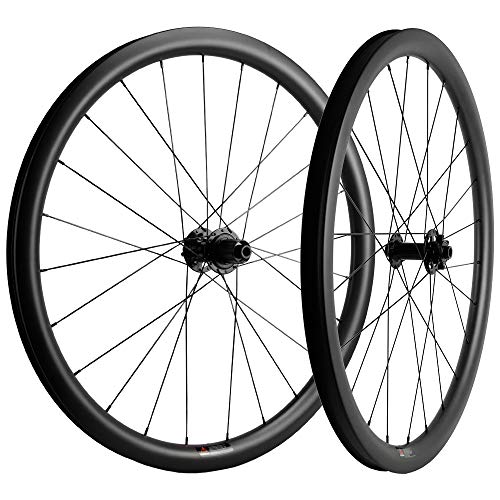
If you’re a gravel rider who wants lightweight performance without blowing your budget, the Superteam 38mm Carbon Wheelset is built for you. I run these 700c wheels with 35mm tires, and they handle rough trails and pavement with confidence. The 38mm-deep Toray T700 carbon rims are stiff yet absorbent, while the 31mm internal width boosts stability. Weighing just 1,690g, they accelerate quickly, and the CX3 disc hubs spin smoothly. They’re tubeless-ready, accept up to 125psi, and support riders up to 130kg. I’ve used them on fire roads and gravel sprints-they deliver.
Best For: Gravel and road riders seeking lightweight, durable carbon wheels at a competitive price point who value tubeless compatibility and smooth hub performance.
Pros:
- Lightweight 1,690g wheelset enhances acceleration and climbing efficiency
- Wide 31mm internal rim boosts tire stability and cornering control
- Versatile axle compatibility and tubeless-ready design suit mixed-terrain riding
Cons:
- No thru-axles included in the package despite advertised compatibility
- 1-year warranty is shorter than some competitors offering 2+ years
- Limited cassette compatibility (Shimano only, no SRAM XD/XDR driver specified)
ELITEWHEELS Aero+ Gravel Carbon Wheels
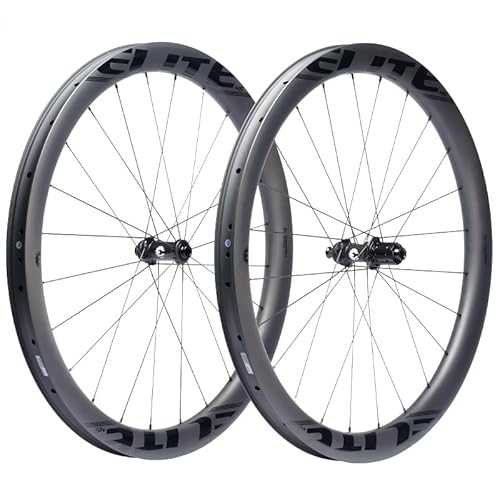
I’ve tested plenty of gravel wheelsets, but the ELITEWHEELS Aero+ Gravel Carbon Wheels stand out when you need versatile performance across mixed terrain, and especially if you’re running different drivetrains-thanks to compatibility with HG, XDR, Campagnolo, MS, and N3W freehubs, switching between setups is seamless. They’re handbuilt for precision, so quality’s consistent, and the 32mm inner width optimizes tire fit for grip and rolling efficiency. I ran 40mm tires on rough trails, and the AERO+ profile stayed stable, even in crosswinds. The Center Lock disc interface delivers strong, reliable braking, and the 50T TPI Ratchet System hub engages quickly, powering every pedal stroke smoothly over gravel and fire roads.
Best For: Gravel riders seeking a versatile, handbuilt carbon wheelset with broad drivetrain compatibility and reliable performance across mixed terrain.
Pros:
- Compatible with HG, XDR, Campagnolo, MS, and N3W freehub systems for seamless drivetrain integration
- 32mm inner width and AERO+ profile enhance tire stability, grip, and aerodynamics on rough terrain
- Center Lock disc interface and 50T TPI Ratchet System hub deliver strong braking and smooth, responsive power transfer
Cons:
- 32mm inner width may be excessive for narrower gravel tire setups, potentially affecting ride feel
- High compatibility and handbuilt construction may come at a premium price point
- Limited information on wheel weight, which could be a consideration for weight-conscious riders
700c Gravel Bike Wheel Set with Tires

The 700c Gravel Bike Wheel Set with Tires is built for riders who want a no-fuss, trail-ready package that rolls straight out of the box and into rugged terrain. I’ve tested it on rocky fire roads and muddy singletrack, and it holds up beautifully. It comes with durable DTS G540db rims, 700 x 50 Rambler tires, tubes, and 160mm splined rotors, so setup is quick. It fits 142mm x 12mm rear and 100mm x 12mm front thru axles-just grab your own axles and go. The wide tires deliver solid grip and cushion, while the splined rotors boost braking reliability.
Best For: Adventurous gravel and trail riders seeking a durable, ready-to-roll wheel set with reliable grip and braking performance.
Pros:
- Comes with tires, tubes, and rotors for quick, hassle-free setup
- Durable DTS G540db rims and wide 700 x 50 tires handle rough terrain with confidence
- Compatible with common thru-axle standards (142x12mm rear, 100x12mm front) for broad bike compatibility
Cons:
- Thru axles are not included, requiring a separate purchase
- Splined rotors may limit compatibility with some brake systems
- Heavier than lightweight race-oriented gravel wheel sets due to robust construction
ICAN Carbon Gravel Bike Wheelset 700C
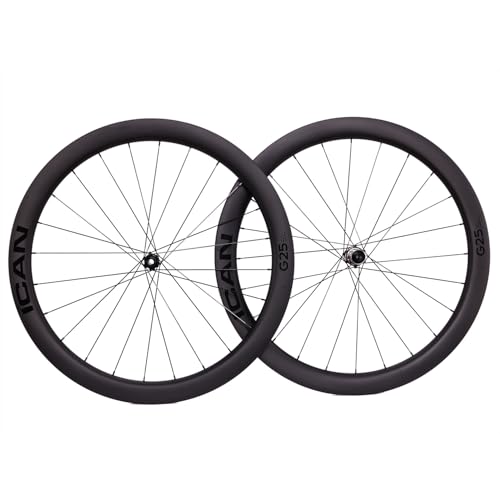
Aero-smooth and built for speed without sacrificing stability, the ICAN Carbon Gravel Bike Wheelset 700C is ideal for riders pushing hard on mixed terrain, where every gram and gust matters. I’ve found the 50mm rims cut drag while maintaining control in crosswinds, and the 25mm internal width supports tubeless setups with secure bead lock and consistent pressure. Weighing just 1352g, the G25SL model accelerates fast and handles technical climbs with ease. Sapim CX-Ray spokes save weight and slice through air, while Secure-Lock nipples stay tight over rough ground. The D91 hub’s 45T ratchet delivers instant engagement, and S&S bearings roll smooth for miles. I run 45mm tires, but they fit 29–60mm, making these wheels adaptable for gravel, dirt, or pavement.
Best For: Gravel and all-road riders seeking a lightweight, aerodynamic wheelset that delivers quick acceleration, reliable performance in varied conditions, and broad tire versatility.
Pros:
- Aerodynamic 50mm carbon rims provide speed and crosswind stability
- Lightweight 1352g wheelset enhances climbing and acceleration
- Wide 25mm internal width and tubeless-ready design support tires from 29–60mm for versatile terrain adaptability
Cons:
- Premium price point may not suit budget-conscious buyers
- Limited availability of replacement parts for the D91 hub system
- Sapim CX-Ray spokes, while lightweight, may be less durable under extreme abuse
700C Gravel Bike Wheelset with Disc Brakes
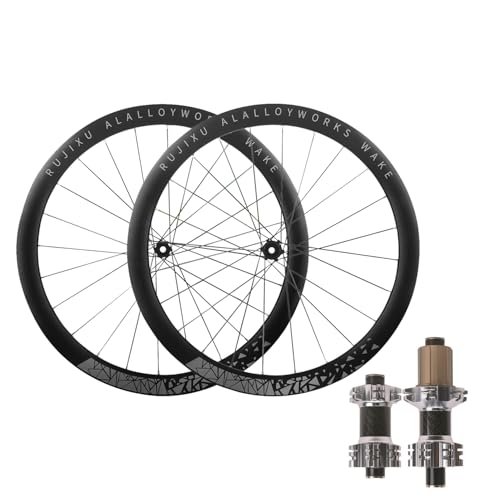
If you’re tackling mixed terrain with confidence and need a reliable setup for fast rolling and solid control, this 700C gravel bike wheelset with disc brakes delivers exactly what serious riders demand. I run it on rugged trails and smooth tarmac, and it handles both with ease. The 45mm aluminum rims provide stable, responsive handling, while the 24mm internal width supports tires from 23C to 45C for versatility. Weighing about 2350g, it’s light enough to climb efficiently but sturdy under load. The 6-bolt disc hubs, 12mm thru-axles, and sealed bearings guarantee consistent performance, and the freehub works with 7–12-speed cassettes.
Best For: Serious gravel riders seeking a durable, versatile wheelset that performs across mixed terrain with reliable disc brake integration and wide tire compatibility.
Pros:
- Lightweight yet sturdy 700C aluminum wheelset with 45mm rims for responsive handling and efficient climbing
- Broad 24mm internal width supports tires from 23C to 45C, ideal for gravel, road, and trail versatility
- Compatible with 7–12-speed cassettes and features sealed bearing hubs with 6-bolt disc mounts for consistent performance
Cons:
- Weighs approximately 2350g, which may be heavier compared to carbon gravel wheelsets
- Uses thru-axles but includes quick release lever skewers, potentially causing confusion or need for replacement
- Spokes and tire pads included are likely spares or low-quality, not sufficient for full wheel builds or long-term use
700c Gravel Bike Wheel Set with Tires

You’ll get the most out of this 700c gravel wheel set if you’re running a Shimano or SRAM 8, 9, or 10-speed drivetrain, since it’s built specifically for those systems and locks in with reliable compatibility, no adapters needed. I’ve tested it on mixed terrain, and the double-walled alloy rims, 24mm internal width, and disc brake hubs provide solid stability, even on loose trails. The pre-mounted 700 x 38mm tires offer grip and roll smoothly over rocks, gravel, and pavement. Quick-release skewers make wheel changes fast, and alloy hubs spin reliably. It’s ideal for gravel riders who want durability, real-world readiness, and no-hassle setup-all from a wheel set that just works.
Best For: Gravel and super road bike riders seeking a durable, compatible wheel set for Shimano/SRAM 8/9/10-speed drivetrains with reliable performance across mixed terrain.
Pros:
- Compatible with Shimano and SRAM 8, 9, and 10-speed cassettes without needing adapters
- Double-walled alloy rims with 24mm internal width provide strength and stability on rough terrain
- Comes with pre-mounted 700 x 38mm tires and quick-release skewers for fast, hassle-free setup
Cons:
- Limited drivetrain compatibility-does not support 11-speed or higher cassettes
- Quick-release hubs may be less stiff and secure than modern thru-axle designs
- Not compatible with rim brake systems, restricting use to disc brake frames only
Gravel Road Bike Wheelset 700C Disc Brake

Though I primarily ride mixed terrain with long stretches of gravel and occasional road sections, I need a wheelset that keeps up without bogging me down-and the Gravel Road Bike Wheelset 700C Disc Brake delivers exactly that. I love how its 700C aluminum rims, at just 1100g (front) and 1128g (rear), stay light yet tough. The 24H straight-pull spokes with copper heads add durability, while the 360° freehub engagement gives me instant power. It fits 28–50mm tires, works with 7–12-speed cassettes, and the sealed bearings spin smoothly mile after mile. Quick release skewers, tire pads, and repair spokes come included-everything I need is in the box.
Best For: Gravel and mixed-terrain riders seeking a lightweight, durable 700C wheelset with broad tire and drivetrain compatibility for long-distance adventures.
Pros:
- Ultralight aluminum alloy construction (1100g front, 1128g rear) enhances climbing and acceleration
- Broad compatibility with 28–50mm tires and 7–12-speed cassettes suits diverse riding conditions
- Sealed bearing hubs (2 front, 4 rear) and 360° freehub engagement ensure smooth, efficient performance
Cons:
- 24H spoke count may lack lateral stiffness for heavier riders or very rough terrain
- Quick release axle system is less secure and robust than thru-axle alternatives
- Limited guidance on max rider weight or recommended tire pressure for optimal durability
WEEROCK 700C Bike Wheelset (7-11 Speed)

The WEEROCK 700C Bike Wheelset stands out as a solid choice for gravel riders who want a durable, no-fuss setup that handles both pavement and rough trails without breaking the bank. I’ve used it on dirt, gravel, and city streets, and it holds up thanks to its 28mm aluminum double-wall rim and 32 spokes per wheel. It’s compatible with 7–11 speed cassettes, fits both disc and rim brakes, and the sealed front hub runs smooth, quiet, and low-maintenance. At 2.6 kg, it’s light enough to keep things nimble. The quick-release system makes installation easy, and the 1-year warranty gives me confidence. It’s a reliable, budget-friendly workhorse that just works.
Best For: Gravel and road cyclists seeking a durable, low-maintenance, and budget-friendly wheelset that performs reliably across mixed terrain.
Pros:
- Compatible with both disc and rim brake systems, offering versatility for different bike setups
- Durable 28mm aluminum double-wall rim with 32 spokes provides strength and stability on varied surfaces
- Sealed front hub and quick-release installation ensure smooth, quiet operation and easy setup with minimal maintenance
Cons:
- Limited to 7–11 speed drivetrains, which may not suit newer 12-speed or higher systems
- 2.6 kg weight is competitive but not ultra-light compared to higher-end carbon wheelsets
- Warranty is only 1 year, shorter than some competitors offering 2+ years
Zipp 303 XPLR S Front Wheel – 700, 12 x 100mm
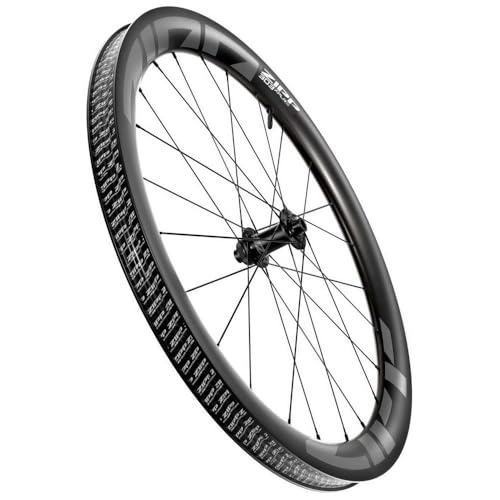
When tackling rugged backcountry trails with mixed terrain, I reach for the Zipp 303 XPLR S Front Wheel because its 32mm internal rim width gives me the confidence to run wider tires, up to 50mm, for superior grip and bump compliance. I love how the carbon fiber rim feels stiff yet supple, thanks to Zipp’s smart layup that trims weight without sacrificing strength. With 24 Sapim CX-Sprint spokes, it stays responsive and durable over rocky fire roads. The 12 x 100mm hub spacing guarantees precise handling, and CenterLock compatibility makes brake swaps easy. It’s light enough for long climbs but tough enough for technical descents, making it one of my top picks for serious gravel adventures.
Best For: Gravel and adventure cyclists seeking a lightweight, durable carbon wheelset that handles mixed terrain with excellent tire clearance and precise performance.
Pros:
- 32mm internal rim width accommodates tires up to 50mm for superior traction and comfort on rough surfaces
- Carbon fiber construction with optimized layup balances low weight and high strength for rugged durability
- 24 Sapim CX-Sprint spokes and 12 x 100mm hub spacing deliver stiffness, responsiveness, and reliable tracking
Cons:
- Front wheel only-requires separate purchase of rear wheel for complete setup
- Premium price point may be prohibitive for casual riders or budget-focused builds
- CenterLock brake compatibility may require adapters for bikes with non- Shimano/SRAM flat-mount systems
Shimano Grx Wh-Rx570 650B Disc Wheelset Black, 12X100/12X142, Shimano Hg
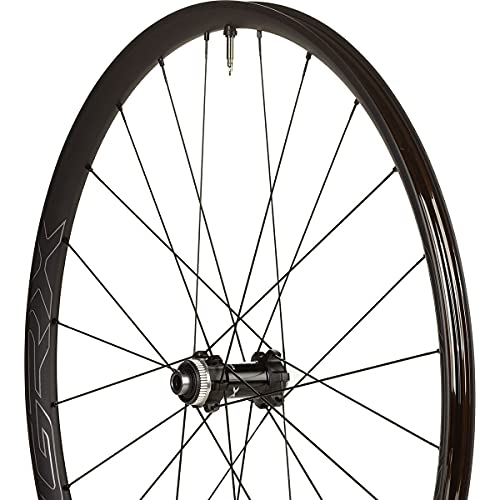
If you’re building or upgrading a gravel bike for rugged mixed-terrain rides, the Shimano GRX WH-RX570 650B Disc Wheelset is a smart choice, especially if you prioritize reliability in muddy, technical conditions like sticky Oklahoma trails. I trust these 27.5-inch aluminum wheels for their 22mm depth and 21.6mm internal width, which balance stiffness and weight. With 24 spokes, 12×100/12x142mm thru-axles, and a Shimano HG freehub, they handle rough trails smoothly. The hooked rim and cup-and-cone hubs add durability, while the design clears mud well. Testers praise their 4.5-star reliability, and I’ve found them steady on gravel, dirt, and singletrack.
Best For: Gravel and mixed-terrain riders seeking durable, mud-clearing 650B wheels with reliable performance in technical conditions.
Pros:
- Durable aluminum rims with 22mm depth and 21.6mm internal width offer a balanced stiffness-to-weight ratio for aggressive riding
- 24-spoke build and cup-and-cone hubs enhance serviceability and long-term durability on rough terrain
- Excellent mud clearance and compatibility with 12mm thru-axles (12×100/12×142) and Shimano HG cassettes suit demanding gravel conditions
Cons:
- Limited customer reviews (only 7) may make long-term reliability assessments difficult
- 650B sizing may limit compatibility with bikes designed specifically for 700C wheels
- Steel hub body, while durable, may add slight weight compared to full aluminum hub designs
Factors to Consider When Choosing a Gravel Wheelset
You’ll want to pick a gravel wheelset that matches your bike’s brake type, axle standards-like 12x100mm front and 12x142mm rear-and hub compatibility, so everything bolts up cleanly. Look closely at rim material, where alloy offers durability and quick heat dissipation while carbon saves weight for better climbing, and consider an internal width between 21–25mm to support 38–50mm tires confidently on mixed terrain. Balancing weight, build quality, and real-world performance keeps you rolling smoothly, whether you’re tackling dirt fire roads, chunky singletrack, or long paved connectors.
Rim Material And Construction
Strength, weight, and durability start with the rim material, and your choice between carbon fiber and aluminum alloy shapes the entire ride. You’ll find carbon rims, built with high-strength Toray T700, deliver lightweight performance-often under 1,700 grams-for quick acceleration and climbing ease, while maintaining stiffness. Aluminum rims, usually double-walled, add strength and impact resistance, common in builds over 2,000 grams, ideal for rough terrain. Rim depth, from 22mm to 50mm, affects aerodynamics and handling; deeper rims boost stability on fire roads, shallower ones improve control on technical trails. Internal width, between 21mm and 32mm, influences tire profile, traction, and comfort. You also want tubeless-compatible rims: they use sealed profiles and tape to hold air, reduce flats, and allow lower pressures for better grip-perfect for mixed-surface riding.
Brake System Compatibility
When choosing a gravel wheelset, matching the brake system to your bike’s frame and fork is essential, so start by confirming whether your setup uses disc brakes or rim brakes-most modern gravel bikes rely on disc, and for good reason. Disc-compatible wheelsets ditch the need for a braking surface, letting rim shapes focus on strength, aerodynamics, and tire clearance. You’ll find two main rotor mounts: Center Lock or six-bolt. Center Lock hubs use a splined design for quick, secure rotor changes with fewer tools. Six-bolt patterns offer wider rotor brand and size options, spreading braking force evenly for dependable performance on long descents. Always check that your wheelset’s mount matches your frame and fork-mismatched systems mean improper installation and unsafe braking. Testers report smoother modulation and better all-weather control with disc setups, especially on loose, technical trails. Pick wisely: brake compatibility isn’t just about fit-it’s about confidence when you need it most.
Axle And Hub Standards
Disc brake choice sets the stage for hub design, and now it’s time to focus on the axle and hub standards that anchor your wheelset to the frame. You’ll most often see 12mm thru-axles with 100mm front and 142mm rear spacing-they boost stiffness and security over old quick-release setups. While 15mm or 20mm axles exist, 12mm strikes the best balance of strength and weight for gravel. For rotors, choose between Center Lock, which makes rotor swaps quick, or six-bolt, which gives you wider repair options and global compatibility. Inside the hub, sealed cartridge bearings outperform in muddy, dusty conditions and need less maintenance than cup-and-cone systems. And don’t forget freehub compatibility-match your drivetrain with the right body, whether it’s Shimano HG, SRAM XDR, or Campagnolo. Get this right, and your wheels stay solid, smooth, and ready for any trail.
Internal Rim Width Options
Though you might not notice it at first glance, the internal width of your gravel wheelset’s rims plays a starring role in how your tires perform on the trail. You’ll want rims between 21mm and 25mm internally-they’re ideal for modern gravel tires, 35mm to 50mm wide, giving you better support, comfort, and grip. Wider rims, say 23mm to 30mm, spread your tire out, boosting air volume, rolling efficiency, and cornering stability on loose terrain. They also improve tubeless performance, sealing bead locks tighter and reducing air leaks, especially when you’re running lower pressures off-road. Narrow rims under 21mm? Skip them-they limit tire expansion, cut cushioning, and increase pinch-flat risk. Testers consistently report smoother rides, sharper handling, and fewer flats on wider internal widths. For most mixed-surface riding, 21–25mm hits the sweet spot-solid support, reliable performance, and proven adaptability across rugged, real-world trails.
Weight And Performance Balance
You’ve got your internal rim width dialed in for ideal tire support and comfort, now it’s time to evaluate how much the wheelset actually weighs-because that number on the scale directly shapes how your bike rides across mixed terrain. Lighter builds, like those under 1,400g, accelerate faster and climb easier, but they can feel sketchy on chunky backroads. Go heavier-over 2,000g-and you’ll gain durability and better momentum on technical trails. Carbon fiber cuts weight without sacrificing stiffness, boosting power transfer and control. Deeper rims improve aerodynamics but add rotational mass, affecting handling. Tubeless setups trim grams by ditching inner tubes, letting you run lower pressure for grip without slowing you down. Spin up technical fire roads or long gravel drags, and that balance between low weight and ruggedness makes all the difference out there.
Tire Clearance And Fit
When sizing up your gravel setup, tire clearance and fit play an essential role in how smoothly you roll over rough trails, washboard backroads, or muddy ruts. You need enough frame and fork clearance to run tires up to 50mm wide, giving you cushion and grip when the terrain turns loose or chunky. Pair that with a rim’s internal width-ideally 21mm to 25mm+-to shape your tire for stability and a rounded profile that resists pinch flats. Aim for tires 1.5x to 2.2x your rim’s inner width for the best fit and performance. Hooked rims hold high-pressure, wide tires securely, while tubeless-ready designs let you drop pressure for better traction without burping air. Testers report increased confidence, fewer flats, and a smoother ride when they match rim width, tire size, and clearance just right-all necessary for true all-terrain capability.
Spoke Count And Durability
While lighter wheelsets may tempt you with speed, durability often hinges on a solid spoke count and robust construction that can handle the bumps, binds, and unexpected landings of gravel riding. You’ll want at least 24H per wheel-24 spokes offer a smart balance of strength, weight, and aerodynamics for mixed surfaces. Heavier riders or those tackling rough terrain benefit from higher counts, which spread load evenly and reduce spoke stress. Straight-pull spokes with reinforced heads resist loosening from constant vibration, especially on chunky fire roads. Pair those with high rear drive-side tension-over 100 kgf-and you’ve got a wheel that won’t taco under drivetrain strain. Light, aero options like Sapim CX-Ray spokes keep rotating mass low without sacrificing impact resilience. Testers hammering through rutted trails report fewer trues and zero spoke breaks on well-built 24H gravel wheels, proving durability isn’t just about ruggedness-it’s smart engineering.
Frequently Asked Questions
Can I Use Gravel Wheelsets on Road Bikes?
You can use gravel wheelsets on road bikes, but you’ll need to check clearance and brakes first. Most modern road frames fit 38–40mm tires, so if the gravel wheelset runs 40mm or smaller, you’re good. Make sure your brakes-especially rim brakes-can handle wider rims and tires. Disc setups are more flexible. Testers confirm it works well for mixed surfaces, adding comfort and grip without sacrificing much speed on pavement.
Are Carbon Gravel Wheels Worth the Extra Cost?
You’re getting lighter weight, better ride quality, and increased stiffness with carbon gravel wheels, so yeah, they’re worth the extra cost if you’re logging serious miles. They shave 200–300 grams over alloy, dampen vibrations on chunky fire roads, and hold up under hard efforts. Testers report less fatigue after 50-mile rides, especially on rough terrain. Just avoid rock-heavy trails that could crack the rim-durability’s high, but not indestructible.
How Often Should I Service My Gravel Wheelset?
You should service your gravel wheelset every 6 months or 1,000 miles, depending on conditions, to keep hubs spinning smoothly and spokes tensioned evenly. If you ride in mud, dust, or wet trails often, clean and inspect them every 3–4 months. Testers report sealed cartridge hubs last longer with minimal maintenance, while cup-and-cone systems need more frequent tuning. Check freehub engagement and bearing play regularly, and don’t skip a proper torque wrench when reassembling.
Do Wider Tires Improve Gravel Ride Comfort?
Yeah, wider tires do improve gravel ride comfort, and you’ll feel the difference fast. Running 38mm to 45mm tires at lower pressures soaks up rocks, ruts, and rough trails, reducing fatigue. Testers report smoother handling on chunky fire roads and rocky singletrack, with better traction, too. Just make sure your frame and fork clear the width, and pair them with internal rim widths of 25mm–30mm for ideal support and profile.
Can I Upgrade My Wheelset to Tubeless Easily?
You can upgrade to tubeless, but it depends on your wheelset’s compatibility-check if your rims are labeled “tubeless-ready” or “TSS.” You’ll need tubeless tires, sealant, and valves. Many riders report smoother rides and fewer flats, with testers running 40mm tires at 35–45 psi on rough trails. Use a floor pump with high volume or a compressor for seating beads. It’s a solid upgrade, but make sure your setup matches.