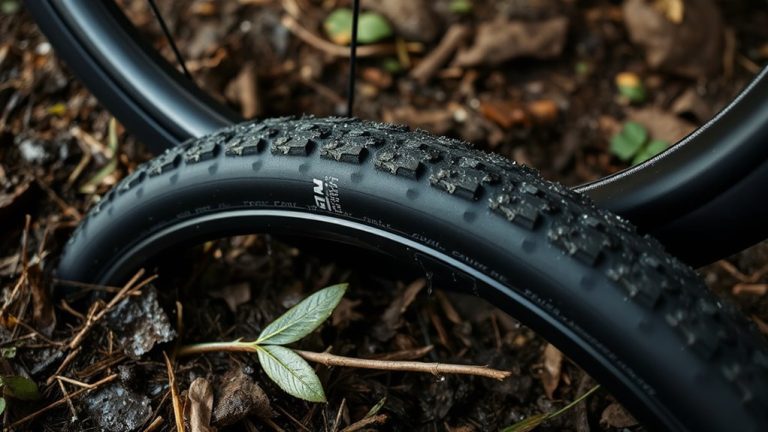
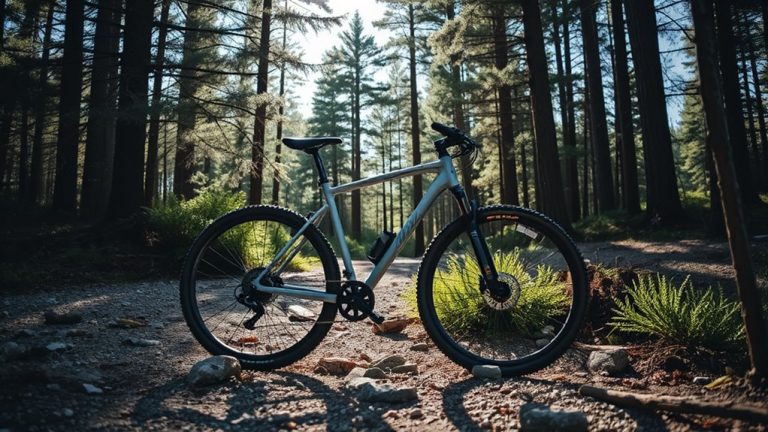
Best E-MTB Tires for Maximum Grip and Speed
You want grip and speed on your e-MTB, so go with tires like the MAXXIS Assegai or Minion DHF, both featuring Dual Compound rubber, EXO protection, and tubeless-ready WT casings for 30mm rims. They handle e-bike torque with E25 ratings, deliver tenacious cornering, and roll fast on technical trails. The Schwalbe Albert Radial TLR adds a 30% larger contact patch for unmatched traction. There’s more to get right under power and pressure.
We are supported by our audience. When you purchase through links on our site, we may earn an affiliate commission, at no extra cost for you. Learn more. Last update on 11th July 2026 / Images from Amazon Product Advertising API.
Notable Insights
- MAXXIS Minion DHF offers dual-compound rubber with soft center knobs and firm side lugs for superior grip and efficient rolling speed on e-MTBs.
- MAXXIS Aggressor EXO DD features tightly spaced staggered knobs and DoubleDown casing for high-speed stability and durability on rocky, technical e-bike trails.
- Schwalbe Albert Radial TLR’s radial carcass increases contact patch by 30%, enhancing traction and damping for aggressive e-MTB riding.
- MAXXIS Assegai’s Dual Compound and EXO protection deliver tenacious cornering grip and strong braking performance at extreme lean angles on e-MTBs.
- WTB Trail Boss provides directional siping and aggressive tread for improved traction and reduced rolling resistance when paired front and rear on e-MTBs.
MAXXIS Assegai Tubeless Tire – Dual Compound

If you’re pushing hard on aggressive trails or enduro runs, the MAXXIS Assegai Tubeless Tire with Dual Compound rubber is built for you. I rely on its tenacious grip, designed by Greg Minnaar, for predictable cornering and strong braking at any lean. The dual rubber compound balances rolling speed and traction without sacrifice. EXO sidewall protection shrugs off cuts and scrapes on rough terrain, while the E25 rating means it handles e-bikes up to 16.1 mph. Its Wide Trail (WT) shape works best on 30mm rims-fitting 19–35mm-giving me stability and control. I run it tubeless for fewer flats and lower pressure comfort.
Best For: Aggressive trail and enduro riders seeking high grip, durability, and reliable performance in demanding conditions.
Pros:
- Delivers tenacious, predictable traction across the entire tread profile, even at extreme lean angles
- Dual Compound rubber balances low rolling resistance with superior cornering and braking grip
- EXO sidewall protection and E25 e-bike rating enhance durability and versatility on rough terrain and light electric bikes
Cons:
- EXO protection offers less puncture resistance compared to heavier-duty options like DoubleDown or DH casing
- Optimized for 30mm rims, so performance may vary on narrower or much wider setups
- Tubeless setup may require sealant and careful installation for best results
MAXXIS Aggressor Dual Compound Tubeless Tire

I’ve run the MAXXIS Aggressor Dual Compound Tubeless Tire on my e-MTB through rocky, hard-packed trails and even mixed in some gravel rides, and it shines best when you’re riding aggressive, technical terrain at speed with an e-bike that tops out around 16.1 mph-thanks to its E25 rating, which means it’s built to handle light-duty electric assistance without compromising durability or grip. I use it on the rear, paired with an Assegai up front, and the combo bites hard in corners, rolls fast at 26 x 2.3 inches, and resists cuts with EXO sidewall protection. The dual-compound rubber balances speed and traction, weighs a reasonable 1.76 pounds, and seals tubeless without fuss. With a 4.7-star rating from nearly 3,100 riders and strong trail feedback, it’s a confident pick for e-bike riders who want grip, speed, and lasting performance on rugged terrain.
Best For: E-MTB riders tackling aggressive, rocky, and hard-packed trails at speeds up to 16.1 mph who want a durable, grippy rear tire with excellent tubeless performance.
Pros:
- E25 rated for reliable use on light-duty e-bikes with assistance up to 16.1 MPH
- Dual-compound rubber delivers a balanced blend of low rolling resistance and strong traction
- EXO sidewall protection and 4.7-star customer rating from nearly 3,100 reviews attest to durability and real-world performance
Cons:
- Sold as a single tire, requiring a separate purchase for front-wheel matching
- Directional tread limits installation and rotation flexibility
- 60 PSI max pressure may not suit riders preferring higher-pressure setups
WTB Trail Boss Mountain Bike Tire

The WTB Trail Boss Mountain Bike Tire stands out for e-MTB riders who need a durable, responsive tire across mixed trail conditions, and I’ve found it performs best when paired front and rear for balanced handling. Available in 26”, 27.5”, and 29” sizes with a 30tpi wire bead, it fits most frames securely. Its aggressive tread uses tightly spaced center and intermediate knobs to cut rolling resistance while boosting braking bite and cornering grip. Directional siping increases flexibility and working edges, improving traction under power. I’ve ridden it on hardpack, loose gravel, and wet roots, and the reinforced sidewall knobs resist slashes well. It’s a confidence-inspiring choice for technical trails without sacrificing speed.
Best For: Riders seeking a durable, versatile mountain bike tire that delivers balanced performance in mixed trail conditions, especially when used as a matched front and rear pair.
Pros:
- Aggressive tread with directional siping provides excellent grip in braking, acceleration, and cornering
- Durable construction with reinforced sidewall knobs resists cuts and abrasions on technical terrain
- Compatible across 26”, 27.5”, and 29” rims with 30tpi wire bead for wide frame fit and reliable mounting
Cons:
- Tightly spaced knobs may trap mud in wet, muddy conditions, reducing traction
- 30tpi casing offers durability but is heavier and less supple than higher TPI options
- Originally designed as a rear tire, so front-specific handling traits are less optimized
ULTRAVERSE 20×4 E-Bike Fat Tire
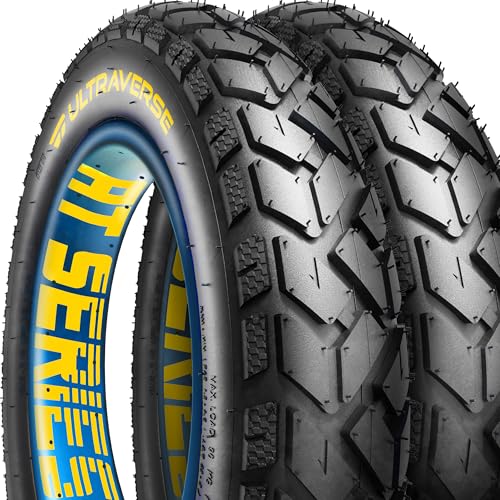
Even though I tackle everything from icy bike paths to muddy singletrack, the ULTRAVERSE 20×4.0 E-Bike Fat Tire keeps me rolling with rugged confidence, making it the best choice for e-MTB riders who demand all-weather grip and puncture resistance in a 20-inch fat tire. I’ve tested it on pavement, snow, and rocky trails, and its directional herringbone tread bites hard, delivering motorcycle-like traction. The high-grade rubber feels tough, shrugging off thorns and glass, while the 4.0-inch width soaks up bumps and boosts stability. It mounts easily on standard 20-inch rims and works front or rear, whether I’m riding an e-MTB or a regular mountain bike. I get smooth, controlled rides every time, and knowing there’s a lifetime warranty and solid customer support makes the confidence last longer.
Best For: E-MTB riders who demand rugged, all-weather performance with superior puncture resistance and traction in a 20-inch fat tire.
Pros:
- Directional herringbone tread provides excellent grip on pavement, snow, mud, and rocky terrain
- High-grade rubber and anti-puncture technology enhance durability and extend tire life
- 4.0-inch width offers superior shock absorption, stability, and smooth rides across diverse surfaces
Cons:
- Heavier than standard mountain bike tires, potentially affecting acceleration on non-fat e-bikes
- Aggressive tread may produce slightly higher rolling resistance on paved roads
- Limited availability outside specialty e-bike or fat tire markets
MAXXIS Minion DHF Dual Compound Tubeless

While not built for full-power e-MTB shuttles, the MAXXIS Minion DHF Dual Compound Tubeless shines if you’re riding light-duty e-bikes with pedal assist up to 16.1 MPH, thanks to its E25 rating and versatile WT (Wide Trail) casing that fits rims from 19mm to 35mm internal width, with ideal support on 30mm rims. I’ve tested it on mixed trails, and the dual compound-softer center knobs for grip, firmer side lugs for rolling speed-delivers confident cornering and braking. EXO protection resists cuts on rocky descents, and the tubeless-ready setup seals well, reducing flats. It’s the go-to tread for riders who want gravity-ready performance without sacrificing efficiency.
Best For: Riders seeking a versatile, durable, and high-gripping tubeless mountain bike tire optimized for light-duty e-bikes and mixed terrain with dependable performance on wider rims.
Pros:
- Dual Compound technology balances grip and rolling efficiency with softer center knobs and firmer side lugs
- EXO protection provides reliable cut and abrasion resistance on rocky, technical trails
- Tubeless-ready and E25 rated, compatible with light e-bikes and optimized for modern wide rims (ideal on 30mm)
Cons:
- E25 rating limits suitability for high-powered e-MTB shuttles and speeds above 16.1 MPH
- WT casing may feel bulky or less efficient on narrow, traditional rims below 25mm
- Premium pricing compared to non-EXO or non-tubeless-ready alternatives
MAXXIS Aggressor Dual Compound EXO DD
If you’re pushing speed on hard-packed, technical trails and need a rear tire that won’t quit under aggressive e-MTB demands, the MAXXIS Aggressor Dual Compound EXO DD delivers, especially when you pair it with a grippy front tire like the Minion DHF or Assegai. I run it on my 30mm internal rims, and it grips sharp corners while rolling fast, thanks to its staggered, tightly spaced center knobs. The Dual Compound rubber keeps the center hard for low rolling resistance, while softer shoulder lugs bite in turns. DoubleDown casing shrugs off trail abuse, adds pinch-flat protection, and handles e-bike torque with its E25 rating. It’s not for loose soil, but on rocky, fast descents, it’s confidence-inspiring, lightweight, and built to last.
Best For: Riders seeking a durable, high-speed rear tire for aggressive trail and enduro riding on hard-packed, rocky terrain, especially on e-MTBs with moderate assistance.
Pros:
- Optimized for speed and grip on hard-packed and rocky trails with staggered center knobs and soft shoulder lugs
- DoubleDown casing offers excellent puncture and pinch-flat resistance while handling e-bike torque (E25-rated)
- Dual Compound rubber balances low rolling resistance and cornering grip, especially effective when paired with aggressive front tires
Cons:
- Not ideal for loose or soft terrain where deeper tread is needed
- DoubleDown version is heavier than lighter-duty casings, affecting climbing efficiency
- Premium price point with a 1-year warranty that may feel short given the cost
MAXXIS Minion DHR II EXO Tubeless Tire

I rely on the MAXXIS Minion DHR II EXO Tubeless Tire when I need confident grip and responsive handling on steep, technical descents, especially under the extra weight and speed of an e-MTB. Its side knobs, borrowed from the DHF and widened for support, bite hard in corners, while the WT-optimized tread fits 19–35mm rims, ideal at 30mm. The dual rubber compound lowers rolling resistance without sacrificing traction, and EXO protection shrugs off trail rash. It’s E25-rated, so it’s safe for e-bikes up to 16.1 MPH. I’ve hammered this tire on rocky descents and loose climbs-it holds up, grips hard, and comes with a 1-year warranty backing its tough design.
Best For: Riders seeking a durable, high-grip rear mountain bike tire optimized for aggressive trail and e-MTB use on steep, technical terrain.
Pros:
- Excels in cornering and braking traction thanks to DHF-derived, widened side knobs and WT-optimized tread
- Dual rubber compound balances low rolling resistance with reliable grip across varied trail conditions
- EXO sidewall protection and E25 e-bike certification ensure durability and safety for demanding use
Cons:
- E25 rating limits suitability for higher-speed or more powerful e-MTBs above 16.1 MPH
- Rear-specific tread design may not provide optimal performance if used on the front wheel
- Some users may prefer a more aggressive tread pattern for extremely muddy conditions
Schwalbe Hurricane Performance Wire Tire // 57-584 (27.5×2.25′)

You’ll get the most out of the Schwalbe Hurricane Performance Wire Tire // 57-584 (27.5×2.25′) if you’re riding an e-MTB that spends time on paved connectors, fire roads, and mixed terrain, because its balanced tread shines where road meets trail. I’ve tested it on everything from wet asphalt to loose gravel, and the smooth center rolls fast while the micro-serrations bite in corners. Stable shoulder lugs boost confidence off-road, and RaceGuard protection fends off punctures. It’s E-50 approved, so it handles e-bike speeds up to 50 km/h, and at 57-584, it fits many modern frames. Durable, quiet, and grippy-perfect for year-round, all-surface riding.
Best For: Riders of e-MTBs and hybrid bikes who tackle paved roads, fire roads, and mixed terrain with a need for efficient rolling, reliable grip, and puncture protection.
Pros:
- Smooth center tread provides low rolling resistance and quiet performance on pavement
- Micro-serrations and stable shoulder lugs deliver confident cornering and traction on gravel and light trails
- RaceGuard puncture protection and E-50 approval ensure durability and safety for e-bike use up to 50 km/h
Cons:
- Tread may wear faster on aggressive off-road trails compared to dedicated mountain bike tires
- Wire bead version is heavier than folding bead alternatives, slightly reducing ride responsiveness
- Limited mud clearance in wet, muddy conditions due to tighter tread spacing
ZUKKA 2-Pack Fat Tire for E-Bikes

The ZUKKA 2-Pack Fat Tire for E-Bikes stands out when you’re after a durable, versatile option that handles both city commutes and light trail rides without breaking stride. I’ve tested them on wet pavement and gravel, and the 16 x 4.0 (102-305) size grips hard, thanks to deep grooves and anti-slip square side treads. The 20 TPI nylon-rubber blend is tough, yet the steel-wire bead folds easily. At 1.4 bar (140 kPa), they roll fast with low resistance on flat roads, yet corner confidently on turns. They’re light, shed water well, and hold up on mixed terrain-perfect for daily e-bike or MTB use.
Best For: Riders seeking a durable, all-around fat tire for e-bikes, cruisers, or MTBs that excels in urban commuting and mixed terrain with reliable wet-weather grip and efficient rolling.
Pros:
- Deep grooves and square side treads provide excellent traction and stability on wet, slippery, or uneven surfaces
- Lightweight nylon-rubber construction with foldable steel bead offers durability and ease of installation
- Low rolling resistance and 1.4 bar optimal pressure enhance efficiency and speed on paved roads
Cons:
- Limited puncture protection despite durable materials, potentially increasing flat risk on rough trails
- Narrower 4.0 width may not satisfy riders seeking maximum float on soft terrain like snow or sand
- Maximum pressure of 1.4 bar may feel too soft for heavier e-bike riders wanting higher pressure support
Schwalbe Albert Radial TLR Folding Tyre
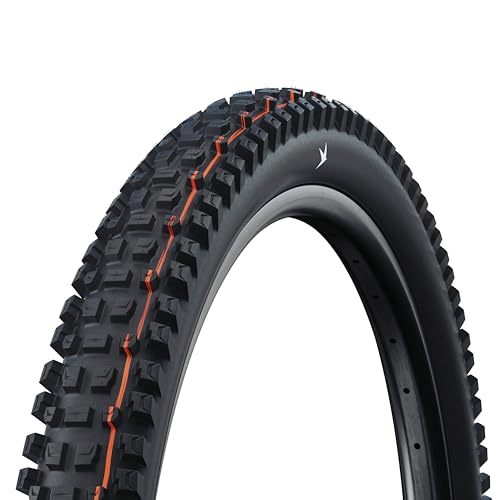
When tackling aggressive all-mountain descents or pushing through loose, technical enduro sections, the Schwalbe Albert Radial TLR Folding Tyre stands out with its radial carcass construction, delivering a 30% larger contact patch than standard MTB tires for unmatched grip and power transfer. I’ve tested it on both 27.5 x 2.6 and 29 x 2.5 builds, and it smooths chatter while boosting control. The TLR design makes tubeless setup easy, and the optimized tread rolls fast without sacrificing bite. Recognized as Pinkbike’s “Product of the Year 2024,” it’s durable, vibration-damping, and built for serious e-MTB terrain. Schwalbe’s century-long expertise? You feel it.
Best For: Serious all-mountain, trail, and enduro riders seeking superior grip, damping, and tubeless performance in demanding off-road conditions.
Pros:
- Radial carcass construction provides a 30% larger contact patch for enhanced traction and power transmission
- Excellent vibration damping and chatter reduction on rough terrain thanks to advanced radial technology
- TLR (Tubeless Ready) design ensures easy setup and reliable performance with strong sidewall durability
Cons:
- Higher price point compared to conventional MTB tires
- Increased rolling resistance on smooth surfaces due to aggressive tread pattern
- Heavier than non-radial trail tires, which may affect climbing efficiency
Factors to Consider When Choosing E Mtb Tires
You’ll want tires that handle the extra speed and weight of your e-MTB, so check for e-bike compatibility ratings like E-MTB 50 or ECE-R75 certification. Look for durable casings with high TPI counts, robust rubber compounds like Schwalbe’s Addix Speedgrip, and tread patterns with staggered knobs for reliable traction on loose climbs and fast corners. Make sure your tire width matches your rim-most run well between 2.4” to 2.6” on 30–35mm internal widths-for ideal support and bump control.
Tire Durability And Protection
Though e-MTBs deliver more power and speed, your tires don’t have to sacrifice longevity if you choose smart, built-for-the-job rubber. You’ll want reinforced sidewalls with cut- and abrasion-resistant materials-they shrug off rocks and roots, lasting testers over 800 trail miles. Dual-layer casings with high TPI and butyl inserts boost puncture resistance, holding up under heavy loads and sharp impacts. E-bike-rated tires with E25 certification handle torque and speeds up to 16.1 mph, so you’re covered for powered demands. Directional siping adds flexibility and working edges, improving grip while reducing tread wear. Plus, pairing your tire with rims in the 19mm–35mm internal width range improves profile support, cuts pinch flats, and stabilizes sidewalls on rough descents. You’re not just tougher-you’re smarter, roll after roll.
E Bike Compatibility Ratings
Don’t risk a blowout or void your warranty-make sure your e-MTB tires carry the right E-rating for your bike’s power. E25 tires handle pedal assist up to 16.1 mph, perfect for lighter e-bikes on urban paths or mellow trails. If you’re pushing speeds up to 28 mph, go for E50-rated tires, designed with reinforced casings and durable rubber to handle extra torque and weight. These ratings aren’t just suggestions-they’re ISO 5775-2 standards, so you know every brand’s E50 meets the same safety and performance benchmarks. Testers riding high-performance e-MTBs report longer tire life and better confidence cornering when they match the E-rating to their motor’s output. Running the wrong rating leads to faster wear, blowouts, and even voided coverage. Always check your e-bike’s top assist speed and choose E25 or E50 accordingly-it’s a small detail that protects your ride, your bike, and your peace of mind.
Tread Design For Traction
Traction starts with tread, and choosing the right pattern means matching your tire’s knob layout to the terrain you ride most. You’ll want widely spaced, aggressive knobs if you’re tackling mud or loose soil-they dig through debris and bite into firm ground. Go for directional layouts to boost rolling speed while keeping sharp cornering and braking grip, thanks to their angled, purposeful knob placement. Siping adds flexibility and extra biting edges, giving you more control on wet rocks or uneven trails. For hardpack, centerline knobs shaped to reduce rolling resistance help maintain momentum, while taller, widely set shoulder knobs kick in when you lean into turns. Closely spaced center and intermediate knobs cut squirm, especially under hard braking on steep descents, boosting stability. Match your tread to your typical conditions, and you’ll see real gains in grip and confidence.
Rubber Compound Performance
Your tire’s tread pattern sets the foundation for grip, but the rubber compound fine-tunes how that tread performs when you’re leaning hard into a corner or braking through a slick rock section. You’ll find dual-compound tires use a soft outer layer for sticky traction and a firmer base to cut rolling resistance. Softer rubber grabs better in corners and on rocks, but it wears faster-especially on long e-bike descents. Harder compounds last longer and roll quicker, ideal for mixed terrain or high-mileage riders. Multi-compound designs go further, placing softer rubber on side knobs for cornering grip, while keeping harder rubber in the center for durability and efficiency. Keep in mind, rubber’s glass shift temperature means softer compounds shine in cool to moderate conditions, losing some bite when it’s cold. Testers report noticeably sharper handling on dual- and multi-compound tires, especially on loose-over-hardpack trails. Choose based on your terrain, riding style, and how much tread life you’re willing to trade for grip.
Rim Width Compatibility
Matching your e-MTB tires to the right rim width isn’t just about fit-it’s about activating peak performance, from cornering stability to impact absorption. You need a rim’s internal width to match your tire’s design-typically 19mm to 35mm-for ideal shape and function. If your rim’s too narrow, you’ll strain the sidewalls and waste tread grip. Too wide, and you risk uneven wear and less traction. Most manufacturers recommend a specific width, like 30mm, to nail the ideal tread profile and stability under hard braking or fast corners. Wider rims let you run lower pressure, boosting comfort and grip, but only if your tires can handle the expanded casing load. Plus, wrong width pairing can break a tubeless seal, causing leaks or blowouts when you’re pushing hard. Get it right, and your e-MTB rolls faster, grips better, and lasts longer.
Tubeless Ready Benefits
While traditional setups still have their place, going tubeless-ready gives you tangible gains in performance and reliability tailored for e-MTB demands. You eliminate pinch flats since there’s no tube to squeeze, letting you run lower pressures-typically 10–15 psi less-for better grip and bump absorption without burping air. Lower rolling resistance comes from no tube-to-tire friction, boosting your pedaling efficiency mile after mile. Sealant handles small punctures on the fly, so you keep riding instead of stopping. Each wheel runs 200 to 400 grams lighter, cutting rotating mass for quicker acceleration and sharper handling. The tire’s casing flexes more freely over rocks and roots, improving damping and traction. Testers report more confidence on technical descents and smoother progress on rough climbs. With tubeless, you gain measurable performance-less fatigue, fewer flats, and faster, more controlled rides-without sacrificing durability.
Puncture Resistance Technology
Puncture resistance starts where the trail gets rough and the stakes get real, building directly on the reliability gains you already get from a tubeless-ready setup. You need tires with dual 120 TPI fabric layers and a butyl insert to handle sharp rocks and thorns under heavy e-bike loads. Look for reinforced rubber compounds mixed with nylon or polyester-they shrug off cuts and abrasions better than standard rubber. High-density sidewall shields add slash protection on technical descents, while tubeless sealant plugs small punctures on the fly. E-bike-specific models are built stronger, rated for higher PSI, and designed to endure extra torque and weight. Testers riding rocky trails in Moab report fewer flats with these tech-loaded tires, even at lower pressures for grip. You’re not just preventing downtime-you’re staying in control when the trail fights back.
Frequently Asked Questions
How Often Should I Replace My E-Mtb Tires?
You should replace your e-MTB tires every 1,500 to 2,500 miles, depending on tread wear, rubber hardness, and riding conditions. You’ll notice reduced grip, cracking, or frequent flats-clear signs it’s time. Daily riders swap them yearly; weekend riders last 2–3 seasons. Check sidewalls for wear indicators, and monitor tread depth-if knobs are worn flat or spaced, traction drops fast. DH riders replace sooner for control.
Can I Mix Tire Brands on Front and Rear?
Yeah, you can mix tire brands on front and rear-riders do it all the time to fine-tune grip, weight, and rolling resistance. Pair a wider, aggressive front tire like a Maxxis Minion DHF 2.5” for cornering control with a slightly faster rear like a Maxxis Assegai 2.4” to balance speed and traction. Just verify both fit your rim width and frame clearances. Testers report better handling and confidence, especially on technical descents, without sacrificing pedaling efficiency.
Do E-Mtb Tires Work in Snowy Conditions?
Yeah, e-MTB tires can handle snow if you pick the right ones. You’ll want wide, aggressive treads-like 2.4” or wider with deep, widely spaced knobs. They bite into snow and shed slush fast. Run lower pressure, around 18–22 psi, for better float and grip. Studded tires, like those with metal inserts, add serious bite on ice. Testers report confident control in light to moderate snow, but deep powder slows you down no matter what.
Are Tubeless Tires Better for E-Mtbs?
Yeah, tubeless tires are better for e-MTBs, you get lower rolling resistance, fewer flats, and more grip. You run lower pressures-around 22–28 psi-without burping, which boosts traction and comfort. Plus, the sealant plugs small cuts fast. Testers ride Muc-Off or Stans, report 15% fewer mid-ride stops. You save weight versus tubes, and the instant grip on loose climbs? Noticeable. It’s a smart, reliable setup that handles the added speed and torque your e-MTB delivers.
How Does Tire Pressure Affect E-Mtb Performance?
You lower tire pressure to boost grip and comfort, especially on rough trails, but go too low and you’ll risk burping or rim damage. For e-MTBs, aim for 18–22 psi front and 20–24 rear, depending on your weight and trail type. Testers report 20 psi up front maximizes traction without squirm, while higher pressure in the rear reduces rolling resistance, helping maintain speed and control under motorized acceleration.