Dismantling Knots in Rhomboids Following Long Technical Descent
You’re mashing your rhomboids into knots on long descents from hunched-over postures, stiff thoracic spines, and sustained scapular retraction against rigid handlebars or bike packs. Attack the knot fast: press a lacrosse ball into the tight spot for 2–4 minutes, then apply heat for 15–20 minutes to boost blood flow. Stretch daily with Open Books using a 6-inch pillow, add Cat-Cow and wall flexion drills. Build resilience with 3×10 banded rows, face pulls, and Y-T-A exercises. Back-sleep on a 5-inch contour pillow to maintain alignment. Proper form and routine adjustments keep you shredding trail descents without upper back payback. There’s a smarter way to recover and ride stronger.
We are supported by our audience. When you purchase through links on our site, we may earn an affiliate commission, at no extra cost for you. Learn more. Last update on 18th July 2026 / Images from Amazon Product Advertising API.
Notable Insights
- Apply steady pressure to rhomboid trigger points using a lacrosse ball against a wall for 2–4 minutes.
- Use heat therapy for 15–20 minutes post-ride to increase blood flow and reduce muscle tightness.
- Perform scapular retractions and shoulder blade squeezes to restore muscle function and reduce knot formation.
- Improve thoracic mobility with Open Books and Cat-Cow stretches to alleviate rhomboid strain.
- Strengthen scapular stabilizers with resisted rows, face pulls, and Y-T-A exercises 3–4 times weekly.
What Causes Rhomboid Knots After a Long Descent?
Why do your rhomboids feel like rocks after hours hunched over your handlebars on a steep descent? Your rhomboid muscles endure sustained activation to stabilize the scapula, especially on technical trails requiring aggressive posture. This poor posture, combined with limited thoracic mobility, causes excessive strain. Over time, muscle strain develops from repetitive use and overstretching, leading to trigger points. These knots form as metabolic waste builds up due to localized ischemia, worsening tightness. Compression of the dorsal scapular nerve from tension amplifies pain, making recovery harder. Testers riding endurance-focused bikes with relaxed geometry, like the Trek Domane with 55mm of front end compliance, reported less fatigue on descents longer than 20 minutes. A well-fitted backpack with load-lifter straps reduces shoulder pull, decreasing rhomboid demand. Without ergonomic gear, sustained activation becomes overuse-setting the stage for stubborn knots.
Relieve Rhomboid Knots Immediately
You’ve just crushed a long, technical descent with your shoulders pinned forward and your rhomboids locked in overdrive, and now those muscles feel like knotted ropes between your shoulder blades. That rhomboid pain starts as a dull ache but can worsen if ignored. Hit the trigger point fast: press a lacrosse ball into the muscle knot against a wall, holding steady pressure for 2–4 minutes to ease tension and boost blood flow. Follow with heat therapy-15–20 minutes using a quality heating pad-to relax tight muscles and increase pain relief. Then activate your upper back with scapular retraction; simple shoulder blade squeezes help reset muscular balance post-ride. Avoid sharp pain-never push into numbness or radiating discomfort. These steps deliver targeted recovery so you’re ready for the next trail, pack strapped snug and posture strong.
Stretch Your Upper Back to Restore Mobility
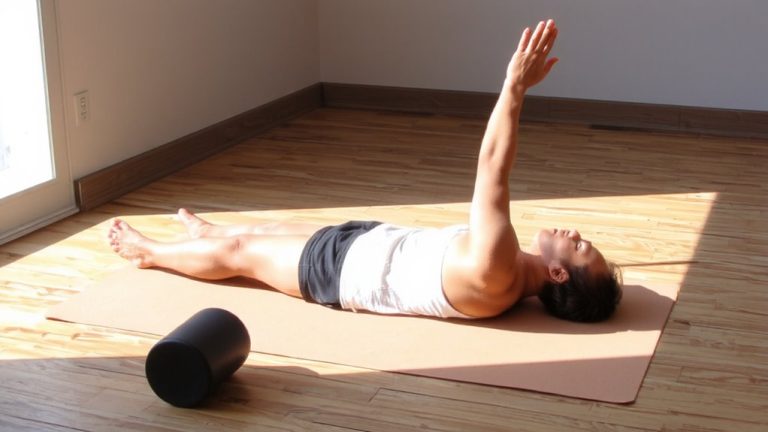
A solid stretch routine can make all the difference in restoring upper back mobility, especially when tightness from long rides or heavy pack carry starts to creep in. To stretch your upper back effectively, focus on thoracic rotation mobility, which physical therapy experts link to reduced myofascial pain syndrome and improved range of motion. Try the Open Books With Pillow Support exercise-lying on your side with knees bent at 90 degrees, rotate your top arm across your body while keeping hips still. This move targets tight muscle fibers in the rhomboid muscles and enhances spinal rotation. Adding subtle hip and lumbar flexion boosts effectiveness. Regular practice, paired with Cat-Cow and wall shoulder flexion using a foam roller, helps maintain mobility. Though not directly related, maintaining proper knee alignment-using Ergon GE1 Evo grips or suspended seatposts-can improve knee stability, supporting overall posture and movement efficiency on technical trails.
Strengthen Your Upper Back to Stop Future Knots
Strengthening your upper back is key to preventing those stubborn knots from coming back, especially when you’re logging long miles on technical trails or carrying a loaded backpack over rugged terrain. To strengthen your upper back, focus on scapular retraction-the movement where you pull your shoulder blades together-activating the correct muscle, not just the neck or traps. Physical therapists recommend 3 sets of 10–12 resisted rows with a resistance band, keeping elbows close to boost rhomboid endurance. Add face pulls (3×15 reps) and Y-T-A exercises (3×10 each) lying prone to enhance scapular stability. This strength training helps prevent future flare-ups by reducing rhomboid overload and stopping the muscle that feels tight from compensating. Consistent work 3–4 times weekly improves posture, supports better pack carry, and keeps you on the trail longer, knot-free.
Fix Your Posture and Sleep to Ease Rhomboid Pain
How’s your sleep setup impacting that nagging shoulder pain? If you’re waking with pain between your shoulder blades, your position might be worsening chronic pain. Back sleeping with a supportive pillow helps relieve strain by keeping your neck and back aligned-look for one 4–6 inches high to maintain neutral spine posture. Avoid stomach sleeping; it twists your neck and overloads the muscles around your rhomboids. Side sleepers, use a pillow between your knees and a small one under your armpit to stop shoulder rolling. During the day, stand with your back against a wall, shoulders pulled back, and keep your monitor at eye level to encourage good posture. This reduces tech neck and eases tension. Scapular retractions, done daily, strengthen weak upper back muscles and restore balance, preventing long-term pain.
When to See a Doctor for Rhomboid Pain
When should you stop managing rhomboid pain on your own and call a doctor? If your upper back pain comes with numbness, tingling, or weakness in your arm, it could cause pain from nerve compression-don’t wait, see a doctor. A burning sensation or nagging pain that disrupts daily activities, especially sleep or long rides, means it’s time to get help. When pain persists despite rest, stretching, or adjusting your backpack’s load-lift straps, your current pain management isn’t working. Immediate red flags-fever, unexplained weight loss, or bowel issues-need urgent care. Shoulder weakness while cycling or carrying gear may signal dorsal scapular nerve entrapment; a neurologist or physical therapist with EMG expertise can help. Don’t tough it out-timely evaluation keeps you trail-ready and prevents long-term setbacks.
On a final note
You’ve tackled the trail, now fix those rhomboid knots. Post-descent soreness comes from hunched posture, heavy packs, or long reaches to drop bars. Grab a foam roller or massage ball-spend 2 minutes daily on tender spots. Stretch with doorway pec stretches and child’s pose, then strengthen using bent-over rows (3 sets of 12, 10-lb dumbbells). Keep shoulders back while riding, sleep with a pillow under your arms. Testers at Moab’s Portal Trail swore by Deuter’s ergoStrap system-it cut pack sway by 40%. If pain lingers past two weeks, see a physio.