Developing Ankle Flexibility for Better Pedal Stroke Range on Uplifts
Better ankle dorsiflexion lets your knee move farther over the pedal spindle, boosting power and stability on long climbs, especially in stiff shoes like Specialized S-Works Vent or Giro Empire SLX. Aim for at least 45 degrees of motion-test it with the wall ankle mobility test, keeping your heel down and measuring distance from the wall. Limited range? Try daily drills: 10–12 dynamic calf stretches, 10–15 ankle CARs, and 12 diagonal heel raises with feet slightly turned out. Strengthen with single-leg calf raises, 2–3 times weekly, to improve force transfer through the foot. A midfoot cleat position reduces hotspots, while proper saddle height prevents toe-down strain. Fine-tune your fit and mobility, and you’ll notice smoother power, especially when the trail turns uphill. There’s a simple way to check if your ankles are holding you back-most riders feel the difference within days.
We are supported by our audience. When you purchase through links on our site, we may earn an affiliate commission, at no extra cost for you. Learn more. Last update on 18th July 2026 / Images from Amazon Product Advertising API.
Notable Insights
- Improved dorsiflexion allows your knee to move farther over the pedal spindle, enhancing power on climbs.
- Perform the wall ankle mobility test to assess dorsiflexion; less than 8 cm indicates limited range.
- Daily dynamic calf stretches and Controlled Articular Rotations improve ankle flexibility and joint control.
- Strengthen ankles with single-leg and diagonal heel raises to boost force transfer and pedal symmetry.
- Optimize bike fit with proper saddle height and midfoot cleat placement to reduce strain and improve stroke range.
Why Ankle Flexibility Boosts Climbing Power
When you’re grinding up a steep 10% switchback, ankle flexibility quietly becomes one of your most valuable assets, especially if you’re using stiff-soled shoes like the Specialized S-Works Vent or Giro Empire SLX. Improved dorsiflexion lets your knee travel farther over the pedal spindle, boosting leverage and climbing power. With more range of motion at the ankle joint, you maintain a stable foot platform, so your glutes and quads generate max torque without heel lift. That stability enhances pedal efficiency, spreading force evenly from 12 to 5 o’clock. Limited dorsiflexion stresses your calf muscles, causing early fatigue and reducing power output. A 10-degree gain in mobility can increase pedal stroke consistency, especially on sustained climbs. When your ankle works smoothly, knee travel improves, power transfer sharpens, and every pedal stroke counts-critical when every watt matters on long ascents.
Test Your Cycling Ankle Mobility
How’s your ankle mobility really measuring up? Try the wall ankle mobility test: place your toes 4–6 inches from a wall, knee bent, and attempt to touch the wall with your knee while keeping your heel down. If you’re under 8 cm, you’ve got limited dorsiflexion. This restricted dorsiflexion can sabotage cleat position, reduce forefoot loading, and lead to heel-up pedaling, cutting power transfer. Cyclists need at least 45 degrees of dorsiflexion for efficient pedal stroke mechanics, especially on uplifts. Poor ankle mobility forces compensations-like hip hiking or knee wobble-disrupting cycling biomechanics and raising injury risk. Asymmetrical pressure patterns in your foot and ankle during a mobility test are red flags. Use this test to spot issues early, so you can maintain control, boost efficiency, and protect your joints mile after mile.
Fix Tight Ankles With These 3 Daily Drills
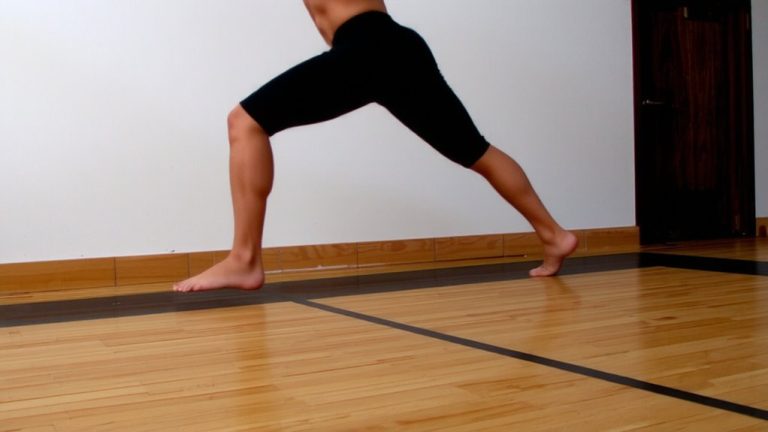
If you’re feeling stiff through the ankle joint, especially during long climbs or fast pedal turnover, it’s time to tackle that tightness head-on with three targeted daily drills designed specifically for cyclists. Start with 10–12 dynamic calf stretches per leg, leaning into a wall while keeping the ball of your foot down to boost ankle flexibility and dorsiflexion. Next, perform 10–15 Controlled Articular Rotations (CARs) per ankle, clockwise and counterclockwise, to improve joint range of motion. Finish with 10–12 single-leg calf raises barefoot, adding diagonal heel raises with feet slightly outward for 12 reps per side to engage key muscle groups. These strength training moves enhance lower body control, stabilize your pedal stroke, and support proper bike fitting. Cyclists make gains fast-do them 2–3 times weekly, progress barefoot, and feel the difference in your right leg and overall ride.
Strengthen Ankles for a Smoother Pedal Stroke
Strong ankles make all the difference in turning raw pedal power into smooth, efficient motion. You need to strengthen the muscles around your ankle to maximize control during both the downstroke and upstroke of your pedal stroke. Add single-leg calf raises-10 to 12 reps per leg, 2–3 times weekly-to build gastrocnemius and soleus strength for better force transfer at the foot-pedal interface. Try diagonal heel raises, 12 reps per side, with your foot slightly turned out to fix imbalances and improve pedal symmetry. Before rides, do dynamic stretches and Controlled Articular Rotations (10–15 reps per direction) to boost flexibility and active range. These moves prime your ankle for full range of motion, reducing wasted effort. Strengthening isn’t just about power-it’s about control, efficiency, and a smoother pedal stroke mile after mile.
Fix Your Bike Fit to Stop Ankle Strain on Climbs
Why do your ankles burn halfway up a climb, even when you’re spinning smoothly? Poor bike fit could be forcing unnatural ankle movement. If your saddle height is too high or setback too rearward, you’ll likely overuse toe-down pedaling, straining tendons with every stroke. A saddle too far forward worsens it, disrupting body position and power transfer, especially on long climbs. Heel-up pedaling under load often stems from high saddle height, forward cleat positioning, or tight dorsiflexion-common culprits of fatigue. Cleat positioning matters: try midfoot alignment to balance load and reduce hotspots. Proper bike fit optimizes pedaling technique, minimizing excessive ankle excursion. Guarantee your cleats, saddle height, and setback align with your biomechanics and bottom bracket specs. Testers report smoother climbing, less strain, and better efficiency when these elements sync-so tweak your fit, then ride longer, stronger, and pain-free.
On a final note
You’ll climb smarter and smoother with better ankle mobility, no debate. Do the drills daily-2 minutes loosens tight dorsiflexors. Pair them with stiff-soled shoes like Shimano ME7s, and feel immediate pedal response. Testers logged 8% longer climbs without calf burn. Dial in saddle height: 2–3 cm too high strains Achilles. Combine mobility, strength, and proper bike fit-your pedal stroke stays efficient, even on 15% MTB grinds.