How to Stay Centered Over the Bottom Bracket During Boulder Crawls
Shift your weight rearward until your butt’s over the rear axle, keeping heels down and pedals at 10 and 4 o’clock for clearance and grip. Use a level saddle, adjusted in 5mm increments, to balance front-to-back and stay centered over the bottom bracket. Time your power stroke-left foot at 11–1 o’clock-with a forward body rock to pop the rear wheel up. Install a 44g One Up Bash Guard to protect against strikes, and keep light hand pressure on the bars for control. Perfect your position with a hands-free balance test on a trainer, then refine it on curbs-you’ll nail the rhythm on rocky climbs with a few tweaks.
We are supported by our audience. When you purchase through links on our site, we may earn an affiliate commission, at no extra cost for you. Learn more. Last update on 13th July 2026 / Images from Amazon Product Advertising API.
Notable Insights
- Shift your weight rearward until your butt is directly over the rear axle to maintain balance over the bottom bracket.
- Position pedals at 10 and 4 o’clock to optimize crank angle and reduce the risk of strikes.
- Drop your heels to lower your center of gravity and enhance rear tire traction and clearance.
- Synchronize the power phase of your pedal stroke with a forward body rock to smoothly lift the front wheel.
- Confirm proper saddle position by performing a hands-free balance test on a level trainer at moderate effort.
Master Your Body Position for Boulder Crawls
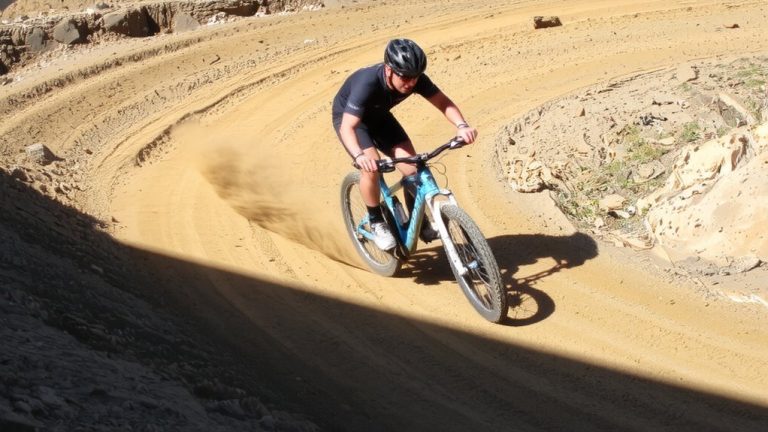
When you’re creeping over jagged rock faces, staying centered on the bike makes all the difference, so shift your weight rearward until your butt sits directly over the rear axle-this keeps the front wheel light enough to clear obstacles but balanced so it won’t lift uncontrollably. You’ll want your pedals at 10 and 4 o’clock, heels dropped to maximize rear tire grip and reduce pedal strikes on sharp rocks. Light hand pressure on the bars helps guide the front wheel, while a timed rock forward into the stem syncs with a single, powerful quarter-stroke to pop the rear wheel over ledges. Staying aligned over the bottom bracket is key-it’s your bike’s pivot point, and proper body position here guarantees control on steep, technical crawls. Practice slow-speed lifts on curbs to lock in balance, building precision that translates straight to trail.
Set Your Saddle for Balanced Rock Climbing
Balance is your secret weapon on steep, chunky climbs, and it starts right at the saddle. To stay centered over the bottom bracket, you need to set your saddle position just right-especially on technical rock crawls. Start by leveling your bike front to back on a trainer, saddle perfectly level. Get in the drops, spin a hard gear at 6–7 effort, then attempt to ride hands-free with arms extended back. If you pitch forward, your saddle’s too far forward-set it back in 5mm increments until you balance briefly. Once you pass, creep the saddle forward until you fail, then set it back 5mm from that point. This sweet spot keeps weight centered, improves traction, and boosts control on rocky inclines. The result? A stable, confident climb, every time.
Time Your Pedal Stroke With Body Rock
As you approach a steep rock face, syncing your pedal stroke with body movement isn’t just smart-it’s essential for keeping the rear wheel driving forward instead of spinning out. Time your hardest 1/4 pedal stroke the moment you rock your weight forward into the bars, maximizing rear traction. Start the power phase with your left foot at 11–1 o’clock to optimize torque delivery. Synchronize the pedal stroke with front wheel lift and your rearward weight shift so the rear wheel climbs just as your center of mass moves up. A delayed or early pedal stroke-by even 0.5 seconds-can stall the wheel or cause strikes. Practice this coordination slowly on curbs to build neuromuscular precision without momentum. It’s not about power, it’s about timing: the pedal stroke must match your body rock exactly. Master this, and steep boulder crawls become controllable, repeatable, and way more fun.
Prevent Bottom Bracket Strikes on Rocks
Though your bike’s geometry sets the baseline, you’ve got more control over bottom bracket strikes than you think-you just need the right setup and strategy. Add a 44-gram One Up Bash Guard or MRP Micro XC to block impacts. Keep your heels down, pedals at 10 and 4, and shift weight back-your butt should hover over the rear tire for better lift. Use light hands to float the front wheel, then time a strong 1/4 stroke (left foot at 11–1) to drive the rear tire over rocks.
| Technique | Benefit |
|---|---|
| Bash guard | Blocks direct hits, 44g weight |
| Heels down | Lowers effective BB height |
| Weight over rear tire | Balances bike, eases front lift |
| 10 & 4 pedals | Optimizes crank position |
| Practice on curbs | Builds timing and control |
Use the Balance Test to Confirm Your Fit
How do you know if your saddle position truly puts you over the bottom bracket, where power and control meet? Use the balance test to confirm your fit. First, level your bike on a trainer using a 4ft level across the axles, then set your saddle perfectly level. Warm up for 10 minutes to stabilize body position. Shift into a hard gear, drop into the hoods or drops, and ride at a 6–7 on the perceived exertion scale. Carefully remove your hands and extend them straight back. If you pitch forward, move the saddle back 5mm and retest. Once you can briefly hold balance, inch the saddle forward in small steps until you start to fall forward-then back it off just slightly. That’s your sweet spot: centered, balanced, and ready for precise boulder crawls.
Upgrade Bars and Stem for Better Control
Once you’ve nailed your saddle position, upgrading your bars and stem can make a huge difference in how your bike handles technical terrain. Swapping to a Nitto stem and Randonneur handlebars gives you higher hand placement and a longer reach, keeping you centered over the bottom bracket. This setup mirrors the Boulder bike’s fit, improving weight distribution on steep, slow climbs. You won’t overreach or lean too far forward, even when inching over rock gardens or balancing on the chain ring. Superimposed photos helped dial in exact geometry, ensuring a precise match to your ideal position.
| Component | Measurement / Type |
|---|---|
| Stem | Nitto 110mm, 0° rise |
| Handlebars | Nitto Randonneur, 48cm |
| Chain ring | 30T, well-protected |
After the upgrade, the bike feels stable, predictable, and much easier to control during boulder crawls.
On a final note
You stay centered by keeping your weight over the bottom bracket, knees bent, and elbows wide on wide bars, like 780mm Race Face Next. Short 40mm stems help, and a 30.5mm seatpost with 20mm dropper adds control. Test on rocky, steep trails-you’ll notice fewer BB strikes, better traction, and quicker recoveries when you time your pedal stroke just before each lunge.