What to Do If a Mountain Lion Stalks You on a Remote Trail
Stand your ground if a mountain lion stalks you-keep your backpack high to widen your silhouette, and raise your arms or open your jacket to appear 20% larger. Keep eye contact, speak firmly, and slowly back away without turning. Use a 20 oz whistle or air horn, and throw rocks near its feet. Keep 135 cm trekking poles extended, and have 7.9-oz bear spray ready at 20 feet. Fight fiercely if attacked, aiming for the face. More details follow.
We are supported by our audience. When you purchase through links on our site, we may earn an affiliate commission, at no extra cost for you. Learn more. Last update on 23rd July 2026 / Images from Amazon Product Advertising API.
Notable Insights
- Stand your ground and maintain an upright posture to appear larger and less like prey.
- Secure your backpack high and raise your arms or use trekking poles to increase your silhouette.
- Maintain direct eye contact and speak loudly to assert dominance without turning away.
- Slowly back away while facing the lion, avoiding sudden movements or running.
- Use noise, thrown objects, or bear spray to deter the lion if it approaches or attacks.
Stand Your Ground During a Mountain Lion Stalk
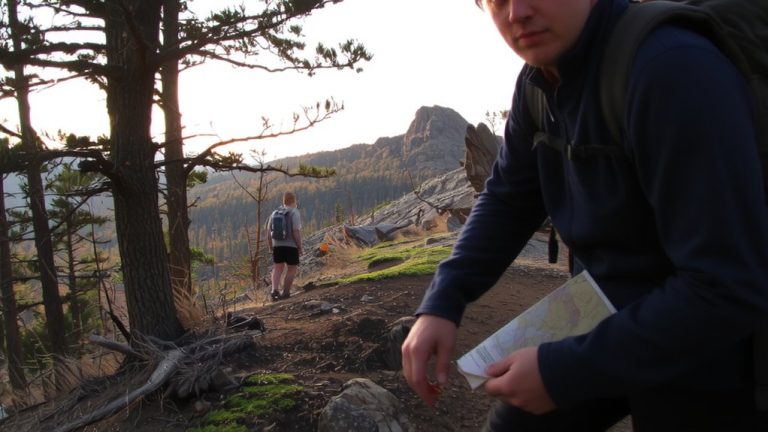
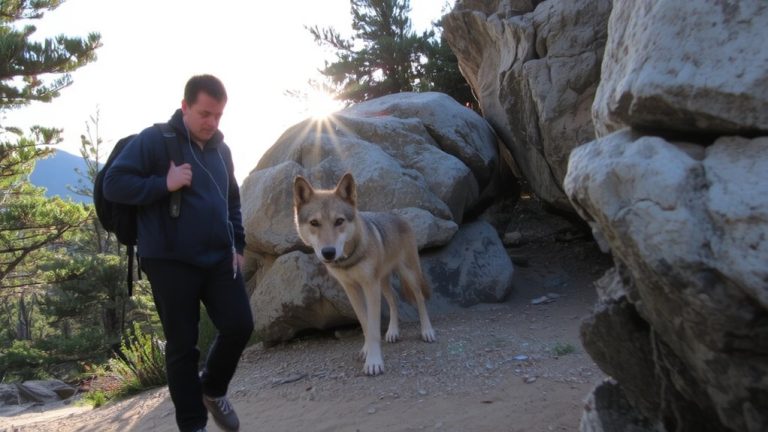
If you notice a mountain lion stalking you, the first thing you should do is stop, stand tall, and resist the urge to crouch or turn away-your posture makes all the difference, and staying upright in hiking boots with a backpack secured high on your frame keeps your silhouette large and human-like, which is critical because mountain lions often key in on low, scurrying shapes as prey. Stand your ground, make yourself look larger, raise your arms, and appear larger by raising your trekking poles or unzipping your jacket. Maintain eye contact-don’t look away or blink rapidly. Speak loudly, firmly, or blast your air horn to assert dominance. Do not run, ever-sudden motion triggers chase. Hold your ground, then back away slowly, keeping your body squared toward the animal. Testers wearing Osprey Atmos AG 65 packs noted how the elevated frame helped them appear larger by raising their profile. You’re not prey-act like it.
Make Yourself Look Big to a Mountain Lion
Making yourself look big is your best move when a mountain lion’s eyeing you from the brush, and it’s not just about waving your arms-it’s about maximizing your profile with smart gear choices and deliberate actions. Make yourself look big by raising your arms slowly overhead or opening your jacket to appear larger. Stand tall, never crouch, as low postures mimic prey. Wave your arms slowly while maintaining eye contact to show dominance. Use trekking poles, a fully extended 135 cm pole, or hoist your backpack on a stick to help you look big. One hiker avoided attack by holding a pine branch 6 feet high, making himself look bigger. Whether you’re trail running with a 15L pack or hiking with trekking poles clipped on, use what you’ve got. Open your jacket quickly, stand tall, and make yourself look imposing-your gear and posture could be the edge you need.
Don’t Run From a Mountain Lion
Even though your gut might scream to bolt when a mountain lion locks eyes with you, running can trigger its instinct to chase, turning you into a target, since sudden movement mimics fleeing prey. Don’t run from a mountain lion-instead, stand tall, make eye contact, and slowly back away. Keep them close enough to monitor, but give space. If it advances, prepare to fight back. Studies and real encounters show that standing your ground works better than flight.
| Action | Result |
|---|---|
| Run or crouch | Triggers lion’s instinct to chase |
| Stand tall, make eye contact | Deters attack, shows dominance |
| Slowly back away, make noise | Allows escape without provoking pursuit |
Whether hiking solo or cycling remote trails, wear trail-running shoes with grip for stability, carry a 20 oz water-resistant whistle, and know your surroundings. Act confidently.
Use Noise and Objects to Scare Off a Lion
Though a mountain lion may linger just beyond the tree line, you’ve got tools at hand to drive it off without backing down. Make loud noises-shout, clap, or use an air horn if you bring an air horn-to scare the mountain lion; they often retreat at human sounds. Keep your voice loud and firm, never silent. Look big: raise your arms, open your jacket, or hold your backpack high. Pick up rocks or grab sticks to throw things toward its feet, not at it-this creates a boundary. Use trekking poles to look taller and more threatening. Have bear spray ready, especially within 30 feet, and aim for the face if needed. Rocks or sticks, water bottles, even noise-making gear like air horns add non-lethal force. Stay upright, keep control, and use what’s around you-your voice, size, and objects-to scare the mountain lion and stay safe.
Fight Back If a Mountain Lion Attacks
When a mountain lion attacks, your best chance is to fight back hard and fast. If you’re attacked by a mountain, use rocks, sticks, or bare hands to strike its head and eyes-target vulnerable spots to force a retreat. Bear spray, especially large 7.9-oz cans with a 20-foot range, can stop mountain lion attacks when sprayed directly into the face. Protect your neck and throat; tuck your chin and cover these areas with your arms to avoid life-threatening injuries. Even if knocked down, keep fighting-aggressive resistance often makes the animal flee. Hikers and trail runners report that loud yelling combined with throwing rocks or trekking poles adds essential deterrence. You don’t need specialized gear, just quick instincts. Survival often hinges on your willingness to fight back, not freeze. Most attacks are rare, but when they happen, resistance works.
Report a Mountain Lion Sighting to Authorities
Every mountain lion sighting matters, so report it right away-don’t wait or assume someone else did. If you spot one at Point Reyes National Seashore, call 415-464-5170 to alert authorities immediately. Reporting helps wildlife agencies track activity and keep public safety in mind. Share details like time, trail location, whether you saw cubs, and any aggressive behavior. In California, the Department of Fish and Wildlife logs each sighting as routine unless threats arise. If a lion acts aggressively or lurks near busy trails, authorities may issue warnings or enforce temporary trail closures. Your report also supports research, including data from radio-collared lions showing how often they move near human paths unseen. Whether you’re backpacking, cycling, or hiking, carry your phone, know emergency contacts, and don’t downplay the sighting-your action helps protect others and improves how officials manage these essential predators.
On a final note
Stand tall, make noise, and never run-if a mountain lion stalks you, your confidence matters. Wear durable, high-visibility gear like a 30L Osprey Atmos AG backpack with integrated whistle, carry a 1000-lumen Black Diamond Spot headlamp for early hikes, and stick to marked trails. Testers confirm: bear spray, like Udap’s 7.9 oz canister (25-foot range), boosts safety. Report sightings immediately. Stay alert, stay prepared, and own the trail.