Assessing Aerobic Decoupling During Two-Hour Steady-State Efforts
You assess aerobic decoupling during a 2-hour steady effort at 65–75% FTP on a smart trainer or flat terrain, using a chest-strap HR monitor and power meter for precise data. A drop in power-to-heart-rate efficiency-like >10% decoupling-means you’re drifting above your aerobic threshold, often due to fatigue, heat, or poor pacing. Less than 5% shows solid endurance; negative decoupling hints at elite fitness. Track trends in TrainingPeaks to guide when to add volume or ease back. See how small changes in hydration, effort, or gear like breathable jerseys and reliable power meters shape your next breakthrough.
We are supported by our audience. When you purchase through links on our site, we may earn an affiliate commission, at no extra cost for you. Learn more. Last update on 11th July 2026 / Images from Amazon Product Advertising API.
Notable Insights
- Perform a 2-hour steady-state effort at 65–75% FTP or 75–85% threshold pace to assess aerobic decoupling.
- Measure decoupling by comparing power-to-heart-rate ratios in the first and second halves of the effort.
- Ideal decoupling is ≤5%, indicating strong aerobic fitness and system efficiency.
- Exclude warm-up, cooldown, and variable terrain to ensure accurate decoupling analysis.
- Use a chest-strap HR monitor and power meter for reliable data during the test.
What Is Aerobic Decoupling and Why It Matters
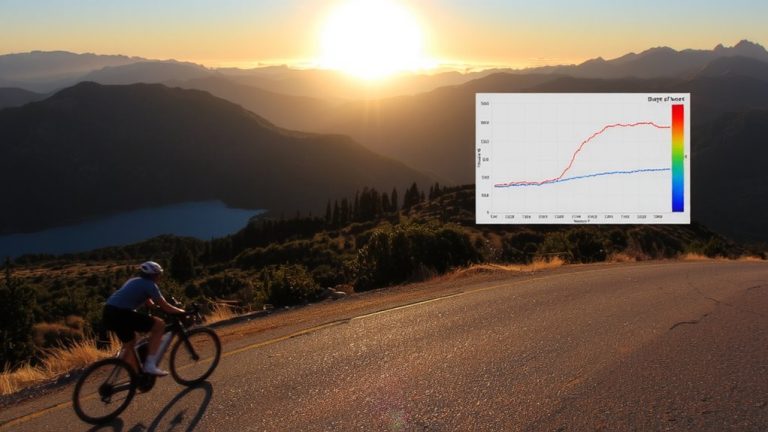
While you’re grinding out a long, steady ride at 65–75% of your FTP, your heart rate creeping up even as power stays constant isn’t just fatigue-it’s a sign of aerobic decoupling, and it tells you exactly how efficiently your aerobic system is working. Aerobic decoupling measures the change in your Power output to Heart Rate ratio during a steady-state effort; ideally, it stays ≤5%, showing solid aerobic endurance. When decoupling hits 5–10%, it hints at moderate strain or insufficient base fitness, while ≥10% means you likely exceeded your aerobic threshold. Joe Friel introduced this metric to help athletes assess aerobic fitness using real data. Tools like TrainingPeaks track cardiac drift across two-hour efforts, isolating warm-up and cooldown. Minimal decoupling means your engine’s dialed-efficient, sustainable, race-ready.
How to Test Aerobic Decoupling in 2 Hours
You’ve heard that steady heart rate and stable power mean solid fitness, but actually measuring how well your engine holds together over time takes a structured test. Do a 2-hour aerobic steady-state effort at 65–75% FTP (cycling) or 75–85% threshold pace (running), skipping warm-up and cooldown in analysis. Use a power meter and chest-strap heart rate monitor for accurate Power and Heart Rate data-critical for calculating decoupling. Keep pacing even, stay hydrated, and pick flat terrain or a trainer to control variables. Afterward, upload to TrainingPeaks or WKO5 to compare the Power-to-Heart-Rate ratio between the first and second half. Decoupling under 5% shows strong aerobic resilience; over 10% signals room for base work. This test reveals how efficiently your system sustains effort, guiding smarter training with real metrics.
What Your Decoupling Percentage Says About Fitness
You’re logging steady miles and holding your pace, but your decoupling percentage tells the real story of how efficiently your body’s handling the load. A less than 5% decoupling during a two-hour steady-state aerobic effort at 65–75% of FTP signals strong aerobic fitness, common in well-trained endurance athletes. That means your heart rate and pace stay tightly coupled, showing your cardiovascular system isn’t drifting under load. HR decoupling between 5–10% hints at aerobic limitations or fatigue, suggesting you’d benefit from more low-intensity volume. A decoupling percentage over 10% often means you’re above aerobic threshold, or battling heat, dehydration, or overreaching. Negative HR decoupling, like -0.3%, reflects elite-level aerobic fitness-power rises while heart rate holds or drops. This kind of efficiency means you can sustain output for hours, essential for long climbs or backcountry rides.
How to Use Decoupling to Level Up Your Training
Since your aerobic decoupling rate reveals how well your body sustains effort over time, using it to guide your training progress makes perfect sense-especially when you’re aiming to ride longer, stronger, and more efficiently. If your decoupling value is ≤5% during a two-hour steady effort at 65–75% FTP, you can assess whether to progress-like extending the ride to 2.5–3 hours or adding race-specific intervals. But if your heart rate drifts more than 10% relative to power or pace, your aerobic base likely needs more low-intensity volume. Use TrainingPeaks to track these trends and spot improvements over time. Consistent decoupling above 5%, even in cool conditions and proper hydration, means hold off on intensity. Building aerobic resilience this way pays off in endurance events, where steady effort and efficiency separate the pack.
On a final note
You’ve seen how aerobic decoupling reveals your endurance, now use it. A power meter like Garmin Rally or Wahoo RPM Speed reads your drift-keep decoupling under 5% on two-hour rides at 75% FTP. Pair it with breathable bibs, a well-padded saddle, and a stable endurance bike like Trek Domane. Test on smooth gravel or paved trails; real riders report smoother power means better fueling, pacing, and long-day confidence.