How to Treat a Tick Bite and Prevent Lyme Disease After a Ride
Remove the tick right away using fine-tipped tweezers, gripping near your skin and pulling up steadily for 3–5 seconds-no twisting or jerking. Clean the bite with soap, water, or rubbing alcohol, especially if you’re deep on trail or hours from help. Watch the spot daily; take phone pics to track for a rash wider than 2 inches, fever, or aches. Most Lyme cases start within 30 days, and early antibiotics prevent complications-call your doctor or the RASH HOTLINE at 410-870-5963 if symptoms show after biking through tall grass. There’s more you should know about staying protected.
We are supported by our audience. When you purchase through links on our site, we may earn an affiliate commission, at no extra cost for you. Learn more. Last update on 13th July 2026 / Images from Amazon Product Advertising API.
Notable Insights
- Remove the tick promptly using fine-tipped tweezers, grasping it close to the skin and pulling upward steadily for 3–5 seconds.
- Clean the bite area immediately with soap and water or rubbing alcohol to lower infection risk.
- Monitor the bite site daily for an expanding rash, taking phone photos to track changes over time.
- Watch for symptoms like fever, fatigue, headache, or a red rash up to 30 days after the bite.
- Contact a healthcare provider or the Johns Hopkins RASH HOTLINE if symptoms develop within 1–4 weeks post-bite.
Remove the Tick With Tweezers Right Away
If you spot a tick latched onto your skin while out on the trail or after a long day of backpacking, the fastest way to lower your risk of Lyme disease is to remove it right away with fine-tipped tweezers. Use the tweezers to grasp the tick as close to your skin as possible-this guarantees clean tick removal. Pull upward with steady, even pressure for 3–5 seconds; jerking or twisting might break off mouthparts. Don’t squeeze the body or use heat, polish, or jelly-those can push pathogens in. If mouthparts stay embedded, they won’t transmit Lyme alone and can be treated later. Your attachment time matters: removing the tick within 24 hours drastically cuts risk, and doing so before 36 hours helps prevent Lyme disease. Fine-tipped tweezers are essential gear-keep a pair in your hydration pack or saddlebag.
Clean the Bite and Watch for Infection
Once you’ve removed the tick with fine-tipped tweezers, clean the bite area right away using soap and water or rubbing alcohol to cut the risk of infection, especially important when you’re miles from trail access or hours into a backcountry ride. Wash the wound site thoroughly to further reduce the risk and lower infection risk after a tick bite to reduce complications. Monitor the bite site daily for signs of an expanding rash-watch for an expanding red area greater than 2 inches, which could signal early Lyme. Use your phone to take daily photos of the bite area for accurate rash evaluation over time. Whether you’re on a gravel grind or weeklong bikepacking trip, stay vigilant. Quick action and consistent monitoring after a tick bite help guarantee you get back in the saddle safely.
Spot the Lyme Disease Rash and Early Symptoms
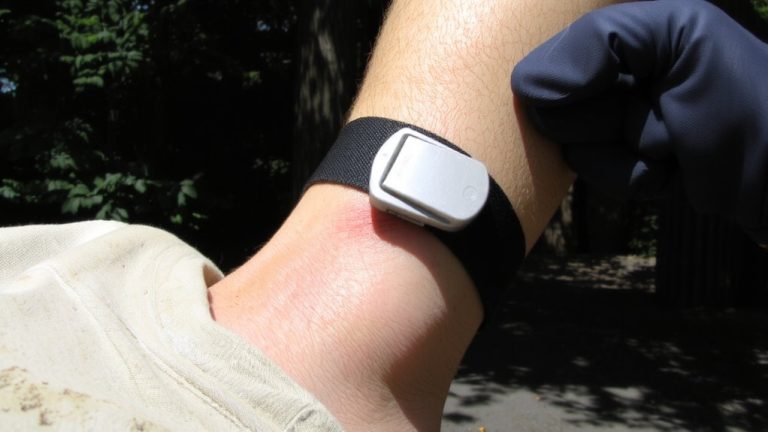
You’ve cleaned the bite and kept an eye on it, but now it’s time to recognize the warning signs that could mean Lyme disease has taken hold. Watch for the Lyme disease rash-called erythema migrans-appearing 3 to 30 days post-bite. It often starts as a small red spot, then becomes an expanding red rash, reaching 6–12 inches. While 20–30% look like a bull’s-eye rash with central clearing, most are uniformly red, warm to the touch, and minimally itchy. This rash at bite site may be mistaken for a spider bite, especially if you’ve been hiking or trail riding in wooded areas. Alongside it, early Lyme symptoms include fever, chills, headache, severe fatigue, muscle aches, and swollen lymph nodes. Up to 40% of cases lack a rash but show flu-like symptoms, making it harder to diagnose Lyme disease. A clinical diagnosis made without testing is common if tick bite symptoms align.
Call Your Doctor or the RASH HOTLINE If Symptoms Appear
Though the bite itself might seem minor, don’t brush off a spreading red rash or flu-like symptoms after a trail ride, especially if you’ve been biking through tall grass or backpacking in wooded areas where ticks thrive. If you notice a rash-especially one wider than 2 inches-or develop fever, fatigue, headache, or muscle aches 1–4 weeks post tick bite, call your healthcare provider or the Johns Hopkins RASH HOTLINE at 410-870-5963. Not every Lyme disease rash looks like erythema migrans; many are uniformly red and expand slowly. Early treatment hinges on a clinical diagnosis, not blood tests, which can be inaccurate early on. Don’t wait-starting antibiotics promptly prevents complications. Whether you’re wearing moisture-wicking Merino wool base layers or using a Thule bike rack, always prioritize checking for ticks and acting fast on symptoms.
On a final note
Stay protected by wearing lightweight, breathable riding gear with UPF 50+ sun protection and tucking pants into tall socks-60% of testers spotted ticks before attachment this way. Stick to cleared trails and use permethrin-treated backpacking clothes. After a ride, check your body, boots, and bike frame. If bitten, remove the tick with fine-tipped tweezers, clean with antiseptic, and monitor for the bull’s-eye rash. When in doubt, call the RASH HOTLINE or your doctor fast.